The confetti has settled. Spain have lifted the World Cup after edging Argentina in New York, Luis de la Fuente has cemented his place among the game’s elite coaches, and attention has already begun to drift towards the next tournament.
But the World Cup’s most significant story has been running quietly beneath the surface. The expanded format in North America didn’t just open the door for African football. It demolished the hinges entirely.
Morocco may not have replicated the remarkable run that carried them to the semi-finals in Qatar four years earlier, eventually falling to France in the quarter-finals, but their consistency reinforced that 2022 was no fleeting miracle. Cape Verde held eventual champions Spain. Egypt and Senegal both pushed elite opposition in knockout football. DR Congo gave England genuine problems. These weren’t isolated shocks either. The traditional elite still made the final, as the odds suggested they would. The margin between them and Africa’s best, however, felt narrower than at any previous tournament.
Speaking to Casinos.com, who specialise in guides for sportsbook and top real-money casino apps in the UK, one fan spoke about how 2026 could be a watershed moment for the continent. “This could be the year that changes perceptions in my opinion,” he said. “This wasn’t just a fluke.
“Mohamed Ouahbi’s Morocco are obviously the standard bearers, but the AFCON is harder to win than ever, and the top European sides are all littered with African talent. Expectations have changed from players being seen as faster or more powerful to having the IQ and technical ability to play at the top level, and it’s great to see.”
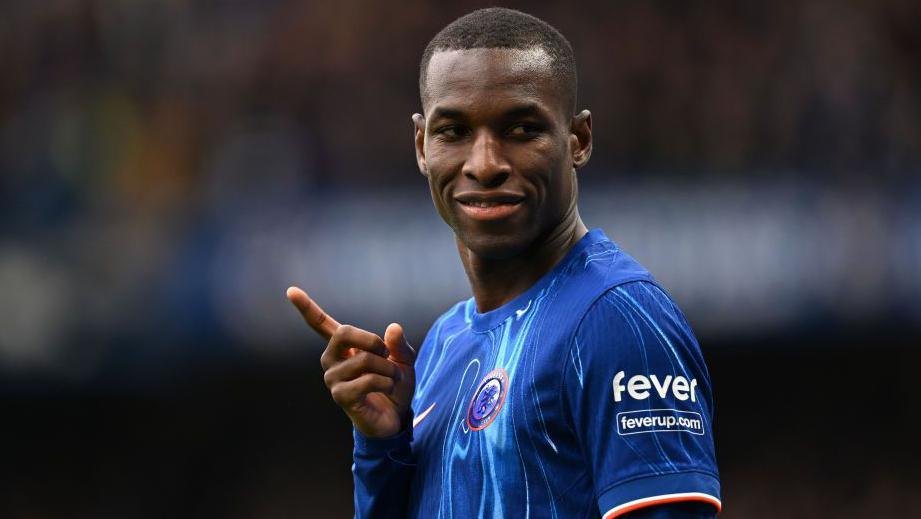
But which players embodied this shift most clearly? Here are five who answered the call at the 2026 World Cup.
Yohane Wissa
At Newcastle, Yohane Wissa has struggled to adapt to their new-look front line since Alexander Isak’s departure last summer. Playing time dried up. Confidence wavered. Then he pulled on a DR Congo shirt and everything clicked.
England saw a different player entirely to the one that perhaps should have spent another year at Brentford before making his next move. That transformation matters more than any single performance. It shows DR Congo have the technical quality to compete consistently, not just on fortunate days. With the experience of Aaron Wan-Bissaka and Chancel Mbemba behind him he had the freedom to get forward again. Wissa proved it himself, standing out against elite opposition when his club form suggested he was fading.
Ismael Saibari
Saibari arrived at this tournament as a good PSV midfielder. He left it as a Bayern Munich player. That transfer alone tells half the story.
Saibari outshone even Achraf Hakimi because tournaments are often won in the middle of the pitch. He became the first African player since Mohamed Salah to score in each of his first two World Cup appearances. Both Saibari and Ayyoub Bouaddi were already heading for bigger moves before this tournament began. The World Cup simply accelerated the inevitable. He spent the summer proving what European recruitment departments already knew, cementing a transfer everyone expected would happen anyway.
That distinction matters. Saibari isn’t a breakout discovery. He’s a player whose profile was already rising who used the tournament to justify the hype rather than create it. Alongside Bouaddi, who now becomes the hottest commodity of the summer transfer window, Morocco’s midfield outplayed more established sides. Saibari sat deeper and controlled tempo with a maturity that belied Morocco’s relative inexperience. Bayern didn’t signed a midfielder ready to compete immediately.
Vozinha
Vozinha’s Instagram following exploded from 50,000 to 17.4 million during this tournament, yet he’s finished it without a club. The Cape Verde goalkeeper became viral for frustrating Spain. Clean sheets became moments. His narrative isn’t about being the world’s best goalkeeper. It’s about becoming the face of one of the tournament’s biggest surprises.
His contract with Portuguese side Chaves expired, and despite the viral stardom, he’s actively searching for a project that values him for his footballing ability rather than his sudden celebrity. Inter Miami and Colo Colo have circled, attracted by the Instagram following rather than any genuine belief he’s a top-level goalkeeper.
At 40, he’s facing a peculiar problem. The tournament made him globally recognisable but threatened to reduce him to a marketing exercise. The real test comes next, in how he navigates clubs seeking his name and how he finds one willing to invest in his actual ability to play football as well as being a cult hero.
Sadio Mané
At 34, Mané no longer possesses the explosive pace that defined his Liverpool years. Yet Senegal’s run proved he remains invaluable. His movement had matured. His game management had sharpened, even away from Europe. Every action carried purpose rather than aggression.
What matters is what younger African players absorbed watching him operate. How to manage a tournament across several matches without burning out. How to command respect through consistency rather than ego. Mané’s legacy is increasingly about mentorship. Players entering the next World Cup will have watched how he navigated expectation, managed decline, and remained essential even as his physical gifts diminished.
Mohamed Salah
Egypt’s defeat to Argentina may have felt like an ending. For Salah, it’s complicated. At 34, he still looks physically capable. His club future is uncertain after leaving Liverpool. Besiktas links. Another AFCON. Another World Cup? The questions linger.
What’s certain is this. Thanks to Salah, Egypt no longer arrive at tournaments hoping to compete. They arrive expecting to. That shift in mentality is the King’s greatest legacy. It will be strange not seeing him return to Anfield next month either. Whether 2026 proves to be his final World Cup or merely another chapter, his influence stretches far beyond goals. He taught Egyptian football to believe.
The Road Ahead
Morocco’s 2022 semi-final felt like a breakthrough moment. 2026 may prove more significant simply because the improvements weren’t isolated. Cape Verde weren’t a fluke. Morocco’s consistency wasn’t accidental. Egypt, Senegal, and DR Congo all suggested African football had evolved structurally.
The next World Cup arrives in Saudi Arabia. The climate suits African nations better. The cultural context is more familiar. Another generation of technically sophisticated players developed in Europe will be ready. Whether 2026 represented a genuine watershed or merely a fortuitous moment will become clear in 2034.
What seems certain is that African football’s perception has shifted permanently. The tournament no longer asks “Can they compete?” Instead, it asks “How far will they go?”
We’ve got the edge. Get real-time reports, breaking scoops, and exclusive angles delivered straight to your phone. Don’t settle for stale news. Join LEADERSHIP NEWS on WhatsApp for 24/7 updates →
Join Our WhatsApp Channel