
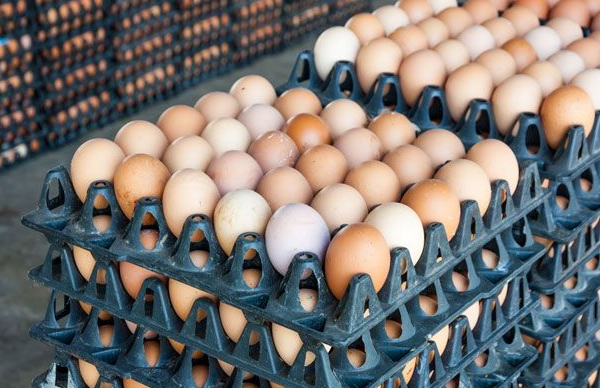
Despite over 30 per cent reduction in the prices of some poultry feeds, consumers are yet to enjoy a corresponding drop in egg prices, raising questions about the factors responsible for the high cost of the commodity.
Findings by LEADERSHIP in Ondo State showed that some poultry feed brands previously sold for about N22,500 now go for N15,500, representing a reduction of approximately 31 per cent. However, the decline has not translated into cheaper eggs.
Speaking with LEADERSHIP, the poultry manager of Nibanola Farms, Mr Adedoye Adedolapo, confirmed the reduction in feed prices but said it was not enough to trigger an immediate fall in egg prices.
He explained that his farm currently produces its own feed from raw materials such as maize and oats, with the production cost at about N12,800 per bag.
“The total cost of our feed production per bag is N12,800. We source maize, oats and other materials ourselves,” he said.
Adedolapo said the poultry business was subject to market forces, adding that farmers had limited control over the prices at which retailers eventually sold eggs to consumers.
He noted that retailers considered transportation and other operating expenses when fixing their prices, making it difficult for a reduction in feed costs alone to determine the final cost of eggs.
“If retailers buy a crate from farms at N4,000, they also consider transportation costs and other expenses because they have families to feed. We cannot determine the amount another person should sell,” he said.
The poultry manager also identified fuel prices as a major factor in egg costs, noting that transportation expenses remained high for both farmers and buyers.
He called on the government to support poultry farmers through grants and intervention programmes, saying such assistance could help reduce production costs and improve affordability.
“Government should support farmers. Grants should be made available to farmers. If the government provides grants, that is where it can have some influence over producers by saying, ‘This is the price you should sell at,’” he said.
Also speaking, a poultry feed seller, Mrs Omolayo Fagbemi, confirmed that prices of several feed brands, including Ultima, Chikun, Vital and Hope Feeds, had dropped considerably compared with previous months.
She said some feeds that previously sold for about N22,500 were now available for N15,500.
However, Fagbemi said the reduction was too recent to have an immediate impact on egg prices, explaining that poultry farmers had spent the previous three months buying feeds at higher rates.
“Before the price of feed dropped, farmers had been feeding their chickens with expensive feed for the past three months. The price just fell recently, so you cannot expect the impact on the eggs instantly,” she said.
She added that farmers could incur losses or struggle to make reasonable profits if they reduced egg prices immediately after the decline in feed costs.
“There’s no way they are going to make enough gain if they reduce the price immediately,” she said.
The feed seller further identified seasonal demand as another factor contributing to the high cost of eggs, explaining that some poultry farmers were shifting attention to raising broiler chickens for meat ahead of the festive season.
According to her, the shift could reduce the number of farmers concentrating on egg production, with possible implications for supply and market prices.
“We are getting closer to the festive period. People are not feeding for eggs again; they are feeding chickens for sale during the festive season. Only a few are rearing birds for eggs. That is another factor why eggs are costly,” she said.
”Anybody who says they want to contest is not an Afenifere person,” he stressed.
We’ve got the edge. Get real-time reports, breaking scoops, and exclusive angles delivered straight to your phone. Don’t settle for stale news. Join LEADERSHIP NEWS on WhatsApp for 24/7 updates →
Join Our WhatsApp Channel