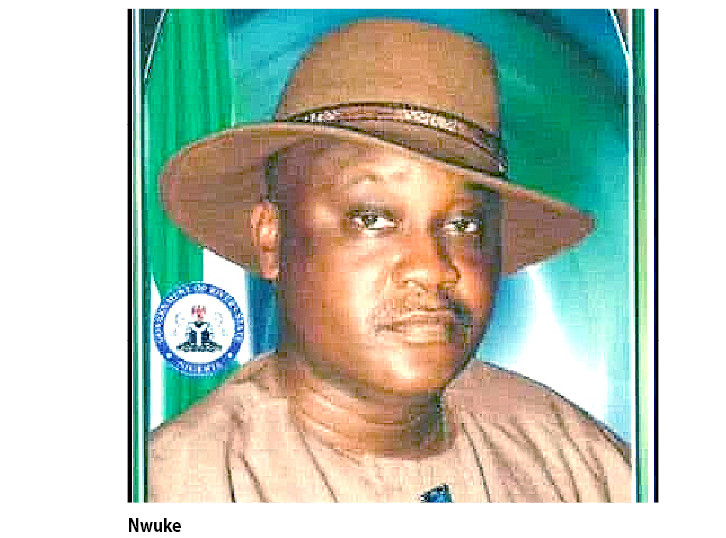
Hon. Ogbonna Nwuke, a former lawmaker who represented Etche/Omuma Federal Constituency in the House of Representatives from 2011 to 2015, speaks with ANAYO ONUKWUGHA on the political developments in Rivers State. Excerpts
Looking back, how would you compare the current political climate in Rivers State with the period when you first entered politics?
I think there have been significant changes in the dynamics. The optics have changed. When we first entered politics, there was a popular saying that politics had no rules, that it was a dirty game played by people often considered unreliable.
However, over time, we have also seen changes. More competent people have become involved in politics. What has not changed is the fact that politics is still a game with rules. Those who entered it initially thought it had no rules, and so all kinds of manipulations were tolerated.
But today, things have changed in a different way. You can hardly have peaceful primaries or conventions. You cannot even find disciplined members of political parties anymore. Everyone says different things at different times, depending on what suits them.
So, I think politics is in transition, and that is exactly what we are seeing in Rivers State, where strange bedfellows now belong to the same party, even though they have no compatible ideologies. You also see the original interest in serving the people gradually taking a back seat. What you now see upfront is the “I” factor: I did this, I did that. It is no longer the noble enterprise many people once believed it to be. Behind the scenes, those who played politics from the beginning realised that outside the days of independence and the nationalist struggle, there were no well-structured political institutions. Those who laid the foundation in the 1960s were eventually removed by military coups. Those were the days of the Eastern Region. After the civil war, those of us from that region became Rivers people.
Of course, Rivers’ politics were sometimes played along ethnic lines, whether one was from the upland or riverine areas.
Yes, but over time, that tendency began to diminish. But it has now been replaced by a new brand of politics that is difficult to interpret, a kind of muscular, elitist politics.
How do you mean?
These elitist struggles have reduced the ambition to serve the people into something entirely different. In the past three years, the interest of the people has not been paramount, in my view.
Looking at the clashes that have occurred, Rivers State has continued to face embarrassing incidents that have damaged its image.
There have been mixed messages coming from the state, and people now look to those at the centre to broker peace for the Rivers people. That is the kind of politics we now have, which differs greatly from what we used to see. In the past, Rivers’ issues were resolved by Rivers’ people. Today, Rivers’ issues are resolved by non-Rivers people. That is the major difference.
To what extent does the issue of political godfatherism feature in this comparison?
Let’s be clear about this. Even in the past, attempts to create “godson” situations did not really succeed.
How?
For instance, Melford Okilo brought in Rufus Ada-George as Secretary to the State Government. Ada-George eventually succeeded Okilo, but not as a political godson. Rather, he inherited the political structure in place at the time and turned it into his Action Committee, which he used to gain power in Rivers State.
Ada-George later served alongside Dr Peter Odili. When Odili became governor, you could not describe their relationship as master-servant.
Thereafter, Chibuike Amaechi emerged as governor. With due respect to Odili, even though he may have played a role in Amaechi’s preparation for leadership, he cannot claim that he made Amaechi governor. Those of us who witnessed the political developments in Rivers State know how that relationship evolved.
Nyesom Wike served under Amaechi as Chief of Staff, but you cannot say Amaechi made Wike to become the governor. So, when you look at the dynamics of how power has transitioned from one leader to another in Rivers State, it is difficult to genuinely say that we had strong godfather, godson relationships.
That may even be one of the reasons previous governors performed relatively well; they had the independence to operate and build alliances.
However, what we are witnessing now is different. For the first time in our history, an outgoing governor actively installed an incoming governor, campaigned with him, and did almost everything possible to ensure his emergence. Yet, at the end of the day, events unfolded in a way that perhaps nobody initially imagined.
Still, it is a good thing that there has been a test of will. It is also good that after that test of will, they could return to the table and say, “I am working with my oga,” while the other says, “I am working with my son.”
The people of Rivers state have probably learnt important lessons from what transpired. If there were losers in the situation, it was Rivers’ people who lost. At the same time, they have also gained experience from it.
Following President Bola Tinubu’s fourth intervention in the face-off between Rivers State Governor Siminalayi Fubara and FCT Minister Nyesom Wike, do you think the reconciliation between the two leaders is sincere and sustainable?
One should not be mistaken about what is happening. The driving force behind the peace effort is President Tinubu.
Many Rivers people are happy that he has taken a strong interest in resolving the crisis. When you listen to the gladiators speak and observe the emotions in their statements, you realise that ordinarily there might have been no meeting point.
Let me quote the FCT Minister. One thing I appreciate about him is that he speaks his mind. At one point, he said that if he had his way, Fubara would not return. He also said they could deliver the votes for the President in 2027 without the governor and even suggested that if Fubara secured a second term, he would be politically buried.
Yet the same man later said, in a more conciliatory tone, that all sins could be forgiven and that he would be willing to allow Fubara to run for a second term.
When you look at the personalities involved, Wike is very expressive and aggressive, while Fubara appears quiet and perhaps projects an image of calmness and inclusiveness.
But those personal traits do not fully explain what we see in the political field. Now, to your question: Is the peace real or superficial? It is difficult to say. What is clear is that peace is a process. It is not like an ornament placed on a table that you simply pick up.
Peace grows organically. People must understand one another, rebuild trust, and learn to collaborate. In doing so, they learn how to relate better with one another.
I cannot say definitively that peace has arrived, nor will I say that peace is dead. But it remains a process, and the fact that both sides are now talking to each other gives hope that peace may eventually be achieved. We must also remember that the chief driver of the peace process is the President, who has a stake in what happens in Rivers State because the state is strategically important.
Rivers is one of the most viable states in Nigeria in terms of economic resources and its role in national development. Tinubu understands that the centre cannot afford to allow Rivers to slide into instability.
He is also a tactician who knows that to win Rivers State politically, he needs both a serving governor and a serving minister on his side. It appears both men understand the President’s position, and there seems to be some determination on both sides to respect his intervention, de-escalate tensions, and work together.
Given the FCT Minister’s strong influence in Rivers politics, do you see Governor Fubara running for a second term in 2027?
This is a question everyone is asking. That is why, as a journalist and perhaps a student of history, I referenced some of the earlier comments in this interview. Those comments cannot simply be ignored. One major challenge for an ambitious Fubara could be Wike’s statement that if Fubara runs for a second term, he would be buried politically.
If that statement is anything to go by, then Fubara must tread carefully in his relationship with Wike because the man has clearly spoken. However, there are other dynamics. Fubara must focus on delivering results. What will his legacy be? Will his legacy be that he fought Wike? Or that he had genuine support from Rivers’ people?
What will his report card show? Will he deliver the dividends of democracy? Will he complete the Port Harcourt Ring Road project? Will he implement the blue economy project linking Andoni and Oyorokoto? Will he connect upland and riverine communities?
Ultimately, these deliverables will determine whether Fubara is worthy of a second term. It will not be about what Wike says or what Fubara says, but what Rivers’ people think about the opportunity they gave him and what he did with it. For me, that is the bottom line. In mathematics, we are taught that two plus two equals four. But in politics, two plus two does not always equal four.
As a member of the PDP, do you believe the party still has a viable future in Rivers State ahead of the 2027 elections, given the current developments at the national level?
It would be unrealistic to assume that the PDP currently has a strong chance of winning in 2027. The party has been weakened by internal conflicts and the kind of politics we now practise in Nigeria, particularly in Rivers State. A party that only three years ago stood together and maintained dominance in the state has suddenly become weakened because of desperation, constant infighting, distrust, and animosity.
As I said earlier, discipline within the PDP family has collapsed. I do not know where the party will find the strength to win another election in Rivers State for now. In the South-South region, the political landscape has also changed.
There was a time when the PDP controlled the entire region. But today, in Akwa Ibom, Cross River, Bayelsa, Delta, Edo, and now Rivers, many political actors are tilting towards the APC.
If you are a foot soldier of the PDP in Rivers State, where the party used to be very strong, will you still have confidence when your governor and your minister, who hold significant political influence, appear to be aligned elsewhere? To suggest that the PDP still has sufficient strength under such circumstances would simply be wishful thinking.
We’ve got the edge. Get real-time reports, breaking scoops, and exclusive angles delivered straight to your phone. Don’t settle for stale news. Join LEADERSHIP NEWS on WhatsApp for 24/7 updates →
Join Our WhatsApp Channel