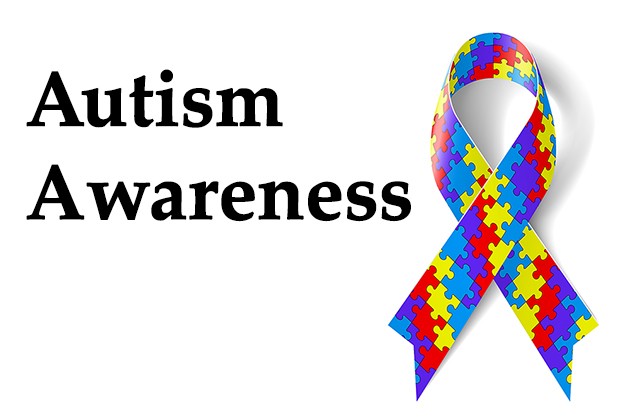
The international community marked World Autism Awareness Day recently with the theme “Autism and Humanity, Every Life Has Value. ” As memories of that event linger, we ask a pertinent question: Does Nigeria treat the lives of its autistic citizens as though they have value? The situation on the ground indicates that it is not in any way that counts.
Globally, the World Health Organisation (WHO) estimates that one in 127 persons has autism, a lifelong neurodevelopmental condition that affects social interaction, communication, and behaviour. The Centres for Disease Control and Prevention in the United States puts the figure higher, one in 36 children.
In Nigeria, studies suggest a rising prevalence rate ranging from 0.8 per cent to 1.2 per cent, with some estimates indicating that one in 88 children may be on the spectrum. And yet, for a country with these numbers, Nigeria’s response to autism remains shockingly inadequate, defined more by ignorance and neglect than by any coherent policy framework.
The problems begin at the point of diagnosis or rather, the absence of it. Parents and healthcare workers frequently fail to detect autism early in children. In many cases, it is only when speech delays become impossible to ignore that concerns are raised at all. This delay robs children of the critical early intervention window that medical professionals agree can dramatically improve outcomes. Access to diagnosis and therapy services remains concentrated in major cities leaving families in rural communities with little or no support.
Even within urban centres, there is a severe shortage of trained developmental paediatricians, speech therapists, and behavioural specialists. The infrastructure, put plainly, does not exist for most Nigerian families.
And then there is the question of cost. Autism therapy in Nigeria runs between N100,000 and N300,000 monthly a staggering sum in a country where the minimum wage barely covers basic survival. Because autism care is not typically covered by health insurance, families bear this burden entirely out of pocket. The predictable result is that many families cannot sustain therapy.
Children are withdrawn from care, kept away from public spaces, or handed over to spiritual houses and traditional healers in desperation. Interrupted therapy leads to inconsistent progress and, in too many cases, complete abandonment of professional care. A country that forces its most vulnerable citizens into this kind of impossible choice has no business claiming to value every life.
But the financial barriers, severe as they are, sit atop something worse: a deep cultural hostility toward autism that persists across much of the country. In parts of Nigeria, autism is still attributed to spiritual forces, witchcraft, curses, or divine punishment.
Autistic children are hidden away by their families, treated as sources of shame rather than human beings deserving of dignity and support. The stigma falls hardest on mothers, who are blamed for their children’s condition accused of poor parenting or spiritual failure.
In public spaces, the pattern is depressingly familiar: staring, whispering, judgment. A child having a meltdown in a market or church becomes an occasion for communal condemnation rather than compassion.
The education system compounds these failures. Many schools are reluctant to admit autistic children in the first place. Those that do accept them offer little meaningful support overcrowded classrooms, few trained special education teachers, and no therapists. Inclusive education, in Nigeria, remains a slogan rather than a practice. There are no systematic support structures for children with special needs within mainstream schools, and the gap between policy pronouncements and classroom realities is vast.
Medical professionals have been clear that autism is not a disease to be cured but a condition that can be managed with the right support, therapy, and education. Early detection is critical. Good prenatal care and limiting exposure to heavy metals and environmental toxins are considered important preventive measures.
None of this is controversial or expensive to communicate in Nigeria, yet it has failed to mount the kind of sustained public awareness campaign that could shift attitudes and save lives.
What, then, must be done? The federal government and the private sector need to dramatically increase investment in autism research and services. This means dedicated funding for diagnostic centres outside Lagos and Abuja, training programmes for healthcare professionals across the country, and subsidies that make therapy accessible to ordinary families.
Health insurance schemes must be expanded to cover autism care , it is unconscionable that a lifelong condition affecting this many Nigerians remains outside the scope of coverage. State governments, too, have a role: inclusive education policies must be backed by real resources, not just paper commitments.
Beyond policy, there is an urgent need for a national enlightenment campaign that confronts the myths and superstitions surrounding autism head-on. Religious and community leaders must be enlisted in this effort.
The media must do better in portraying autistic individuals not as objects of pity or fear but as citizens with rights, capabilities, and contributions to make.
World Autism Awareness Day is observed once a year. But the challenges facing autistic Nigerians and their families do not observe a calendar they are constant, grinding, and largely invisible to those in power. If every life truly has value, Nigeria must prove it with action, not rhetoric. The time for that proof is long overdue.
We’ve got the edge. Get real-time reports, breaking scoops, and exclusive angles delivered straight to your phone. Don’t settle for stale news. Join LEADERSHIP NEWS on WhatsApp for 24/7 updates →
Join Our WhatsApp Channel