Whenever school holidays loom, many parents find themselves caught in an emotional tug-of-war: on the one hand, relief at bidding farewell to homework battles, bedtime struggles, and the lamenting of lost lunchboxes; on the other, terror at the daunting prospect of a barrage of “whys” and “buts” from their relentless interrogators. To avoid logic-defying arguments and endless debates, it is often not long before they find themselves playing the ultimate parental trump card: “because I said so”.
As a parent, I can relate. But I’m also a moral philosopher with almost two decades of teaching experience. In philosophy classes, students who question ideas – and sometimes, in doing so, challenge authority – are praised. Why isn’t the same true for children? Is a child who questions their parents “being cheeky”? Or are they flexing the mental muscles that are necessary for their intellectual growth and ability to navigate the world?
The job of a moral philosopher is to grapple with ideas about right and wrong, good and bad, seeking to answer the ultimate question: “how ought we to live?” While we use a range of strategies to tackle these fundamental ethical questions, one of the most important tools at our disposal is critical thinking.
Critical thinking is the ability to analyse and evaluate information and arguments in a clear, rational and objective manner. When we are confronted with information, critical thinking requires us to consider why this person is saying that. What could be their motive? Is there a different possible explanation?
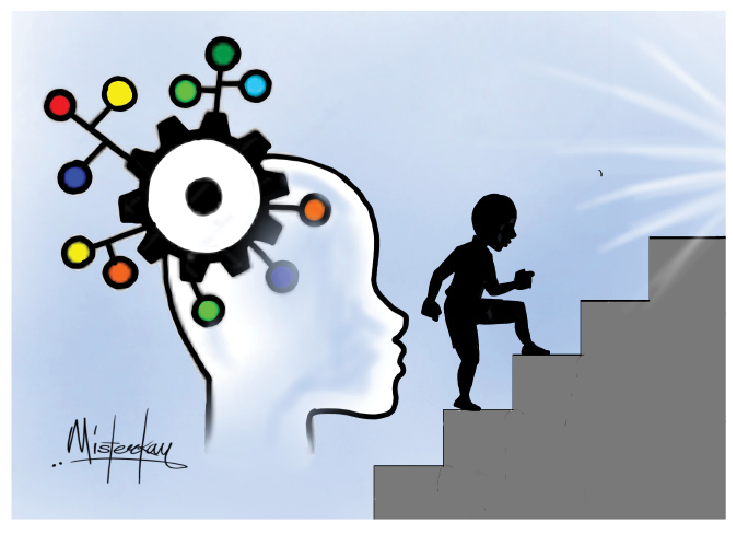
I’m not suggesting that the goal is to raise argumentative children. Rather, as philosopher, strategic thinker and author Peter Facione explains, it is to nurture inquisitive minds that can interpret, analyse, evaluate and infer from information. In other words, parents should raise their children to be curious, critical thinkers who question everything, even if this means they question us in the process.
How can parents teach critical thinking at home? Here are my five top tips:
- Ask open-ended questions and encourage children to do the same.
- Provide children with opportunities to make decisions and solve problems rather than doing it for them.
- Discuss the reasoning behind rules and decisions you make for them.
- Encourage children to consider alternative perspectives rather than just their own.
- Model critical thinking by thinking aloud when approaching problems.
Thinking about our thinking
Critical thinking requires metacognition: thinking about our thinking.
Reflecting on our own views gives us a chance to recognise that they too should be scrutinised and evaluated. If we choose to be vegan, for example, is it because we care about reducing harm to animals, the environment, or both; or because it’s fashionable to be vegan? Once we’ve worked out our reasons for something, we can then evaluate whether these are “good” reasons or not.
Critical thinking also means evaluating other people’s reasons. This requires us to be open to others’ points of view – including our children’s – rather than being blinded by our own biases. At the same time, to be a critical thinker is to take seriously the fact that everyone “has an agenda” (which may not be explicit) and we should therefore not take everything at face value. We can teach our children to be critical thinkers by getting them to consider the quality of the evidence presented for a position.
Put simply, parents and caregivers can promote critical thinking in children by encouraging them to ask questions, challenge assumptions and explore alternative perspectives. Critical thinking requires us not to passively accept everything we read, hear and see but rather to question, evaluate and make judgments.
Here’s what that might look like in practice.
Let’s say your child asks why she needs to eat vegetables.
You could respond by saying “That’s a good question. What do you think? Why do you suppose we eat vegetables?” This encourages the child to start thinking about the issue herself.
She replies: “Because you said I have to.”
To get her to think about whether there are reasons beyond parental authority that may be important, you might want to ask: “Is that the only reason? Let’s think about it some more. Do you know anyone else who thinks we should eat vegetables?”
Then, to encourage her to explore alternatives, you could ask: “What do you think would happen if we never ate any vegetables? What if we only ate sweets instead?”
It might also be useful to do some research with your child, to introduce the idea of seeking evidence and reliable information. You could suggest that the two of you look up some facts about what vegetables do for our bodies.
Finally, you could pose the original question back to your child, giving her a chance to synthesise what she’s learnt and form her own conclusion.
Throughout the process, you are guiding your child to question, think about, and arrive at a reasoned understanding, rather than simply accepting a statement at face value.
Other resources
Does this sound daunting? Relax – it’s not all up to you.
Many schools incorporate critical thinking skills across their curricula. Some excellent programmes have been implemented in schools around the world. One example is Philosophy for Children (P4C), developed by educator and philosopher Matthew Lipman in the 1970s. This approach uses structured discussions about open-ended questions and can be used to develop critical thinking skills in children as young as six.
I also like the work of Critical Thinking Consortium (TC2), a Canadian organisation which provides resources and professional development to help educators embed critical thinking in their teaching. Project Zero is another good resource. This research group at the Harvard Graduate School of Education has developed several thinking routines and frameworks, such as “visible thinking” and “artful thinking”.
You could also advocate for your child’s school to introduce critical thinking skills into their curricula. Schools could partner with university philosophy departments to offer classes for low or no cost as a community engagement or social responsibility initiative.
Ultimately, whether children are exposed to these skills at home or at school, the key is to create an environment where questioning, reasoning, and exploring ideas are encouraged and valued. The goal is to make critical thinking a natural part of the way we interact with our children so that it becomes a natural part of the way they interact with the world.
Culled from The Conversation.
We’ve got the edge. Get real-time reports, breaking scoops, and exclusive angles delivered straight to your phone. Don’t settle for stale news. Join LEADERSHIP NEWS on WhatsApp for 24/7 updates →
Join Our WhatsApp Channel