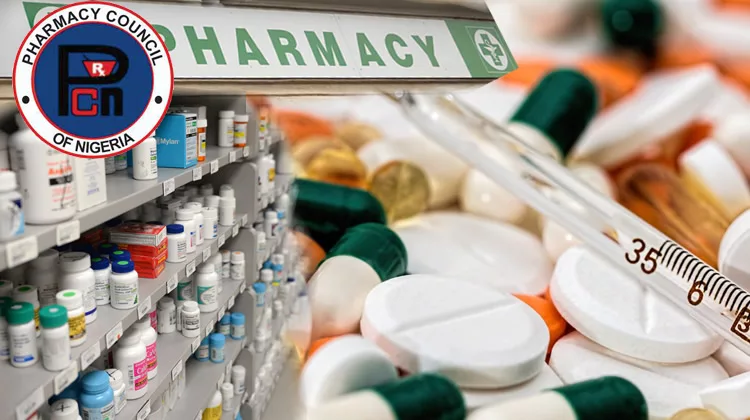
Up to 90 percent of medicines circulating in Nigeria do not pass through licensed and regulated pharmaceutical channels, the Pharmaceutical Wholesalers and Distributors Association of Nigeria (PWDAN) has warned, describing the situation as a deepening national health crisis that threatens millions of lives.
The association issued the warning in Lagos during a press briefing on Friday to mark the 2025 Fight the Fake Week, a global awareness campaign aimed at combating falsified and substandard medicines.
Powder chairman, Pharmacist Ogheneochuko Omaruaye, said the figure reflects a dangerously fragmented and weakly regulated drug distribution system that allows counterfeiters and unlicensed operators to flourish. “Our members account for only about 10 to 20 per cent of medicines in circulation. The remaining 80 percent, sometimes even more, is controlled by individuals and bodies outside our regulated network. This is a national emergency,” he stated.
According to Omaruaye, Nigeria’s chaotic pharmaceutical supply chain continues to enable the proliferation of fake and substandard drugs, especially in open markets and online spaces where regulation is minimal, noting that this reality makes it difficult for consumers to distinguish safe medicines from harmful counterfeits, thereby putting the public at severe risk.
Speaking on ongoing efforts, Omaruaye revealed that PWDAN has been exploring ways to strengthen medicine traceability within its own network.
Over the past two years, the association has worked on developing a new technology platform that will enhance drug tracking from distributors to end users.
The platform is scheduled for launch in January 2026. However, he emphasized that technology alone cannot solve the problem.
“Just as the banking sector requires government oversight for a secure national payment system, drug traceability must be nationwide, government-led, and strictly enforced. An association cannot fix this alone. We need the National Agency for Food and Drug Administration and Control (NAFDAC), the Pharmacists Council of Nigeria, and other regulators to enforce compliance across the entire supply chain,” he said.
Ultimately, PWDAN called for an urgent, unified response involving regulators, policymakers, and industry experts to establish a fully regulated, end-to-end supply chain. “Lives are at stake. Until Nigeria shuts down unlicensed channels and enforces a national traceability system, the fake drug epidemic will continue to cost lives and undermine our healthcare system,” Omaruaye warned.
PWDAN secretary, Pharmacist Olaide Soetan also raised concerns over the dominance of unlicensed players in the drug market, warning that unless the National Drug Distribution Guidelines (NDDG) are fully implemented, Nigeria will continue to lose ground in the fight against falsified medicines. “The NDDG provides a clear pathway for safe, responsible drug distribution. But without enforcement, the system remains open to abuse,” she said.
Gafar Olanrewaju of Pharmaton 693 Cooperative Pharmacy, noted that counterfeiters often exploit Nigerians’ preference for low-cost drugs, stressing that cheaper, unbranded medicines are not necessarily substandard, but urged consumers to buy only from licensed pharmacy professionals to ensure quality and safety.
The officials reiterated that the high cost of medicines, often blamed on distributors, is largely driven by manufacturers, importation costs, and government policy. They argued that increasing local production and expanding health insurance coverage could help reduce prices and discourage patronage of unsafe alternatives.
We’ve got the edge. Get real-time reports, breaking scoops, and exclusive angles delivered straight to your phone. Don’t settle for stale news. Join LEADERSHIP NEWS on WhatsApp for 24/7 updates →
Join Our WhatsApp Channel