Nigeria’s struggle against violent extremism has reached a critical juncture. It is worrisome that the nation continues to be significantly impacted by terrorism and violent extremism, ranking as the eighth most impacted country globally, according to the 2023 Global Terrorism Index.
While extremist ideologies are promoted by the malicious activities of ethnic militias, religious or secessionist movements and moral/value decay at community levels, violent extremism is enabled by unattended socio-economic challenges, unchecked ideology, illiteracy, political instability and insecurity.
As observed by the United Nations Office on Drugs and Crime (UNODC), Nigeria faces profound challenges posed by terrorism and counter-terrorism efforts, most notably as a result of the activities of terrorist organisations and their affiliates in the North East. This has resulted in civilian casualties, prolonged internal displacement, cross-border movements, substantial economic losses, and increased risks of multidimensional poverty for affected communities.
Apparently, terrorism and violent extremism are enabled by, among other factors, weak institutions and bad governance, porous borders, poverty, unemployment, illiteracy and technological advancement. Others are religious division, indoctrination, ideological commitment, arms proliferation and trafficking, historical grievances as well as injustice.
Recent engagements by the Civil Society Legislative Advocacy Centre (CISLAC), financed by GIABA-ECOWAS, have revealed that poor awareness at community levels of collective monitoring and timely response to warning signals of potential terrorist activities and violent extremism exposes the North East to the increasingly complex and uncertain security situation, as various non-state armed groups have emerged and consolidated coercive power to terrorise the region.
It is important to understand that violent extremism thrives through poor awareness at community levels of the radicalisation process as well as the potential impact of social extremists’ activities targeted at undermining social cohesion, peaceful co-existence, tolerance and literacy.
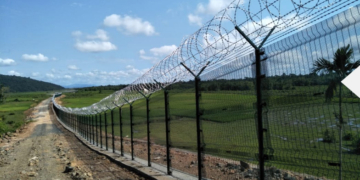
Similarly, poorly monitored borders pave way for easy movement of goods and services used in facilitating terrorism and terrorism financing. Nigeria shares borders in the North with Niger Republic, in the North-East with Chad, in the East with Cameroon, and in the West with Benin Republic; with nearly 1,500 identified land border crossings as of 2016. Of these, only 114 reportedly had approved control posts manned by immigration officials and other security agencies.
It is critical not to underestimate the role of economic factors, such as poverty and lack of economic opportunities, in enabling violent extremist groups to recruit from among the local population. Experience from the North-East has revealed that a small portion of the population that experiences social deprivation turns to violence and joins extremist groups as a way of escaping such underlying conditions.
On a similar note, in 2017 Report, the USAID Center for Resilience warns that over-focusing on the underlying socio-economic conditions such as poverty must not result in an underestimation of individual psychological factors along with the role of human agency and the degree to which those who voluntarily join extremist groups do so by choice. Extremist groups have made reference to identity, existential threats, corruption, cultural domination, and hate as major motivating factors.
More importantly, while terrorists or terrorist organisations need money to acquire weapons and other equipment, recruit supporters, facilitate logistics and feeding, and provide shelter and the general upkeep of their members, the banking sector continues to offer opportunities for terrorist financing; as current measures employed by banks have proven ineffective for increasing knowledge gap of the tactics and concrete methods employed by terrorist financiers.
It has been reported that most violent extremists fund their activities through commercial enterprises, using natural resources, multiple small donations, and illegal means like ransom, extortion, smuggling, drug and human trafficking, and illegal weapons trading. Without access to legal or illegal money, they cannot purchase any weapons or supplies to carry out their plans.
Consequently, controlling the flow of money to terrorist organisations is important if terrorists’ activities must be mitigated. Strengthening regulations in the financial sector has become imperative to counter the unscrupulous financial activities of Bureau de Change operators, Binance, Point of Sale (POS) devices, wire transfers, and Designated Non-Financial Businesses and Professions, among other enabling platforms exploited for terrorism financing.
These measures cannot be achieved without strengthening the anti-corruption Institutions and other regulatory agencies through adequate technical capacity and resources to detect and disrupt the financial networks of terrorist organisations.
It has become imperative to demonstrate holistic efforts to address poverty and illiteracy, bad governance and corruption, and socio-economic inequalities, promote social inclusion, and foster a sense of belonging that is essential for preventing violent extremism.
Moreover, associated early signals of violent extremism like idealism, recruitment and propaganda, indoctrination and brainwashing, must be clearly observed, properly monitored and timely reported through trust building and enhanced community engagement mobilisation and support. Trauma, mental health issues, and psycho-social needs must be integrated into community engagements to prevent indoctrination.
As Nigeria confronts this challenge, it’s clear that military might alone will not suffice. The country needs a strategy that combines security measures with social and economic development, community empowerment, and robust institutional reforms.
Through such a comprehensive approach, Nigeria can hope to stem the tide of violent extremism and build a more stable, prosperous future for all its citizens.
We’ve got the edge. Get real-time reports, breaking scoops, and exclusive angles delivered straight to your phone. Don’t settle for stale news. Join LEADERSHIP NEWS on WhatsApp for 24/7 updates →
Join Our WhatsApp Channel