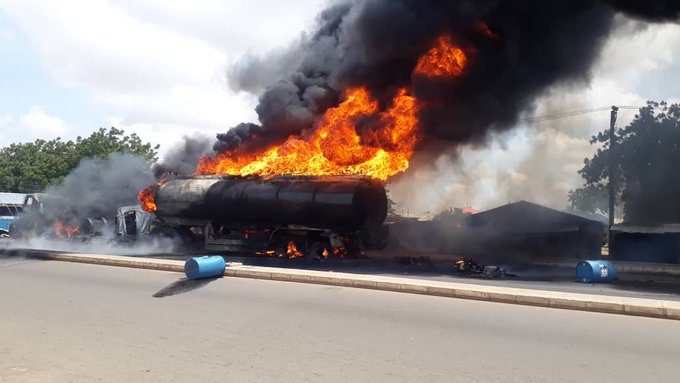
The recent devastating fuel tanker explosion in Jigawa State, which has, so far, claimed 181 lives and hospitalised 80 others, is not merely a tragic accident – it is a damning indictment of Nigeria’s systemic failures and the persistent inability to protect the most vulnerable citizens.
Governor Umar Namadi’s somber announcement of the casualties tells only part of the story. Behind these numbers lie shattered families, devastated communities, and a haunting question: How did it happen?
In his reaction, President Bola Tinubu reassured the nation that the federal government, in collaboration with states, is committed to the swift and comprehensive review of fuel transportation safety protocols across the country.
He restated his directive to the Federal Roads Safety Corps (FRSC) to strengthen night travel measures, such as increased patrols, stricter enforcement of safety regulations, and other highway safety mechanisms.
He said those found responsible for breaches of safety standards will be held accountable, reaffirming the government’s unwavering commitment to ensuring such incidents do not recur.
We are compelled to ask, how many more lives must be lost before the nation addresses the root causes of these recurring disasters?
RELATED: We Lost 181 In Jigawa Tanker Explosion – Governor Namadi
The familiar pattern is heartbreaking in its predictability. A fuel tanker overturns on poorly maintained expressway. Desperate citizens, driven by grinding poverty and soaring fuel prices, rush to scoop up the spilled fuel with cups and buckets. Then comes the inevitable: a spark, an explosion, and another community plunged into mourning.
This is not an isolated incident. The Federal Road Safety Corps reports that in 2020 alone, over 1,500 accidents involving fuel tankers occurred in Nigeria, resulting in 535 deaths.
Just months ago, 48 lives were lost in a similar incident in Niger State. The flames that consumed vehicles on the Ibadan-Ife Expressway are still fresh in our national memory.
These incidents are compelling enough to confront uncomfortable truths about the nation. First, the reliance on road transportation for fuel distribution is both dangerous and inefficient. The absence of a robust railway system for cargo transport is not just an inconvenience – it is a deadly oversight that continues to cost lives. While other nations modernise their infrastructure, we cling to an outdated and lethal distribution system.
Again, these tragedies are symptoms of a deeper socioeconomic crisis. When citizens risk their lives to scoop fuel from overturned tankers, it speaks volumes about the level of desperation in those communities.
No doubt, the recent spike in fuel prices has pushed many to the brink, making such dangerous gambles seem worth the risk.
The ghost of the 1998 Jesse pipeline fire, which claimed over 1,000 lives, still haunts the nation’s conscience. Twenty-five years later, we find ourselves witnessing similar scenes of devastation.
In the considered opinion of this newspaper, while the circumstances may differ, the underlying causes remain unchanged: poverty, desperation, and infrastructural inadequacy.
The government’s response to these incidents typically follows a predictable script: expressions of sympathy, promises of investigation, and pledges to prevent future occurrences. Yet the explosions continue, and the death toll rises.
First, we must urgently modernise fuel distribution infrastructure. The development of a comprehensive railway system for cargo transport should be a national priority, not a perpetually postponed project. The cost of such infrastructure development pales in comparison to the human lives we continue to lose.
Second, we need stricter enforcement of safety regulations in fuel transportation. The frequent overturning of tankers suggests either poor vehicle maintenance, driver fatigue, or both. Regular safety inspections and better working conditions for drivers must be mandatory, not optional.
Third, and perhaps most importantly, we must address the poverty that drives the citizens to such desperate measures. When people choose to risk death for a few litres of fuel, it is a damning indicator of a failure to provide basic economic security for the citizens.
The Jigawa tragedy should serve as a watershed moment in the national conversation about fuel distribution and poverty. We cannot afford to treat these incidents as mere statistics or accept them as inevitable consequences of the country’s developing status.
These are not just accidents; they are predictable, preventable tragedies that reflect a collective failure to protect the most vulnerable citizens. Until we muster the political will to implement comprehensive reforms, we remain complicit in every life lost to these explosions.
We owe it to the victims of Jigawa, Jesse, and countless other communities to transform anger and grief into meaningful action. The citizens deserve better than to die in flames while seeking to meet their basic needs.
We’ve got the edge. Get real-time reports, breaking scoops, and exclusive angles delivered straight to your phone. Don’t settle for stale news. Join LEADERSHIP NEWS on WhatsApp for 24/7 updates →
Join Our WhatsApp Channel