This year’s World Water Day, observed annually on March 22, has raised challenges Nigerians, including women and girls are facing in water and sanitation issues.
The theme, “Water and Gender,” and the slogan, “Where Water Flows, Equality Grows,” emphasise that providing safe, accessible water reduces the burden on women and girls, allowing for improved education and economic opportunities.
The United Nations Sustainable Development Goals (SDGs) highlight the connection between gender equality and access to water through Goal 6, which focuses on clean water and sanitation, and Goal 5, which promotes gender equality.
But the World Health Organisation (WHO) noted that women and girls continue to bear a disproportionate burden of water and sanitation responsibilities and remain underrepresented in water governance and leadership.
Across many communities around the world, access to clean water and safe sanitation remains one of the most basic yet persistent development challenges.
Water, sanitation and hygiene (WASH) are more than infrastructure sectors; they are the foundations of health, dignity, education and economic opportunity.
According to research, water makes up about 71 per cent of the earth’s surface and similarly, 50-65 per cent of the total human mass is also made up of fluid which is water.
The Corporate Accountability and Public Participation Africa (CAPPA), in 2025, said a staggering 113 million Nigerians lack access to basic drinking water, with only 10 per cent of the population having access to basic water, sanitation, and hygiene (WASH) services, leaving millions, particularly in rural areas, reliant on unsafe sources.
The UN-World Water Development Report 2025 highlights that access to water is facing severe threats due to a growing population, rising demands from agriculture and industry, and the ever-increasing effects of climate change.
We recall that on last year’s commemoration of World Water Day, a poll conducted by NOIPolls revealed that only 10 per cent of the estimated 200 million Nigerian population has access to basic water, sanitation, and hygiene services.
It noted that more than half of Nigerian households (52 percent) reported that access to water is challenging, with 68 million people (33 per cent of the population) lacking access to basic drinking water services, while 171 million people (83 per cent of the population) lack basic handwashing facilities.
The polls also highlighted that borehole water (39 per cent) is the primary source of drinking water for households in Nigeria.
According to the report, average families have returned to borehole water due to the rising cost of pure water (sachet water).
Those without boreholes visit places where there are boreholes to fetch water at a cost of N100 per 25 litre. In humane situations, for free.
Across geo-political zones, findings also show that access to tap water from the State Water Board is abysmal with a majority (13 per cent) of Nigerians from the North-East reporting tap water as their main source of drinking water.
Northern states, including Adamawa, Borno, and Yobe face severe deficits in water infrastructure due to insecurity impacting internally displaced persons ( IDPs) and returnees.
The report sharply contradicts that of the National Bureau of Statistics (NBS) WASH NORM Survey which claim that 70 per cent of Nigerian households use basic drinking water services.
Sadly, the report is a damning verdict on the effectiveness and operations of the states’ Water Boards across the country.
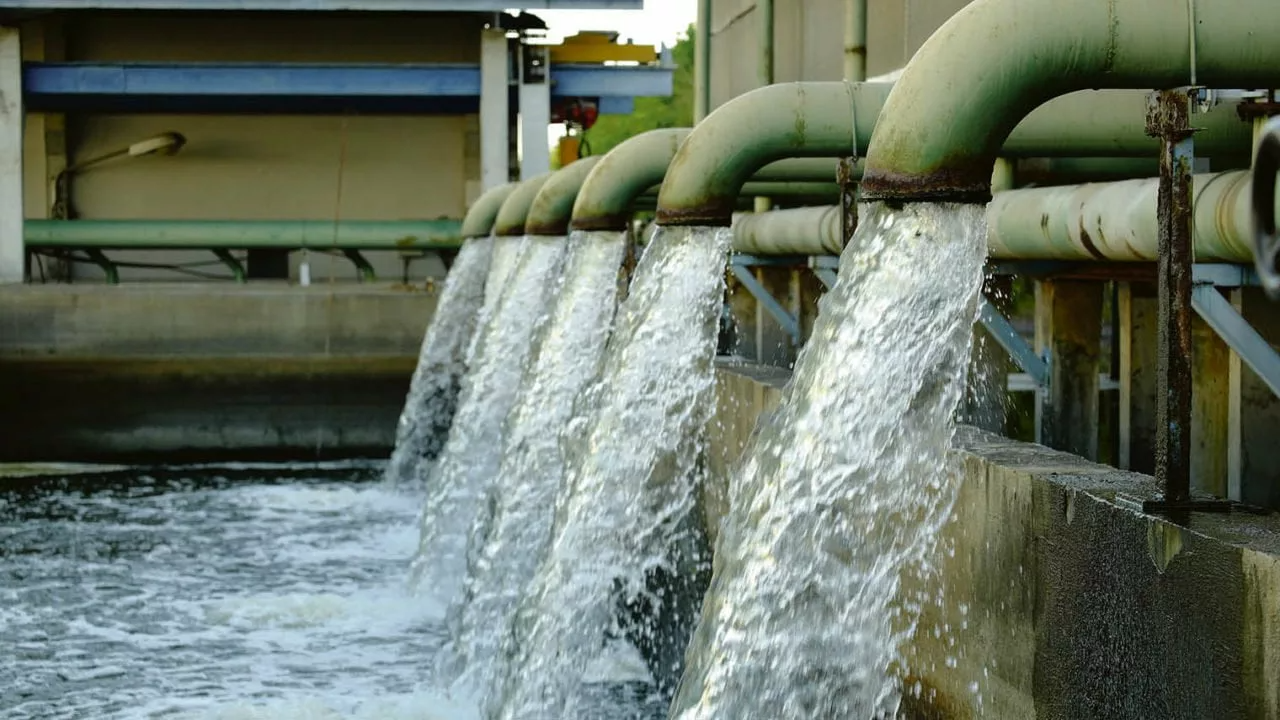
Yet, pipe-borne water (tap water) was introduced in Nigeria during the colonial era, starting in the early 20th century.
We recall the Iju Water Works in Lagos, commissioned in 1915, was one of the earliest systems, primarily serving European residential areas and key administrative centres before the introduction to other geopolitical zones across the country.
As a newspaper, there is an urgent need to strengthen access to safe water and sanitation across communities in Nigeria.
We also recognise that out of every three projects, one goes into dysfunction within the first year of post-construction.
The realities confronting water and sanitation projects in many communities across the country, include funding constraints, poor engineering and weak maintenance culture.
Even the WASH projects that are constructed by the Ministry of Water Resource have the record of one out of three projects being non-functional, no longer producing water, or have been vandalised within the first year.
The Library of Science 2022 publication highlightes a link between contaminated water and transmission of diseases such as cholera, diarrhoea, dysentery, hepatitis A, typhoid, and polio.
It noted that water contamination can occur through the means of a physical, chemical, biological, or radiological substance.
Sadly, in our opinion, Nigeria is the second-largest contributor to the global under-five mortality rate from diarrhoea, with more than 151,700 deaths annually.
Also, the absence of clean water, safely managed sanitation, and hygiene are responsible for almost 88 per cent of the country’s disease burden.
We acknowledge that water is essential for life, acting as the primary, irreplaceable, and most valuable resource on earth, as highlighted in this quote. “Thousands have lived without love, not one without water”.
For us, quotes like these highlight that water is the driving force of nature, necessary for health, and a precious resource.
A non for profit organisation, Water Aids, said access to clean water can create a ripple effect that will be felt for generations.
For us, in recognising women’s central role in this year’s commemoration of World Water Day, the global community takes a decisive step toward healthier families, stronger economies and a more just world.
We’ve got the edge. Get real-time reports, breaking scoops, and exclusive angles delivered straight to your phone. Don’t settle for stale news. Join LEADERSHIP NEWS on WhatsApp for 24/7 updates →
Join Our WhatsApp Channel