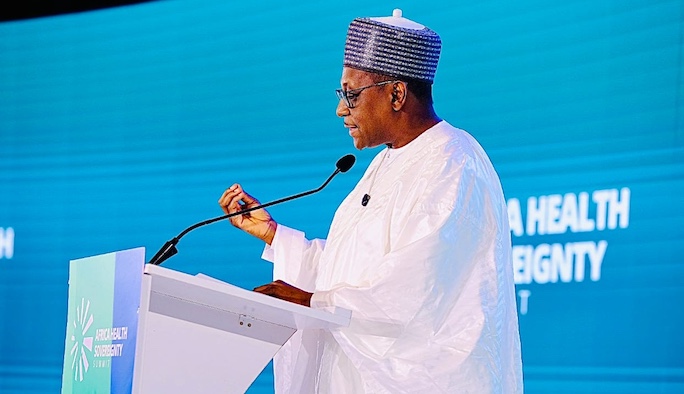
The theme of this year’s. World Health Day 2026 “Together for health. Stand with science,” is a call to action: to reassert science as the foundation of public health policy, to strengthen collaboration across sectors and communities, and to ensure that scientific advances translate into better health for everyone.
According to the World Health Organisation (WHO) the theme underscores the fact that collective health gains depend on evidence-based decisions, resilient health systems, and trust in scientific institutions.
For Nigeria, a nation facing complex health challenges across a very large and fast-growing population, standing with science is not optional; it is essential to meeting the needs of hundreds of millions of people and for achieving sustainable development goals.
As a newspaper, we recognise that the country is one of the world’s most populous countries and continues to expand rapidly.
Recent Worldometers estimates place Nigeria well over 200 million people, making the size of the population itself a central determinant of health needs, service demand, and policy complexity.
Research indicates that large populations increase absolute numbers of people who require routine care, maternal and child health services, chronic disease management, emergency care, and outbreak response, straining systems that already face resource, workforce, infrastructure, and equity constraints.
However, we recognise barriers to realising the promise of science in Nigeria, which include but not limited to, insufficient domestic funding for health research, public health laboratories, and sustained programme implementation. These barriers restrict the scale-up of evidence-based interventions.
Weak health infrastructure and workforce shortages; limited numbers of trained health professionals, uneven distribution (urban concentration vs rural scarcity), and under-resourced facilities hamper delivery of scientifically proven interventions.
There are so many ways, with policy and programmatic priorities, the country can actually stand with science through increasd domestic investment in health research and public health infrastructure.
For us, the need to translate research into policy via knowledge translation mechanisms has never been more urgent.
The nation needs to institutionalise processes that move evidence into guidelines and practice; rapid evidence synthesis units, policy laboratories , and stronger linkages between universities, ministries, and subnational implementers.
We can achieve this when governments allocate predictable public funds for national research institutions, public health laboratories, and genomic and diagnostic capacity to reduce reliance on external donors and enable rapid local responses.
This is a call to the three tiers of government and stakeholders to prioritise health research funding; integrate science into policy across ministries (health, finance, education, environment).
It behoves on Nigerian researchers and academic institutions to focus on locally relevant research questions and implementation science; engage communities as partners instead of academic research samples only.
Perhaps, our civil society organisations ( CSO) should also direct their focus on other issues aside politics by demanding transparency, participate in co-design of interventions, and act as bridges between science and local realities.
The private sector on the one hand, should invest in scalable health technologies and on the other support public–private partnerships that expand access without compromising equity.
There are so many key ways science benefits Nigeria’s health landscape, which include infectious disease control and surveillance.
Rapid diagnostics and data-driven interventions limit spread and save lives.
Evidence-based immunization campaigns have achieved high coverage in many states, lowering incidence of measles and other vaccine-preventable diseases where campaigns reach communities.
A 2025 new report by eHealth shows progress in Nigeria’s health sector especially in immunisation coverage.
Nigeria has one of the worst maternal, newborn and child health indices but
clinical research and implementation science inform best practices in antenatal care, skilled birth attendance, neonatal resuscitation, and nutrition interventions that reduce maternal and infant mortality.
Deployment of low-cost technologies (e.g., solar-powered cold chains, point-of-care diagnostics, mobile health platforms) helps reach remote and underserved communities.
This newspaper recognises that as Nigeria’s population grows and urbanises, Non Communicable Diseases (NCDs), (hypertension, diabetes, cancers) rise.
But a decisive shift toward prevention – focused health policies, stronger regulation of unhealthy products, and improved health financing could help to address the country’s growing disease burden.
Also, environmental science and public health research inform strategies to reduce air and water pollution, manage waste, and prepare for climate-sensitive health threats (vector-borne disease shifts, flooding-related outbreaks).
“Together for health. Stand with science.” is both a clarion call and a practical roadmap. For Nigeria, science offers tools to diagnose problems, design solutions, and evaluate progress — but these tools must be paired with political will, sustained investment, and community partnership.
With the right policies and commitments, scientific advances can be translated into measurable improvements in maternal and child survival, infectious disease control, chronic disease management, and overall health system resilience for Nigeria’s large and growing population.
For us, standing with science in Nigeria means strengthening institutions, closing gaps in access and equity, and ensuring that evidence guides decisions — so that health gains reach every community, now and for generations to come.
World Health Day, observed annually on April 7th since 1950, marks the anniversary of the founding of the World Health Organisation (WHO).
It acts as a global campaign to raise awareness about a specific, priority health issue affecting people worldwide, promoting health equity, and encouraging action toward universal health coverage.
We’ve got the edge. Get real-time reports, breaking scoops, and exclusive angles delivered straight to your phone. Don’t settle for stale news. Join LEADERSHIP NEWS on WhatsApp for 24/7 updates →
Join Our WhatsApp Channel