In much of Northern Nigeria, security has become a grim vocabulary of attacks, reprisals, displacement, military operations and grieving communities. For years, the dominant response to banditry and insurgent violence has been kinetic: deploying force, pursuing armed groups, dismantling camps, recovering weapons and counting the dead. This is necessary in moments when the state must protect lives and reassert authority. But it is not enough. Guns may defeat an attacker, but they rarely heal the conditions that produced him. They may silence a battlefield, but they do not automatically restore trust, livelihoods, dignity, or a sense of belonging.
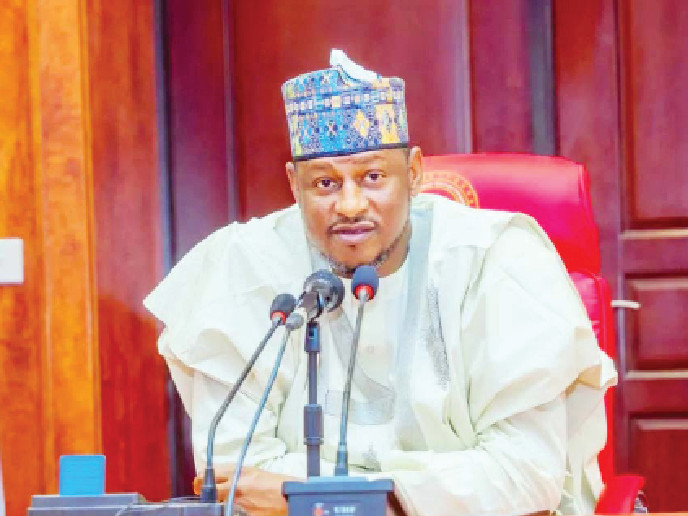
This context makes Katsina State’s launch of the State Disarmament, Demobilisation and Reintegration, Peace and Security Committee a pivotal move—a direct attempt to address security by healing the underlying fractures that fuel conflict. Governor Dikko Umaru Radda’s initiative signals a move away from simple retaliation and toward comprehensive reconstruction. By targeting the social, economic, and psychological roots of violence, Katsina is building bridges rather than relying only on bullets. This shift is the core of Katsina’s experiment.
Launched under the Office of the National Security Adviser at Muhammadu Buhari House in Katsina, the committee draws its legitimacy from a national framework developed by the National Counter Terrorism Centre in collaboration with the United Kingdom’s Strengthening Peace and Resilience in Nigeria Programme. After consultations across Nigeria’s six geopolitical zones, Katsina emerged as a pilot state, reflecting its reputation for community-based security and non-kinetic engagement under the Radda administration.
Governor Radda underscored the importance of the moment, explaining that the programme had been introduced across the zones to promote sustainable peace and development, and that Katsina was selected for its consistent investment in community engagement and non-violent approaches. The significance of that statement lies in its realism. Peace cannot be imposed by policy documents alone. It must be negotiated through local histories, local fears, local authority structures and local expectations. A security model that ignores the community may win operations but lose the people. Katsina appears to understand this.
The committee’s structure reflects that understanding. Chaired by the Secretary to the State Government, Barr. Abdullahi Garba Faskari brings together the Attorney General, commissioners responsible for internal security, agriculture, youth and sports, the Special Adviser on Community Security Watch, the Executive Secretary of SEMA, the police, emirate representatives, the Council of Ulama, and civil society organisations. The Governor’s Office, through MISHA, provides secretarial support. This is not an accidental gathering of names. It is a recognition that security is no longer the business of armed agencies alone. It is a whole-of-society responsibility.
That inclusive design may be the most important feature. In conflict-affected communities, people do not relate to authority only through government. They listen to emirs, clerics, elders, women’s groups, youth leaders, vigilantes, and civil society who understand the grassroots. A repentant fighter may distrust the police but listen to a religious leader. A traumatised village may doubt officials but respect a traditional ruler who shares their pain. Vulnerable youth may be redirected not by speeches, but by access to work, land, training, mentorship and purpose.
The committee’s mandate is both practical and delicate: advise on disarmament, demobilisation, reintegration, peacebuilding and security; profile repentant insurgents; support rehabilitation; facilitate reintegration; produce reports; and strengthen stakeholder coordination. Each task requires discipline. Reintegration is one of peacebuilding’s hardest assignments, sitting at the intersection of mercy, justice and memory. Victims want accountability. Communities fear deception. Security must separate genuine surrender from manipulation. Former fighters must confront trauma, guilt, suspicion and the long journey back.
Katsina’s model must be compassionate without being careless, and firm without being vengeful. A credible DDR process cannot appear to reward violence while neglecting victims. Communities that suffered attacks must also see restoration: farms reopened, homes rebuilt, schools protected, markets revived, widows supported, children returned to learning, and displaced families given a real path back. Peace cannot mean rehabilitating perpetrators while victims remain abandoned. Reintegration must be tied to restitution, healing and community confidence.
At its heart, the Katsina initiative asserts that insecurity demands solutions beyond military force. By linking reintegration with vocational training, agriculture, youth engagement, and community reconciliation, Katsina targets the entire ecosystem that generates violence. The main argument: security is not simply the absence of violence, but the presence of opportunity, trust, and justice.
Yet the path ahead will not be easy. Funding must be consistent. Screening must be rigorous. Reports must be honest. Community buy-in must be earned, not assumed. Political actors must resist the temptation to turn the process into theatre. The state must communicate clearly with citizens, especially those who have buried loved ones or fled their homes. They must understand that reintegration is not indulgence; it is prevention. It is not weakness; it is a strategy. It is not forgiveness without memory; it is security with foresight.
Barr. Faskari’s appreciation of the collaboration among the NCTC, UK-SPRING, and DDR experts points to another strength of the initiative: Katsina is learning while leading. It draws on national and international expertise while adapting the framework to local realities. That balance matters. The most enduring peace models are not copied; they are cultivated.
Governor Radda’s committee is more than a government panel. It tests whether a state can defend itself without losing its humanity; confront those persisting in violence while recovering those willing to return; and replace revenge with renewal. Victory over insecurity will not be won only in forests, hideouts and military operations. It will be won in communities where trust returns, livelihoods resume, schools become safe, and young people choose tools over weapons.
Katsina’s experiment is bold because it rejects the false choice between strength and compassion, showing both are required for lasting peace. In a nation weary of violence, Katsina offers a new security model: disarm the hand, rehabilitate the person, restore the community, and rebuild the future. If pursued with integrity and courage, this initiative could teach not just a state, but a nation, how to truly start again after conflict.
– Dr Jeff Ukachukwu is a public affairs analyst
We’ve got the edge. Get real-time reports, breaking scoops, and exclusive angles delivered straight to your phone. Don’t settle for stale news. Join LEADERSHIP NEWS on WhatsApp for 24/7 updates →
Join Our WhatsApp Channel