
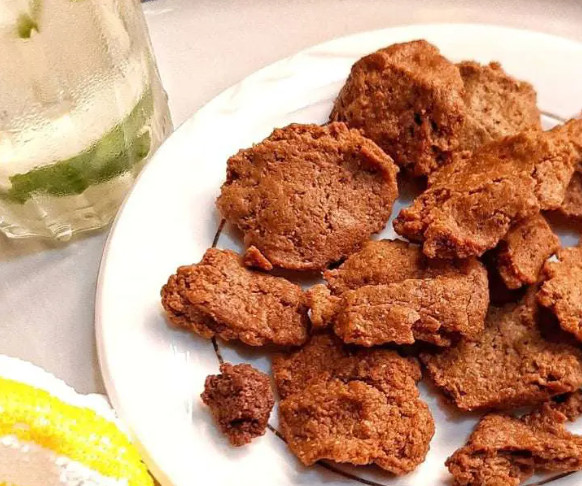
Nigeria’s traditional peanut snack, kuli-kuli, is emerging as more than just a popular local delicacy. With global demand for healthy, plant-based snacks on the rise, the humble treat is increasingly being viewed as a product with significant export and foreign exchange potential.
As more Nigerians embrace healthier lifestyles, consumer preferences are shifting away from highly processed snacks toward natural, protein-rich alternatives. Kuli-kuli, made from roasted groundnuts, has benefited from this trend because of its high protein and fibre content, making it attractive to both local consumers and international buyers.
The snack, once sold mainly in local markets and roadside stalls, is now attracting interest from health-conscious consumers and African diaspora communities in the United States, the United Kingdom, Canada and the Middle East. This growing demand presents Nigerian entrepreneurs with an opportunity to transform a traditional food into a globally recognised export product.
Production begins with quality groundnuts, mainly sourced from Northern Nigeria, where the crop is widely cultivated. The nuts are roasted, ground into a paste and pressed to extract oil. The remaining residue is seasoned with salt or spices, shaped into sticks, balls or discs, and fried until crisp.
The extracted groundnut oil also has commercial value, either being reused during production or sold separately, making kuli-kuli processing a low-waste business suitable for small-scale agro-processors.
Interestingly, only recently, Nigeria’s First Lady, Senator Oluremi Tinubu, advised struggling Nigerians to key into the kuli-kuli business.
However, breaking into international markets requires more than producing a quality snack. Export-ready kuli-kuli must meet stringent food safety, hygiene and packaging standards. Producers must ensure that the groundnuts are free from aflatoxin contamination through laboratory testing while complying with quality regulations.
Certification from the National Agency for Food and Drug Administration and Control (NAFDAC) and compliance with Standards Organisation of Nigeria (SON) requirements are essential. Products must also carry proper labels detailing nutritional information, expiry dates, batch numbers and barcodes.
Packaging is equally critical. Export products are expected to be sealed in moisture-resistant, tamper-proof containers such as vacuum pouches, aluminium foil packs or composite cans to preserve freshness throughout international shipping. Attractive branding further improves competitiveness in foreign retail markets.
Entrepreneurs seeking to enter the export market must first register their businesses with the Corporate Affairs Commission (CAC) before obtaining an exporter’s certificate from the Nigerian Export Promotion Council (NEPC).
Industry experts also encourage prospective exporters to participate in training programmes such as the Export Expansion Facility Programme (EEFP) and NEPC’s Export Clinic to gain practical knowledge on export documentation, packaging standards, logistics and destination market requirements.
Export opportunities continue to expand through wholesale distribution as well as digital marketplaces such as Etsy, eBay and Amazon, where African food products are attracting increasing patronage. Some Nigerian producers are also diversifying their offerings with healthier variants including low-fat kuli-kuli, kuli-kuli flour for smoothies and flavoured products blended with coconut or honey.
Despite the promising outlook, limited access to affordable financing remains one of the biggest obstacles facing small producers. Many struggle to fund improved machinery, modern packaging and certification processes required for international trade.
To bridge this gap, institutions such as the Bank of Industry (BOI) provide financing for agro-processing businesses, while the Central Bank of Nigeria’s Export Facilitation Initiative (EFI) supports exporters with foreign exchange for export operations. Joining cooperatives and export clusters also enables small businesses to share certification, packaging and shipping costs while meeting international quality standards.
With the global snack food market projected to exceed $600 billion by 2026 and demand for plant-based, protein-rich foods continuing to rise, Nigeria is well positioned to leverage its status as one of Africa’s leading groundnut producers.
Industry stakeholders believe that improving production standards, investing in modern packaging and embracing digital marketing could transform kuli-kuli into a major non-oil export, generating foreign exchange while creating jobs across the agricultural value chain.
What began as a simple rural snack now holds the potential to become one of Nigeria’s most successful agro-export products, demonstrating how indigenous foods can compete successfully in global markets.
We’ve got the edge. Get real-time reports, breaking scoops, and exclusive angles delivered straight to your phone. Don’t settle for stale news. Join LEADERSHIP NEWS on WhatsApp for 24/7 updates →
Join Our WhatsApp Channel