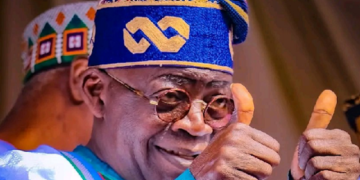
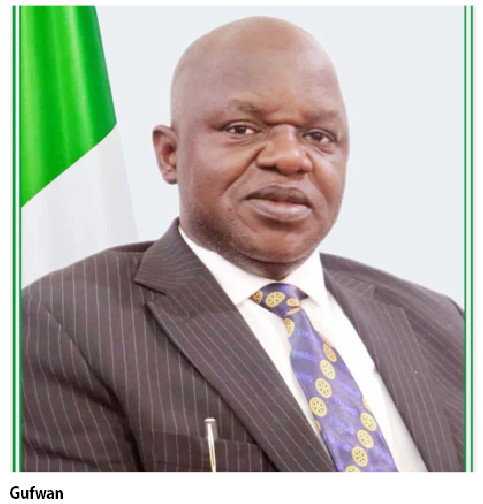
The executive Secretary of the National Commission for Persons with Disabilities (NCPWD), Hon. Ayuba Burki Gufwan, speaks with SILAS EZEUGWU about the drive to enforce the Disability Act, expand access to education and employment, tackle poverty among persons with disabilities (PWDs), and his vision for a more inclusive Nigeria.
What would you describe as the Commission’s three most significant achievements under your leadership?
When I assumed office in August 2025, the Commission had only one functional office. Although there had been efforts to establish zonal offices since the Commission was created, they had not materialised. My priority was to ensure that we established zonal offices in all six geopolitical zones because enforcement of the law and advocacy cannot succeed without reaching the grassroots. In fact, I refused to attend to any other official files until that was achieved.
The second priority was education. Accessible education remains one of the biggest challenges facing persons with disabilities. We engaged the Joint Admissions and Matriculation Board (JAMB) to make its processes more inclusive. As a result, we secured waivers for candidates with disabilities, particularly in English and Mathematics, and the outcome has been encouraging. We expect this to significantly increase the participation of persons with disabilities in tertiary education.
The third area was economic empowerment through agriculture. After strengthening rights protection and education, we identified agriculture as a strategic intervention. We partnered with organisations involved in agricultural reforms, including the Nigerian Agribusiness Group (NABG), and distributed fertilisers and farming equipment to persons with disabilities to improve their livelihoods.
The Discrimination Against Persons with Disabilities (Prohibition) Act, 2018, mandates accessibility in public and private spaces. What concrete steps is the Commission taking to enforce compliance?
The Commission is working closely with the Federal Ministry of Transportation to improve accessibility across the transport sector.
In aviation, we are collaborating with the Nigerian Civil Aviation Authority (NCAA) and the Federal Airports Authority of Nigeria (FAAN) to introduce accessible ambulifts that enable wheelchair users to board aircraft with dignity rather than being physically lifted. We are also advocating the use of onboard wheelchairs to improve mobility within aircraft.
On physical and digital accessibility, the Commission has developed the Persons with Disabilities Minimum Accessibility Standards Regulations. We have completed the implementation guidelines, which are awaiting gazetting.
Once the process is completed, we will begin issuing Certificates of Compliance to organisations that meet accessibility standards. These will cover physical access, digital accessibility and disability inclusion requirements. Within the next few months, Nigerians will begin to see concrete results from these efforts.
A reliable database is essential for planning and policy implementation. What is the current status of the Commission’s database?
Frankly, when I assumed office a year ago, I did not meet any reliable database on persons with disabilities. We held discussions with the National Population Commission (NPC), which acknowledged that disability data were not properly disaggregated during the last census exercise. The available survey data could not be fully authenticated.
Although Nigeria currently lacks comprehensive and validated disability data, the Commission has engaged consultants to commence nationwide data collection. Funding remains a major challenge because such an exercise is capital-intensive, but we are making steady progress within available resources.
Pending the completion of this exercise, we rely on the World Health Organisation’s estimate of about 35.5 million persons with disabilities in Nigeria for planning and programme implementation. However, the actual figure may be higher.
How effective has the Disability Act been in improving the lives of persons with disabilities?
Before the enactment of the Disability Act in 2018, there were policies and presidential directives supporting disability inclusion, but they lacked legal force.
Today, the law guarantees rights to employment, accessibility and freedom from discrimination. More importantly, it empowers persons with disabilities to seek legal redress whenever those rights are violated.
The impact is already visible. Public awareness has increased considerably, organisations now understand there are legal consequences for discrimination, and development partners are paying greater attention to disability issues.
The Federal Government has also demonstrated commitment by appointing persons with disabilities to public offices and strengthening disability inclusion across government programmes.
Poverty remains disproportionately high among persons with disabilities. What strategies is the Commission implementing to address this?
Poverty affects many Nigerians, but persons with disabilities remain among the most vulnerable. The Commission has proposed that at least 10 per cent of all government socio-economic empowerment programmes should be reserved for persons with disabilities. This should apply to constituency projects, empowerment initiatives and other intervention programmes.
Within available resources, we have organised vocational training programmes, supported skills acquisition, distributed Point-of-Sale (POS) machines and provided start-up capital to beneficiaries.
We have also partnered with organisations such as the Beautiful Gate Handicapped People Centre in Jos to distribute rugged manual tricycles to persons with disabilities in rural communities because mobility is essential for economic independence.
How is the Commission promoting employment and entrepreneurship, particularly regarding the statutory five per cent employment quota?
The Commission secured a service-wide circular from the Secretary to the Government of the Federation directing all Ministries, Departments and Agencies (MDAs) to comply with the 5% employment quota for persons with disabilities.
The Federal Character Commission, the Federal Civil Service Commission and the Office of the Head of the Civil Service of the Federation have all adopted this requirement.
Implementation is already underway. Several organisations have complied, while discussions continue with those yet to do so. Where organisations deliberately refuse to comply, we will expose such violations publicly and escalate them to the Presidency.
We have also organised zonal town hall meetings involving MDAs, labour unions and other stakeholders to sensitise them on the law. A national summit is also being planned to address compliance and strengthen enforcement.
Persons with disabilities possess the skills to contribute meaningfully in virtually every profession. Discrimination has no place in today’s society, and we are determined to eliminate it.
What is the Commission doing to improve inclusive education?
Inclusive education remains central to our vision of national development. Although the government has established Special Education Centres in several states, major challenges persist, including inadequate funding, inaccessible infrastructure and insufficient teacher training.
Many schools still lack ramps, braille facilities, assistive devices and sign language interpreters. Even where children with disabilities gain admission, they often struggle because teachers lack the necessary skills to support inclusive learning.
The Commission is working with the Universal Basic Education Commission (UBEC) and state governments to ensure new schools comply with accessibility standards.
We are also expanding scholarship opportunities for students with disabilities and advocating for the integration of braille literacy and sign language into teacher training programmes nationwide.
Education is the master key. Every Nigerian child, regardless of disability, deserves not only access to education but also the opportunity to thrive.
How is the Commission strengthening collaboration with stakeholders?
Disability inclusion requires collective action. We collaborate extensively with Ministries, Departments and Agencies because virtually every government service affects persons with disabilities.
We are working with sports authorities to make sporting activities inclusive, with the Ministry of Women Affairs to ensure women with disabilities benefit from women’s programmes, and with youth-focused agencies to expand opportunities for young persons with disabilities.
The Commission is equally partnering with humanitarian organisations, development partners, NGOs and private sector organisations, including telecommunications companies, to make their services more accessible.
What are the Commission’s short- and long-term priorities?
Within the next 12 to 18 months, our immediate priority is to fully enforce the provisions of the Disability Act relating to accessibility and anti-discrimination.
We expect to begin issuing Certificates of Compliance to organisations that meet accessibility standards and to initiate enforcement measures against violators, including prosecution where necessary.
Long-term, we intend to establish a comprehensive national database of persons with disabilities, develop an accessible transport system, strengthen the Commission’s internally generated revenue, and significantly reduce poverty among persons with disabilities through education, employment, vocational training, and entrepreneurship support.
Our target is to substantially improve the socio-economic well-being of persons with disabilities through the sustained implementation of these programmes.
What are your recommendations for the government, the private sector and Nigerians?
The government must recognise disability as a national development priority deserving greater funding. The National Commission for Persons with Disabilities requires adequate resources to provide the support that many persons with disabilities need, particularly in healthcare, rehabilitation and assistive services.
Government institutions must also fully comply with the Disability Act because eliminating discrimination benefits the entire society.
The private sector should embrace disability inclusion by ensuring its buildings, employment policies, scholarship schemes and empowerment programmes are accessible to persons with disabilities.
Finally, every Nigerian should treat persons with disabilities with empathy, dignity and respect. If each of us asks how we would wish to be treated if we had a disability and acts accordingly, Nigeria will become a more inclusive and compassionate society.
We’ve got the edge. Get real-time reports, breaking scoops, and exclusive angles delivered straight to your phone. Don’t settle for stale news. Join LEADERSHIP NEWS on WhatsApp for 24/7 updates →
Join Our WhatsApp Channel