After serving for 30 years or more in the armed forces, law enforcement, and intelligence agencies, some of Nigeria’s former security chiefs are no longer content to fall back into quiet lives in retirement.
It is a trend that began with civil servants who reached the very top and is now extending to retired service chiefs, who are increasingly showing a hunger for politics and power.
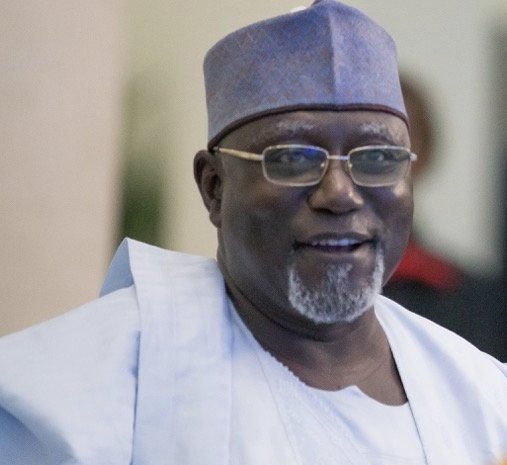
That is the statement that has just been made with the emergence of Lawal Daura, a former Director General of the State Security Service, as the presidential running mate of Governor Seyi Makinde of Oyo State on the platform of the APM.
Makinde and Bala Mohammed, the governor of Bauchi State, were supposed to be a tag team.
They took on the Nyesom Wike faction of the PDP together, challenged President Bola Tinubu together to unite the opposition, joined APM together, and yet are not running on the presidential ticket for 2027. That is a curious turn of events.
The choice of Daura came barely a day after Daura dumped the African Democratic Congress, where he contested and lost the party’s governorship ticket, but remained adamant about legally challenging the loss.
Apart from Daura, a former Inspector General of Police, Mohammed Adamu, also contested for the APC governorship ticket in Nasarawa and lost. And just like Daura, he has refused to concede defeat.
A similar scenario played out in Yobe, where former IGP Usman Alkali Baba sought to contest for the APC governorship ticket in the state. But unlike Daura and Adamu, Baba saw the handwriting on the wall and withdrew from the contest to retain his dignity and that of the office he once held and the institution he led.
He had initially opposed the choice of Baba Malam Wali, the Secretary to the State Government, as the consensus candidate of the APC, but later conceded after talks with Mai Mala Buni, the state governor, and Vice President Kashim Shettima.
Then there is Saddique Abubakar, a former Chief of Air Staff, who, as the APC governorship candidate in 2023, put up a spirited fight for the seat against Governor Bala Mohammed but narrowly lost.
Again, in 2026, he wanted the APC ticket. Without seeing the opening he wanted within the party, Abubakar decided to quit politics altogether.
But what does the increasing presence and participation of uniformed men mean for Nigeria’s democracy and politics? First, it is certain that they are no longer willing to leave governance strictly in the hands of politicians.
More tellingly, the uniformed men appear to have developed some level of trust in the electoral process and are willing to subject themselves to the will of voters.
Maybe they have seen too much from the inside about how elections are manipulated and how easily they are won and lost.
But it could also be an understanding that the only way to attain political power is through the ballot.
We’ve got the edge. Get real-time reports, breaking scoops, and exclusive angles delivered straight to your phone. Don’t settle for stale news. Join LEADERSHIP NEWS on WhatsApp for 24/7 updates →
Join Our WhatsApp Channel