…Seek stronger enforcement measures, incentives
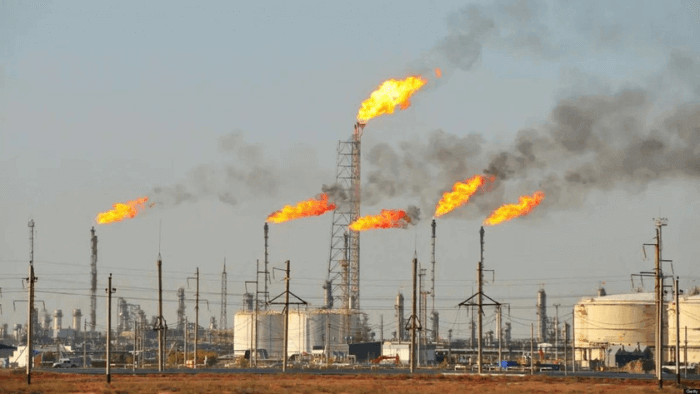
Industry operators, economists and environmental advocates have said the Nigerian Upstream Petroleum Regulatory Commission’s (NUPRC) threat to revoke the licences of investors who fail to develop awarded gas flare sites will not, on its own, end routine gas flaring in Nigeria, insisting that stronger enforcement must be matched by market incentives and infrastructure investment.
Their reaction followed NUPRC’s disclosure that it may revoke awards under the Nigerian Gas Flare Commercialisation Programme (NGFCP) where investors fail to show meaningful progress a year after receiving their licences.
The NUPRC chief executive, Oritsemeyiwa Eyesan, made the disclosure during a working visit to the minister of state for Petroleum Resources (Gas), Ekperikpe Ekpo, in Abuja, where she gave an update on the programme.
She said the Commission reviews each award one year after it is granted and takes action, including revocation, where investors fail to demonstrate progress. “Where there is insufficient progress, the Commission will take appropriate regulatory action, including revocation of the award where necessary,” she said.
Under the NGFCP, 43 flare gas sites were originally identified, of which 27 have so far been awarded, with implementation ongoing despite resistance in some areas.
Stakeholders who spoke to LEADERSHIP said the threat, while welcome, addresses only part of a problem that years of penalties and policy reforms have failed to solve.
Chairman of Integrated Oil and Gas Company, Capt. Emmanuel Iheanacho, called for drastic government measures to cut gas flaring, describing it as contrary to the country’s climate action commitments. He aligned his position with investigations by advocacy groups such as Amnesty International, which have found that routine flaring and major gas leaks continue despite long-standing government frameworks and zero-flare targets, due to weak enforcement and limited corporate accountability.
Principal Partner at Cettle Consulting Nigeria Limited, Charles Ebereonwu, said the underlying driver of flaring is economic rather than regulatory. He said oil and gas companies, being profit-driven, will continue flaring associated gas where there is no viable market to sell it. A functioning gas market, fair pricing, adequate infrastructure and a clear regulatory framework would make gas as commercially attractive as crude oil, prompting companies to end flaring as a business decision, he said.
Ebereonwu argued that government could still compel an end to flaring through firm enforcement. “If other nations are doing it, why can’t Nigeria, if not for a lack of political will, to enforce the extant laws? Some oil companies in Nigeria are already making significant efforts towards zero routine flaring. That means it is not an impossible task,” he said. He proposed a combination of an attractive local gas market and statutory mandates to eliminate routine flaring.
Chairman of the Board of Trustees, Community Development Committees of Niger Delta Oil and Gas Producing Areas, Joseph Ambakederimo, said the problem requires a broader intervention covering infrastructure deficits, market incentives, regulatory enforcement and local gas-to-power and off-grid monetisation. He said captured associated gas could be channelled into captive power generation, industrial hubs and compressed natural gas, while small-scale processing plants could convert gas from remote fields into products such as liquefied petroleum gas.
Ambakederimo described the NGFCP as having fallen short of its original objectives and supported the Commission’s threat to revoke licences from underperforming investors, though he cautioned that reallocating licences alone may not resolve a problem rooted in infrastructure and economics.
Former president of the Nigerian Economic Society, Prof. Adeola Adenikinju, said the economics of gas utilisation need more attention, suggesting that the proposed sanctions could be complemented, or replaced, with incentives that make investment in gas utilisation commercially viable. “The real question is: why are companies willing to pay penalties rather than invest in gas utilisation infrastructure?” he asked. He pointed out that marginal-field operators in particular face location and other constraints that complicate downstream gas investment.
Adenikinju proposed a dedicated fund that companies could draw on to finance gas-utilisation projects, alongside pooled, shared infrastructure for projects that are not individually commercially viable.
Executive Director of Health of Mother Earth Foundation, Dr Nnimmo Bassey, said government has not shown sufficient commitment to ending gas flaring, describing successive deadlines as “shifting goalposts.” He said the issue extends beyond greenhouse gas emissions to the health and environmental toll on Niger Delta communities, and questioned the continued burning of specific oil wells and the response to affected communities.
The reactions come as NUPRC data show the scale of money still being lost to flaring despite years of penalties. The Commission collected N521.87 billion in gas-flare penalties in 2025, against an annualised target of about N699.84 billion, a performance of 74.57 per cent and a shortfall of roughly N177.97 billion. Monthly collections were volatile, ranging from N839 million in January to a high of N69.08 billion in September.
Separately, the country lost close to $1 billion in gas value to flaring in 2025. Between January 2025 and June 2026, Nigeria produced about 4.132 trillion standard cubic feet of gas and utilised more than 3.823 trillion standard cubic feet, recording an average flaring rate of 7.3 per cent. The roughly 301.60 billion standard cubic feet flared over that period translates to an estimated market value of about $888.24 million at a prevailing gas price of $2.84 per million British thermal units.
The World Bank’s Global Gas Flaring Tracker Report placed Nigeria among the world’s nine largest gas-flaring countries in 2025, with flaring volumes rising by eight per cent alongside an eight per cent increase in oil production. The report attributed the rise partly to inadequate infrastructure for transporting associated gas to domestic and export markets, and to ageing gas-processing facilities prone to disruption.
NUPRC says Nigeria’s proven gas reserves have exceeded 215 trillion cubic feet, with an estimated total resource base of about 600 trillion cubic feet.
The minister of state for Petroleum Resources (Gas), Ekperikpe Ekpo, has urged regulators and operators to accelerate implementation of the commercialisation programme to meet Nigeria’s target of ending routine gas flaring by 2030.
We’ve got the edge. Get real-time reports, breaking scoops, and exclusive angles delivered straight to your phone. Don’t settle for stale news. Join LEADERSHIP NEWS on WhatsApp for 24/7 updates →
Join Our WhatsApp Channel