As the world marked World Suicide Prevention Day on September 10, Nigeria has reason to acknowledge an important development in its long-running effort to decriminalise attempted suicide.
The move represents a significant step in the country’s mental health reform journey and an opportunity to align its laws more closely with contemporary public health, mental health and human rights principles.
For decades, Nigerian law has treated attempted suicide primarily as a criminal matter rather than as a manifestation of a possible mental health crisis.
Section 327 of the Criminal Code and Section 231 of the Penal Code provide for criminal sanctions against attempted suicide.
Such provisions, experts argue, are not only outdated but potentially counterproductive to suicide prevention.
LEADERSHIP recalls that the National Mental Health Act, 2021, was signed into law by former President Muhammadu Buhari in January 2023, effectively repealing the colonial-era Lunacy Act of 1958.
The legislation represented a major shift towards a rights-based approach to mental healthcare in Nigeria.
However, while the Mental Health Act is progressive in many respects, it did not specifically abolish the criminal penalties for attempted suicide.
This has created an unfortunate contradiction: the country has embraced a modern framework for protecting the rights and dignity of people living with mental health conditions, yet retains laws that can punish a person who survives a suicide attempt.
We believe this contradiction must be resolved.
Suicide is fundamentally a public health and mental health challenge. A person who attempts to take his or her own life is often experiencing severe psychological distress, trauma, hopelessness, substance abuse, depression or another underlying condition.
Punishing such a person does little to address the factors that brought about the crisis. Instead, the threat of arrest, prosecution and imprisonment may deepen the person’s distress and discourage others from seeking help.
The theme for this year’s World Suicide Prevention Day is part of the triennial theme for 2024–2026: “Changing the Narrative on Suicide”, accompanied by a global call to action.
The objective is to move society away from silence, shame and misunderstanding towards openness, empathy, prevention and active support.
This shift is particularly important in Nigeria, where suicide remains a sensitive and often poorly understood subject.
The World Health Organisation (WHO) has set a target of reducing suicide mortality by one-third globally by 2030, making suicide prevention an important international public health priority.
Suicide reduction is also linked to the United Nations Sustainable Development Goals (SDGs)
Nigeria, therefore, cannot afford to treat the issue as peripheral to national health planning.
According to the WHO, suicide is a major public health problem, with the overwhelming majority of suicide deaths occurring in low- and middle-income countries.
Suicidal behaviour exists on a continuum that may include suicidal thoughts, planning, attempts and, ultimately, death.
This underscores the importance of early intervention before an individual reaches the point of making an attempt.
Available evidence suggests that Nigeria is facing a serious challenge. The country’s reported suicide rate increased from 6.9 per 100,000 population in 2019 to 8.8 per 100,000 in 2021.
A recent systemic review involving more than 100,000 Nigerians across different population groups found significant levels of suicidal ideation, planning and attempts. These figures should not merely generate concern; they should compel action.
A member of the National Taskforce on Decriminalisation of Attempted Suicide and Chief Consultant Psychiatrist, Dr Adegboyega Ogunwale, has argued that there may be as many as 20 suicide attempts for every completed suicide.
He also cited evidence showing that criminal sanctions have not necessarily resulted in lower suicide rates in countries where such laws remain in force.
This is an important point. If criminalisation does not prevent suicide, then its continued justification becomes increasingly difficult.
Indeed, the fear of prosecution could drive suicidal behaviour underground, making it more difficult for families, health workers and communities to intervene.
Nigeria must also confront the broader circumstances that increase vulnerability to suicide.
Mental health conditions, including mood and anxiety disorders, substance-use disorders, personality disorders and severe mental illnesses such as schizophrenia, can contribute to suicidal behaviour.
Genetics and environmental circumstances also play important roles.
Economic hardship is another major concern. Poverty, unemployment, food insecurity, homelessness, social exclusion and the inability to access healthcare can create an environment of persistent stress and hopelessness.
Rising living costs and declining purchasing power have further increased the psychological burden on many households.
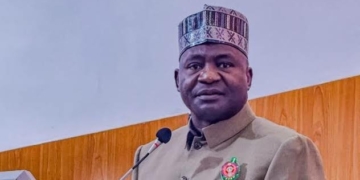
It is therefore encouraging that, at the 2026 World Suicide Prevention Day commemoration, the Minister of State for Health and Social Welfare, Dr Iziaq Salako, acknowledged that removing the fear of criminal sanctions could reduce stigma, encourage help-seeking and create greater opportunities for timely intervention.
He also reaffirmed the ministry’s plans to integrate mental health services into primary healthcare and strengthen community-based interventions.
However, these commitments must be matched by resources.
The Nigerian Medical Association has rightly raised concerns about the poor state of many rural primary healthcare centres, where basic amenities such as electricity, clean water, diagnostic equipment and essential medicines remain inadequate.
The shortage of mental health professionals is equally troubling and continues to limit access to psychiatric and psychological care.
Decriminalisation, therefore, should not be viewed as an end in itself. It must form part of a comprehensive national suicide-prevention strategy.
Nigeria needs adequately funded mental health services, more psychiatrists, psychologists and psychiatric nurses, functional emergency response systems, crisis intervention services, public education and stronger community support.
Most importantly, people in suicidal distress need help, not punishment.
The Federal Government should urgently complete the process of removing criminal penalties for attempted suicide and ensure that the reform is supported by accessible, affordable and confidential mental healthcare.
States must also strengthen mental health services at the grassroots, while schools, workplaces, religious organisations, the media and civil society should help create environments where people can speak about emotional distress without fear of judgement.
Nigeria cannot legislate away despair. But it can choose whether to respond to despair with punishment or compassion.
A suicide attempt should be recognised for what it often is: a desperate cry for help. The appropriate response is not a cell, a courtroom or a criminal record, but immediate care, psychological support and a pathway back to hope.
If Nigeria is serious about preventing suicide, it must move decisively from criminalisation to care and from silence to support.
Decriminalising attempted suicide would not solve the country’s suicide crisis, but it would remove one significant barrier to seeking help—and could ultimately save lives.
We’ve got the edge. Get real-time reports, breaking scoops, and exclusive angles delivered straight to your phone. Don’t settle for stale news. Join LEADERSHIP NEWS on WhatsApp for 24/7 updates →
Join Our WhatsApp Channel