
Sixty years after independence, Nigeria’s healthcare system presents a troubling paradox. PATIENCE IVIE IHEJIRIKA writes.
When Nigeria gained independence in 1960, it inherited a healthcare system already evolving from missionary and colonial medical services into a more structured network of government hospitals, health centres and training institutions.
Over the next 66 years, successive governments introduced national health policies, established and expanded teaching and specialist hospitals, trained generations of doctors, nurses and other health professionals, and launched a series of reforms to improve access to quality healthcare.
Yet, over six decades later, Nigerians still have to leave the country to obtain medical treatment that, in many cases, could be provided at home.
It is more troubling when Nigerian patients travelling abroad include the country’s political and business elite, many of whom have direct influence over the policies, budgets and institutions responsible for healthcare delivery.
The reliance on foreign hospitals was recently underscored by the case of former Head of State, General Abdulsalami Abubakar, who underwent knee surgery at Krishna Shalby Hospital in Ahmedabad, India. The hospital subsequently featured his treatment and recovery in promotional material, bringing renewed attention to Nigeria’s continued dependence on overseas medical care.
LEADERSHIP Sunday reports that former President Muhammadu Buhari, who served as president from 2015 to 2023, was known for his prolonged medical trips to the United Kingdom, particularly in the early years of his administration, when he spent extended periods abroad receiving treatment for an undisclosed illness.
In 2016, Buhari travelled to London for treatment of an ear infection, despite Nigeria having more than 250 ear, nose and throat (ENT) specialists and a National Ear Centre.
The trip was particularly notable because it came just two months after Buhari, through the then Minister of Health, Prof. Isaac Adewole, had assured the Nigerian Medical Association that his administration would discourage government officials from seeking medical treatment overseas.
“While this administration will not deny anyone their fundamental rights, we will certainly not encourage the expenditure of Nigeria’s hard-earned resources on any official seeking care overseas when such care can be provided locally,” he had said.
Despite such promises, Buhari continued to patronise foreign hospitals throughout his presidency, a practice that many Nigerians, including healthcare professionals, described as a lack of confidence in the healthcare services overseen by those professionals.
President Bola Tinubu has also continued the trend, as he usually travels abroad to see his doctors whenever necessary.
Nigeria adopted its first National Health Policy in 1988, revised it in 2004 and again in 2016, and enacted the National Health Act in 2014.
However, policy expansion did not always translate into sustained improvements in healthcare delivery. A 2025 Nigeria Health Systems and Services Profile by the African Health Observatory Platform, supported by the World Health Organisation, reported that about 80 per cent of Nigeria’s public health infrastructure was dysfunctional.
The assessment also identified inadequate funding, weak maintenance planning and shortages of appropriately trained personnel among factors undermining health infrastructure and equipment.
It linked these challenges to about $1 billion in annual losses associated with outbound health tourism.
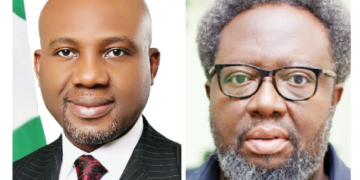
Decrying the deterioration of the country’s healthcare system over the years, the Chairman of the Management Committee of the Association for the Advancement of Family Planning, Dr Ejike Orji, said the explanation lies in the gradual erosion of a system that was once strong enough to attract patients from other countries.
Orji, who is also the Chairman of the Technical Working Group on Health Promotion in the country, said Nigeria “hasn’t done well” with its healthcare system, attributing the decline largely to inadequate funding, poor strategic use of resources and the loss of highly skilled medical professionals.
He recalled that Nigeria once had a health system capable of attracting foreign patients, including members of the Saudi royal family.
How Japa Affected Healthcare System
According to him, the country’s medical education system was also highly regarded in the 1970s, enabling Nigerian medical graduates to enter the United Kingdom’s National Health Service without having to take additional qualifying examinations.
“We haven’t done well as a country at all. The deterioration began when the military government woke up one day and dismissed professors of medicine from the university teaching hospitals,” he said.
Orji said the affected professors were not only responsible for treating patients but also for training generations of doctors, arguing that their departure had a damaging effect on medical education and the wider healthcare system.
He said many of the academics subsequently left Nigeria for countries including Zambia, Saudi Arabia, the United Kingdom and the United States.
The consequence, he said, went beyond the loss of individual specialists. It weakened the institutions responsible for training the next generation of medical professionals.
Orji also recalled a period when Nigerian resident doctors were allowed to spend a year abroad to gain additional experience before returning home to practise.
According to him, most returned because they had sufficient confidence in the Nigerian health system and in the professional opportunities available at home. That confidence, he suggested, has been eroded.
Deficient Budgets
Orji identified funding as one of the biggest challenges facing the country’s health system.
“The most important problem facing our healthcare system is funding,” he said, while stressing that increased funding must also be deployed strategically.
Nigeria has never met the 15 per cent health budget target agreed by African leaders under the Abuja Declaration.
The WHO-supported AHOP assessment likewise identified inadequate health financing as a major challenge, with more than 75 per cent of health expenditure paid directly by households.
For patients requiring complex treatment, the financial burden can be enormous. Orji, therefore, welcomed the National Assembly’s efforts to increase the Basic Health Care Provision Fund allocation from one to two per cent of the Consolidated Revenue Fund, as well as to mobilise additional resources through taxation of sugar-sweetened beverages.
He said that greater investment in health promotion, disease prevention and financial protection could reduce illness and deaths.
Orji also challenged the tendency to place the entire responsibility for Nigeria’s healthcare crisis on the Federal Government. He said that states and local governments must increase their investment, particularly in primary and secondary healthcare.
He urged states to take advantage of matching-fund opportunities from development partners, citing family planning as one area where domestic contributions can unlock additional external resources.
The point, he said, is that government must not only release funds for health but also deploy them according to the country’s most urgent needs.
He recalled an instance in which a public health institution reportedly used funds intended for repairing radiology equipment to purchase an SUV after receiving only part of its budgetary allocation.
Although the vehicle purchase was reportedly within the approved budget, he questioned the decision to prioritise a vehicle over equipment needed for patient care. “It is about the strategic use of our resources,” he said.
The example illustrates one of the central problems facing Nigeria’s health system: increasing funding alone may not be sufficient if institutions do not allocate available resources in line with health priorities.
Orji also pointed to maternal mortality as an important indicator of the health system’s performance. He recalled his involvement in the Midwives Service Scheme, which he said helped reduce maternal mortality at the time.
However, he said the gains were later lost due to funding challenges and the programme’s collapse.
Nigeria’s continuing maternal mortality burden, he said, shows that the country has not yet achieved sustainable improvements.
He acknowledged current government interventions, including the Renewed Hope Initiative and the Maternal and Newborn Mortality Reduction Innovation Initiative (MAMII), which targets areas with high rates of maternal and newborn mortality.
However, he said the effectiveness of such programmes must ultimately be established by nationally representative evidence.
Orji cautioned against blaming current political office-holders for decades of accumulated problems, noting that Nigeria’s healthcare crisis developed over time and could not be reversed overnight.
Politicians Have Enough Cash To Travel
Also, another medical doctor, Emeka Innocent Orji, questioned the confidence of political leaders in Nigeria’s healthcare system, noting that those with the financial means frequently travelled abroad to access medical care.
He stated that the continued reliance on foreign healthcare by political leaders was at odds with claims that the country’s health system was improving.
“Politicians who have the means will always jet out whenever they have a headache, whenever they have a need to access quality healthcare services,” he said.
Orji maintained that the situation reflected a lack of sustained political commitment to improving the health system at the federal, state and local government levels.
He acknowledged that some states had recorded improvements compared with their previous performance, but said such progress should not be mistaken for the achievement of a functional health system.
Using Abia State as an example, he said there had been some improvement compared with the past, but stressed that the state was still far from where it needed to be.
He also cited developments in Enugu State, including plans to commission an international hospital, but questioned whether the necessary manpower and maintenance systems were being put in place alongside the infrastructure.
“What about the workforce? What about the maintenance?” he asked.
According to Orji, building healthcare infrastructure without simultaneously investing in human resources, equipment maintenance and sustainable financing would not achieve the desired improvement in health outcomes.
He therefore criticised what he described as the “ad-hoc and disorderly manner” in which politicians approached healthcare development, warning that constructing projects without addressing the broader systemic challenges would continue to leave Nigerians bearing the consequences.
“This ad hoc and disorderly manner in which our politicians think they can approach the health sector is not going to lead to the improvement everyone is yearning for, and the Nigerian populace is the one suffering from it,” he said.
He said the available evidence does not support claims that Nigeria’s health sector has significantly improved in recent years.
Orji said the assessment of the country’s health sector should be based on measurable outcomes rather than politicians’ claims, arguing that indicators such as health workers’ migration, maternal and infant mortality, access to healthcare, quality of services, and health financing showed that the country was still struggling.
Speaking on the state of the health sector, Orji said, “When you want to assess how well or not the health sector has done, it shouldn’t just be based on what the politicians are saying. It should be based on facts.”
According to him, the continued mass exodus of healthcare professionals, particularly doctors, in search of better working conditions abroad was one of the signs that the country had not made sufficient progress in strengthening its health system.
“The numbers are not in support of the notion that we are doing better than in the past. For instance, the issue of brain drain, that is, the mass exodus of healthcare professionals, especially doctors, from this country to the outside world in search of greener pastures and a more conducive environment, is still leaving in droves,” he said.
Orji also expressed concern over Nigeria’s maternal and infant mortality indicators, saying there was no compelling evidence that the country had achieved substantial improvement in these areas.
“When you talk about infant and maternal mortality, there’s no evidence to show that we are doing better,” he said.
He also faulted the level of access to healthcare and the quality of services available to Nigerians, arguing that improvements in these areas had not kept pace with the scale of the challenges confronting the country.
The doctor said health financing remained another major weakness, noting that funding allocated to the sector, for both capital projects and personnel, was inadequate.
He said Nigeria had also failed to meet the World Health Organisation benchmark of allocating 15 per cent of its annual budget to health, adding that the sector’s allocation remained below five per cent.
Orji recalled that the Minister of Health and Social Welfare, Professor Ali Pate, had previously raised concerns about the release of capital funds for the health sector, alleging that only N36 million of the health sector’s capital allocation had been released at the time.
He said inadequate funding, coupled with poor implementation, had continued to undermine efforts to strengthen healthcare infrastructure, improve services and retain skilled professionals.
For Nigeria to reverse the trend of medical tourism, it will need more than another policy document. It will require sustained financing, functioning infrastructure, equipment maintenance, adequate staffing, stronger health insurance coverage, accountability and strategic deployment of resources.
We’ve got the edge. Get real-time reports, breaking scoops, and exclusive angles delivered straight to your phone. Don’t settle for stale news. Join LEADERSHIP NEWS on WhatsApp for 24/7 updates →
Join Our WhatsApp Channel