By Bello Ahmadu Alkammawa
A Prince Who Hid His Identity, A Sultan Who United A Nation
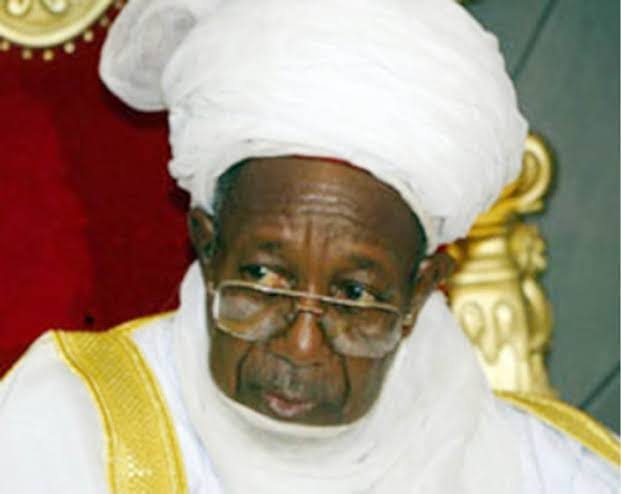
October 29, 2026, marks 20 years since Nigeria lost one of its most humble, humane and unifying monarchs His Eminence, Alhaji Muhammadu Maccido the 19th Sultan of Sokoto.
Born on 1926 in Dange, on the outskirts of Sokoto, to Sultan Siddiq Abubakar III (who reigned for 50 years) and his senior wife Hauwa’u, young Muhammadu’s birth was a miracle many children before him had died at birth.
Humility defined him from childhood. While at Nagarta College, Sokoto, he concealed his royal identity. When asked his name during enrollment, he simply said “Muhammadu Maccido.” No one knew he was a prince until his father, the Sultan, visited the school.
He was later educated at Barewa College, Zaria, and in 1952-1953 at South Devon College in Great Britain.
A Life of Public Service
Long before the throne, Maccido served Nigeria meritoriously. In 1951, he became a member of the House of Assembly in Kaduna, representing the Sokoto Native Authority. Despite his youth, his wisdom and palace background earned him respect among first-generation Nigerian leaders.
He served as Councilor of Works (1956), Councilor for Rural Development (1959) and Councilor for Agriculture (1960). He was dispatched to Zamfara and other flashpoints to douse political tensions ahead of the 1959 elections.
During the 1966 crisis that followed the assassination of Sir Ahmadu Bello, when an angry mob marched to destroy the Catholic Church in Sokoto, Maccido and Marafa son-in-law to Ahmadu Bello stood before the crowd and convinced them to disperse, saving the Church and preventing bloodshed.
He later served as Commissioner for Agriculture and Health in the North-Western State Executive Council. During the Second Republic (1979-1983), he was the Presidential Liaison Officer between the Sokoto State government and President Shehu Shagari. He was also Chairman of the National Party of Nigeria (NPN) in Sokoto, with the traditional title of Sarkin Kudu, and played a key role in bringing Alhaji Shehu Kangiwa to power as Governor of old Sokoto State.
In 1986, he left national politics to nurse his ailing father. When Sultan Siddiq Abubakar III passed on 1 November 1988, Maccido was part of the Inner Council that administered the Emirate.
Following the deposition of Sultan Ibrahim Dasuki in 1996 by General Sani Abacha, Muhammadu Maccido was named Sultan. He was turbaned on 20th April 1996 at the Sultan Bello Mosque. He would reign for a decade.
His Reign: Peace, Unity and Progress
As Sultan, he became the spiritual leader of Nigeria’s Muslims, President-General of the Nigerian Supreme Council for Islamic Affairs (NSCIA), and Head of the Sultanate Council. His deputy was the Shehu of Borno a structure that remains till date.
His ten-year reign is remembered for five enduring legacies:
1.Peace and Religious Tolerance: He was Nigeria’s foremost bridge-builder. He successfully mediated the farmers-Fulani crisis, Tiv-Jukun crisis in Taraba, doused Christian-Muslim tensions across the North, and worked with Primate of the Methodist church, His Eminence Dr. Sunday Mbang, and others to establish the Nigeria Inter-Religious Council(NIREC) and birth inter-faith dialogue in Nigeria.
2.Healthcare Leadership: In the early 2000s, when Northern Nigeria boycotted the polio vaccine over unfounded rumours, Sultan Maccido deployed his spiritual authority to dispel myths and mobilize Emirs for vaccination. Indeed His Eminence presented his family to be vaccinated first to remove the suspicion & fear of the Muslim community. His intervention saved millions of children.
3.Education: He championed the fusion of Islamic and Western education, supported Muslim women’s education, founded the Sultan Maccido College for Qur’anic and General Studies in Sokoto, and raised funds from Saudi Arabia and beyond for Islamic education. He also supported research into the Sokoto Caliphate’s history.
4.Agriculture and Economy: Drawing from his experience as Commissioner for Agriculture, he promoted agricultural cooperatives across the North for large-scale farming, accountability and food security.
5.Cultural Preservation: In 2004, he organized the historic Bicentennial of the Sokoto Caliphate 200 years after Usman Dan Fodio’s Jihad. He gathered descendants of Dan Fodio and his flag-bearers from across West Africa to rekindle the Caliphate’s ideals of justice, scholarship and tolerance. Christians were invited and celebrated the Caliphate’s teaching on respect and freedom of religion.
He was simple in his dealings, kind to a fault, generous beyond description. He respected young and old alike. No matter what tribulation he faced, his faith in Allah never wavered.
The Final Flight
After celebrating Eid-el-Fitr in 2006, Sultan Maccido travelled to Abuja to meet President Olusegun Obasanjo and attend an Educational Summit. On Sunday, 29 October 2006, he boarded ADC Airlines Flight 53 back to Sokoto. On board with him were his son, Senator Badamasi Maccido, his grandson, and other officials returning from an the workshop. In effect, His Eminence died in the middle of a National Service.
The aircraft crashed moments after takeoff in Abuja. Everyone on board, including the Sultan, his son and grandson, died. His body was not burnt, making identification easy. Tens of thousands lined the streets of Sokoto as he was taken to his final resting place in Hubbaren Shehu, beside his father.
Twenty years after, his legacy of humility, peace, and service remains a guiding light.
May Allah forgive his shortcomings and grant him Aljannatul Firdaus. Amin.
Bello Ahmadu Alkammawa is a Concerned Citizen and Public Affairs Analyst. He writes from Kaduna, Nigeria.
We’ve got the edge. Get real-time reports, breaking scoops, and exclusive angles delivered straight to your phone. Don’t settle for stale news. Join LEADERSHIP NEWS on WhatsApp for 24/7 updates →
Join Our WhatsApp Channel