
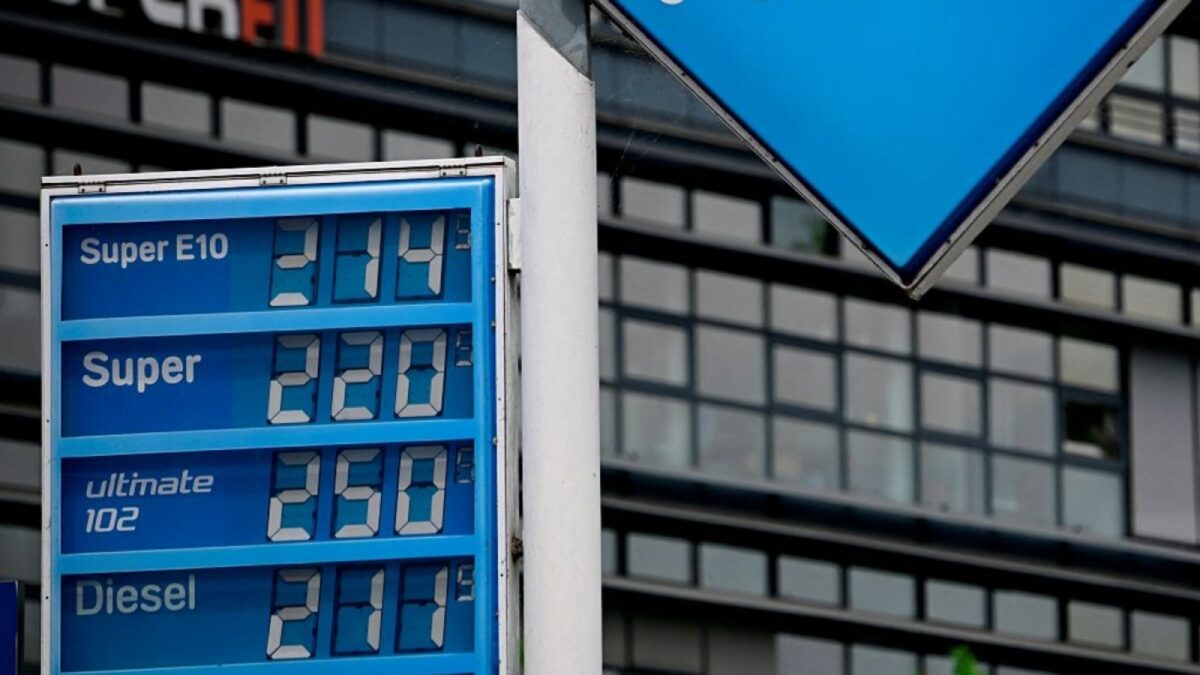
German motorists on Thursday began benefiting from lower fuel prices following the introduction of a government subsidy designed to cushion the impact of soaring energy costs linked to the ongoing Middle East conflict.
According to the German automobile association ADAC, petrol prices fell by an average of 14 cents per litre to €2.06, equivalent to about $8.85 per US gallon.
Diesel prices also declined by approximately 15 cents, bringing the average cost to €2.20 per litre.
Germany, Europe’s largest economy, has witnessed a sharp increase in fuel costs amid disruptions to energy supplies from the Middle East as the US war against Iran continues.
However, some motorists said the reduction had provided only limited relief.
“It’s just a drop in the ocean,” Andrea Hoecker, a 33-year-old public relations worker, told AFP at a petrol station in Frankfurt.
“It helps in the short term, but in the long run I don’t think you can solve the problem with it,” she added.
Another motorist, Lorena Konle, a teacher, described the prevailing fuel prices as “unsatisfactory”, despite the reduction.
“I have to be completely honest: with the prices we have, it doesn’t really make a difference,” she said.
The effectiveness of the subsidy has also come under scrutiny, with motoring organisations expressing concerns that the full benefit may not be transferred to consumers.
The government’s subsidy is officially valued at 17 cents per litre. However, the actual reduction motorists receive at filling stations can vary depending on factors including international crude oil prices and currency exchange rates.
Concerns over the implementation of fuel subsidies are not new in Germany.
During an earlier subsidy scheme introduced in May and June, energy companies reportedly retained about €200 million out of the €1.6 billion provided by the government, according to the Monopolies Commission, Germany’s competition watchdog.
The Auto Club Europa has therefore called for motorists to receive the full benefit of the latest intervention.
“This new fuel discount must now finally reach consumers in full,” a spokeswoman for the association told AFP.
She added that part of the subsidy must not once again “get stuck with the oil industry”.
Economists have also questioned whether the measure is sufficiently targeted at households most affected by rising living costs.
Clemens Fuest, president of the Ifo Institute, argued that the policy could disproportionately benefit motorists who drive frequently and own larger vehicles.
“The fuel discount leads to redistribution in favour of frequent drivers with large cars,” Fuest told the Augsburger Allgemeine daily.
Germany is not alone in introducing measures to ease the pressure of rising fuel prices.
Several other European Union countries have adopted different interventions, including reductions in fuel taxes and direct financial assistance to citizens, as governments seek to limit the effect of higher energy costs on households and businesses.
AFP
We’ve got the edge. Get real-time reports, breaking scoops, and exclusive angles delivered straight to your phone. Don’t settle for stale news. Join LEADERSHIP NEWS on WhatsApp for 24/7 updates →
Join Our WhatsApp Channel