Nigeria is often touted as the “Giant of Africa,” the continent’s largest economy, and the most populous nation. However, despite its economic and demographic heft, Nigeria remains plagued by chronic deficiencies in infrastructure and public services.
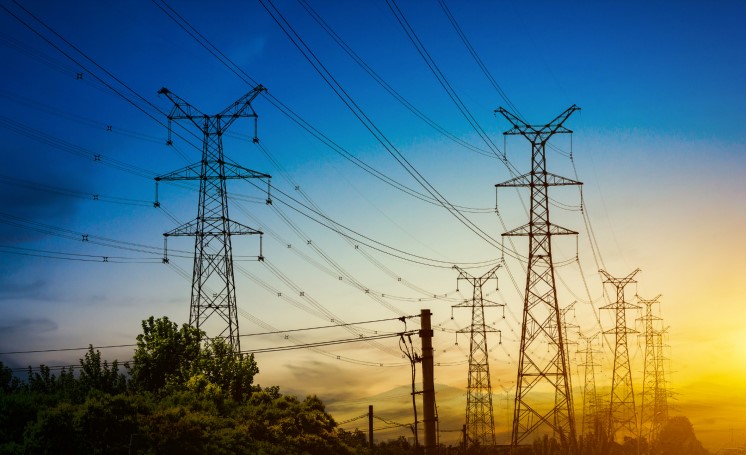
Nowhere is this more glaring than in the power sector, where over 200 million Nigerians continue to grapple with epileptic electricity supply despite the country’s vast energy resources.
According to reports, over 90 million Nigerians lack access to electricity.
Regrettably, incessant national grid collapses are a recurring decimal. In 2022 alone, the national grid collapsed eight times, reflecting a longstanding issue that successive administrations have been unable to resolve.
It is pertinent to note that the national grid collapsed 98 times under the administration of former President Muhammadu Buhari, despite the over N1.51tn intervention in the sector by the Federal Government since the administration came on board in 2015.
According to statistics, Nigeria currently generates only about 5,000 megawatts (MW) of electricity for its bulging population.
This is a paltry amount compared to smaller African nations like Ghana (5,300MW), South Africa (56,000MW), and even Egypt (32,000MW) with less than half of Nigeria’s population.
The implications are dire. Apart from perpetual darkness in homes and businesses, Nigeria loses an estimated $29 billion annually due to power shortages as enterprises and households expend huge sums on diesel/petrol generators and other stop-gap measures.
The economic costs manifest in lost productivity, investment, and jobs. Successive Nigerian governments have been unable to decisively tackle the power conundrum despite reform efforts.
Currently, electricity supply is now largely privatized and undertaken by 11 distribution companies (DisCos) who interface with the public and are expected to improve efficiency.
However, progress remains slow, and the DisCos have come under criticism for poor service, arbitrary billing, and apathy towards consumers.
The tariff review approved by the Nigerian Electricity Regulatory Commission (NERC) aims to balance the interests of the DisCos and Nigerian electricity consumers. NERC increased the DisCos’ cost-reflective tariffs based on updated inflation and forex rates.
However, to alleviate public suffering due to the cost of living crisis, the federal government will subsidize the new tariffs to the tune of N1.6 trillion in 2024 so that consumers can pay the old rates.
While government subsidies allow temporary relief, they are not sustainable in the long run. Funds spent on subsidies could have been better invested in actual improvements and expansion of electricity infrastructure.
Nigeria urgently requires over $100 billion in investments to upgrade its dilapidated power infrastructure and boost generation to meet industrial and household needs.
We recall that the Minister of Power, Adebayo Adelabu, had set an ambitious goal of increasing the national grid’s capacity to 20,000 MW in the next three years.
This is a laudable objective, given that the sector’s greatest challenges are reliability and ensuring universal access to power, especially for underserved communities.
However, achieving this goal will require a comprehensive and sustained effort, as well as addressing the root causes of the power crisis.
One cannot discuss Nigeria’s power problems without mentioning the Siemens deal, a project that held promise for improving the country’s power infrastructure. The Siemens deal, which aimed to upgrade and modernize the power sector, was seen as a potential game-changer.
However, questions linger about the status and progress of this initiative. Nigerians are rightfully asking what happened to this much-anticipated solution.
It is gratifying to note that President Bola Tinubu, in his New Year broadcast to Nigerians, said he is committed to a new deal to speed up the delivery of the Siemens Energy power project that will ultimately deliver a reliable supply of electricity to Nigerian homes.
Furthermore, there is also a need to optimize the electricity value chain, institute proper metering and billing, and improve the DisCos’ efficiency.
Currently, there are inadequate checks and balances on the DisCos as NERC appears unable to enforce standards. The DisCos’ performance and service delivery should be tightly monitored based on set targets, with penalties for failure to meet expectations.
The current structure gives the poorly-managed DisCos an unfair advantage to reap profits without commensurate investments.
The government can explore renegotiating the DisCos’ contracts to include more incentives for performance.
If they consistently fall short, then their operational licenses should be revoked and granted to more competent private sector players. Independent power producers who bypass the DisCos should also be encouraged to generate and distribute directly to consumers.
Ultimately, Nigeria requires political commitment at the highest levels to increase investments in generation, transmission, and distribution.
Tough reforms will be indispensable to reposition the power sector for efficiency, transparency, and service delivery.
The chronic mismanagement and deficiencies of Nigeria’s power infrastructure should no longer be tolerated or papered over with subsidies.
Nigerians deserve uninterrupted electricity supply to power homes and businesses for socioeconomic development. The time for excuses, half-measures, and cronyism is over.
We’ve got the edge. Get real-time reports, breaking scoops, and exclusive angles delivered straight to your phone. Don’t settle for stale news. Join LEADERSHIP NEWS on WhatsApp for 24/7 updates →
Join Our WhatsApp Channel