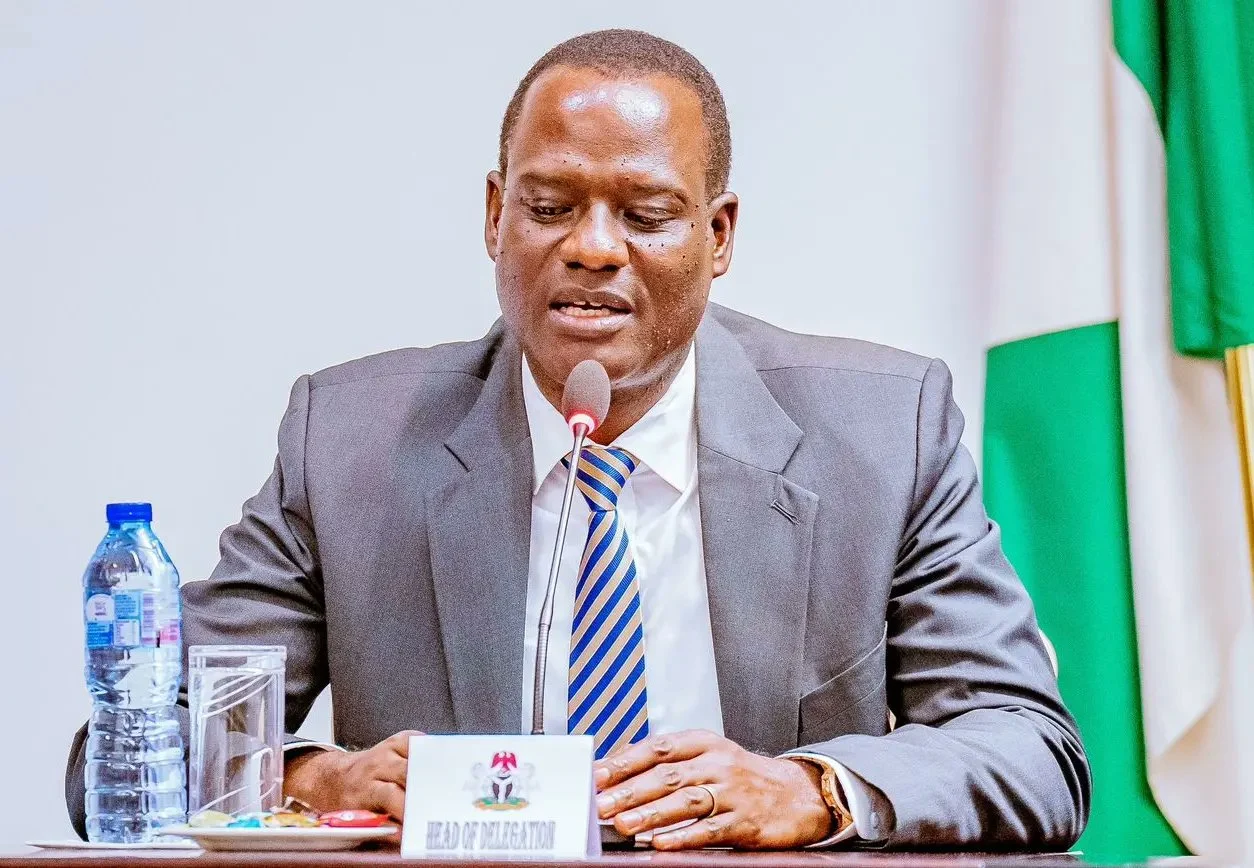
Minister of Finance and Coordinating Minister of the Economy, Taiwo Oyedele, has urged African nations to aggressively reposition themselves to attract a share of the more than $120 trillion in global private capital currently seeking investment opportunities.
He argued that the continent’s future prosperity cannot be built solely on foreign aid or borrowing.
Oyedele made the remarks in a post on his official X handle on Wednesday night, reflecting on the key conversations that dominated the recently concluded Africa Forward Summit held in Nairobi, Kenya.
The summit, which gathered African finance ministers, development economists, and multilateral officials, placed the reform of the international financial architecture at the centre of its agenda. “Africa’s future will not be built on dependency, but on productivity, integration, and value creation.”
At the heart of Oyedele’s message was a sharp critique of what he described as a “prejudice premium” — his term for the inflated cost of capital that African sovereigns and businesses face, driven not by fundamental economic risk but by what he characterised as unfair and structurally biased risk assessment by international creditors and rating agencies. He argued that this premium is a material drag on Africa’s ability to industrialise and compete globally.
The minister identified four structural barriers embedded in the current global financial system that he said continue to hold the continent back: High borrowing costs that price out productive investment restrictive financing terms that limit fiscal flexibility; limited access to long-term capital required for infrastructure and industry; and inadequate financing for productivity enhancement and value addition
He stressed that Africa cannot place the entire blame for its financing challenges on external actors, insisting that the continent must also do more domestically to create conditions that attract and retain private capital.
“Africa must also do more internally to strengthen governance and policy stability, create investment-friendly systems, respect contracts and the rule of law, and deepen regional integration.”
On regional integration, Oyedele was unequivocal. He warned that Africa’s continued fragmentation into small, siloed national markets renders the continent structurally uncompetitive in a global economy built on scale.
He argued that the African Continental Free Trade Area (AfCFTA) and similar frameworks must be accelerated and given practical teeth, particularly in harmonising regulatory standards, easing cross-border capital flows, and building regional value chains.
The minister also outlined what he sees as the correct financing model for the continent’s next phase of development.
He called for Africa to mobilise its own savings — including the fast-growing pool of domestic pension assets — and to channel these into productive sectors rather than allowing them to sit in low-yield instruments or flow out of the continent entirely.
African pension assets under management have grown substantially over the past decade, with Nigeria, South Africa, Kenya, and Egypt among the largest pools.
“With over $120 trillion in global private capital seeking opportunities, Africa must position itself as an investment destination, not just a development conversation.”
Oyedele also called for a fundamental reorientation in the purpose of external financing directed at Africa. He argued that international capital — both public development finance and private investment — has for too long been focused on extracting raw materials or plugging emergency fiscal gaps, rather than on enabling the structural transformation that would eventually make such financing unnecessary.
He said the focus must shift decisively towards value addition, infrastructure development, skills and human capital investment, regional value chains, and the adoption of technology and innovation — areas he argued would generate the productivity gains necessary to place African economies on a self-sustaining growth trajectory.
The remarks carry particular resonance given Nigeria’s own fiscal position. Africa’s largest economy by gross domestic product has grappled with a heavy debt servicing burden, a widening infrastructure deficit, and persistent pressure on its sovereign credit ratings.
The Tinubu administration has framed its ongoing tax reform agenda — which Oyedele has been central in designing — partly as a strategy to reduce dependence on borrowing by broadening the domestic revenue base.
We’ve got the edge. Get real-time reports, breaking scoops, and exclusive angles delivered straight to your phone. Don’t settle for stale news. Join LEADERSHIP NEWS on WhatsApp for 24/7 updates →
Join Our WhatsApp Channel