When European banks began retreating from oil and gas financing in Africa in the late 2010s, a familiar conclusion took hold: capital was leaving the sector. That retreat accelerated sharply after 2020 as European banks tightened climate policies and adopted net-zero financing commitments, recasting African hydrocarbons as structurally unattractive, constrained by political risk, energy transition pressures, and shifting global investment priorities. That conclusion has been reinforced by the withdrawal of major European banks and the growing influence of ESG-driven capital allocation frameworks. It is also increasingly inconsistent with observable market behaviour.
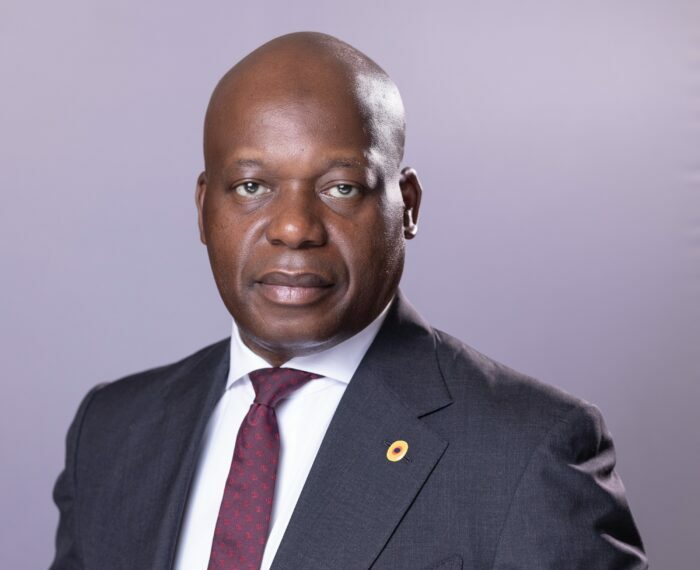
A recent Reuters interview with Oando PLC’s Group Chief Executive, Wale Tinubu, brings that inconsistency into focus. Some may interpret his observation that European banks have “almost completely withdrawn” from financing African upstream as confirmation of capital scarcity. That interpretation will be incomplete. The withdrawal reflects constraints within European financial systems, not a deterioration in the underlying economics of African assets. The more pertinent question, however, is where capital flows when those constraints collide with rising global supply risk.
That question is now being answered by developments outside the continent. Energy markets are operating in an environment defined by geopolitical volatility across core producing regions. Tensions in the Middle East and persistent sensitivity around critical chokepoints such as the Strait of Hormuz, the Bab el-Mandeb Strait, and the Suez Canal continue to expose a significant share of global oil supply to concentrated risk. Capital does not ignore that exposure. It reprices it.
West Africa’s position within this context is structurally different. Located outside the primary arc of geopolitical volatility stretching from the Caspian to the Gulf, the region offers a supply profile that is less exposed to these disruptions. For Asian buyers seeking diversification and for capital pools recalibrating risk, that positioning is increasingly material. As supply risk intensifies in traditional corridors, capital does not withdraw from hydrocarbons. It reallocates towards regions capable of providing more stable output. West Africa sits directly within that reallocation pathway.
For investors, the implication is clear. West Africa is no longer a peripheral play within global energy markets. It is increasingly functioning as a strategic hedge against concentrated supply risk. The investment case is being driven not only by resource depth, but by relative stability in a more volatile global system.
The withdrawal of European banks, while significant, does not alter this logic. BNP Paribas and Crédit Agricole have committed to ending participation in bond issuances by oil and gas producers. ING has halted new upstream financing for greenfield developments. Barclays has ended direct financing for new oil and gas projects. These decisions are driven by EU climate policy frameworks, shareholder pressure, and internal net-zero commitments. None of these factors originate in the geology, cost structure, or commercial viability of West African reserves. Over the past decade, companies such as Oando have raised between $3 billion and $4 billion from European lenders. That channel is now constrained. The capital it represented has not disappeared. It is being replaced by actors operating under different mandates and incentives.
The final constraint is internal. African institutional capital remains largely absent from upstream energy financing despite its scale. At the G20 Africa Energy Investment Forum in 2025, the African Union Development Agency-NEPAD (AUDA-NEPAD) indicated that African pension funds collectively hold approximately $1.5 trillion in assets under management. Yet allocation to infrastructure across the continent remains below 2.7 percent, and in Nigeria, pension assets of roughly NGN 22.5 trillion have less than 1.5 percent exposure to infrastructure. This represents the most significant unrealised source of long-term, patient capital available to the sector. Mobilising it will require regulatory reform, credit enhancement mechanisms, and a deliberate repositioning of upstream energy as a viable institutional asset class. Without this shift, Africa will continue to rely disproportionately on external capital, even as alternative sources expand.
Not all hope is lost, because within this shifting landscape, the role of African multilateral institutions is already evolving. The African Export-Import Bank (Afreximbank), the largest financier of the Dangote refinery, with total assets of approximately $48.5 billion as of 2025, deepened its exposure to energy and launched a $3 billion revolving intra-African oil trade financing programme in 2025, expected to support between $10 billion and $14 billion in petroleum trade. The African Finance Corporation (AFC) has deployed over $11.5 billion across infrastructure and energy projects, with hydrocarbons remaining central to its portfolio. Its 2025 State of Africa’s Infrastructure Report identifies over $1.1 trillion in domestic capital from pension and insurance funds to development banks and sovereign vehicles, currently sitting largely outside the energy financing ecosystem. These institutions are not acting as gap-fillers. They are deploying capital in alignment with long-term regional economic priorities.
Commodity trading houses have simultaneously expanded their role as capital providers. Firms such as Vitol and Trafigura, alongside other global traders including Glencore and Mercuria are deploying capital through prepayment facilities, offtake agreements, and structured finance tied directly to production flows. This model aligns financing with physical trade and embeds repayment within commodity cycles. It is a structure that has historical precedent in other resource markets, particularly during the commodity super cycle of the early 2000s, when producers across Latin America relied on similar arrangements to scale output. Unlike traditional bank lending, which is mediated through credit committees and regulatory capital constraints, these structures are anchored in commercial necessity. The financier’s incentive is directly tied to securing supply. The expanded role of commodity trading houses in Africa reflects both necessity and opportunity.
Gulf-based capital is moving in the same direction. Sovereign wealth funds and banks across the Gulf Cooperation Council (GCC) collectively manage an estimated $5 trillion in assets, with projections rising towards $7 trillion by 2030. Gulf states committed approximately $113 billion in investments into Africa between 2022 and 2023 alone, a scale that exceeds their total commitments to the continent over the previous decade. These institutions operate without the internal contradictions that have constrained European lenders. Their capital originates from hydrocarbons, and their investment frameworks are built around long-cycle energy assets. More importantly, the same geopolitical dynamics affecting Middle Eastern supply routes reinforce the strategic case for diversification. Investment in West African energy is not a divergence from global energy strategy. It is a continuation of it under different risk assumptions.
Financing conditions have tightened, and capital is being deployed under more complex structures. Industry estimates point to a material increase in the cost of capital since 2020, reflecting both higher global interest rates and shifting investor risk appetite. Reserve-based lending, hybrid instruments, and offtake-linked financing are now more prevalent than conventional syndicated loans. These changes represent a repricing of risk rather than a withdrawal of capital. Funding remains available to projects and operators capable of meeting these evolving requirements.
It is within this context that Wale Tinubu’s remarks in the Reuters interview carry broader significance. His expectation that geopolitical instability, including tensions involving the Middle East, could improve funding conditions reflects a consistent feature of global energy markets. The oil shocks of the 1970s, the investment surge following the early 2000s commodity boom, and the reallocation of capital after the Russia-Ukraine conflict in 2022 all demonstrate the same pattern. Disruptions to supply redirect investment towards producers capable of filling the gap. African operators sit within that dynamic.
The evidence across the market is clear. Capital has not left African hydrocarbons. It is being repriced and redirected towards regions capable of delivering a stable supply in a more volatile global system. West Africa sits firmly within that strategic window. The investment case is no longer theoretical. Capital is already moving. The priority now is to attract it at scale and convert it into sustained production growth across Nigeria and the broader region.
We’ve got the edge. Get real-time reports, breaking scoops, and exclusive angles delivered straight to your phone. Don’t settle for stale news. Join LEADERSHIP NEWS on WhatsApp for 24/7 updates →
Join Our WhatsApp Channel