
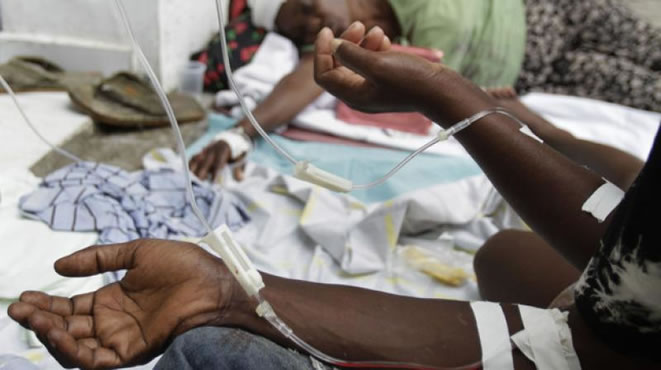
Communities in Jere and Konduga local government areas of Borno State have appealed to non-governmental organisations (NGOs) and the government for more interventions even cholera cases declined in their respective areas.
They asked for cholera preventive kits, WASH (Water, Sanitation, and Hygiene) facilities, latrines and livelihood support.
Attributing the decline in cholera cases, which had caused several deaths to the earlier intervention by the Voluntary Aid Initiative, International Alert, Justice Peace Development Initiative, and other partners with funding from the Start Network, the communities said deaths and infections had drastically reduced due to the NGOs’ intervention.
A nurse in charge of the Oral Rehydration Point (ORP) at Mashamari community of Old Maiduguri in Jere local government area, Mariam Mohammed, revealed that between April and May this year, over 50 cases of cholera were recorded daily.
She, however, said with the intervention of the NGOs and government, 50 cases were hardly recorded in a week in the community.
She added that 10 referrals were being made daily between April and May, but said that at present, they hardly experience referral cases.
In the same vein, the village head of Mashamari, Lawan Aisami Abba, noted that several cases of Cholera were recorded with some deaths about three months ago during the height of the outbreak before the intervention of the Voluntary Aid Initiative, International Alert and other partners, which drastically controlled the outbreak and saved lives.
“Mashamari is the most densely populated of the twelve wards in Jere, with an estimated population of over 120,000 people. Three months ago, our community experienced a severe cholera outbreak. At that difficult time, we received support from the Borno State Government under the leadership of His Excellency, Governor Babagana Umara Zulum, as well as from the local government authorities and several humanitarian organisations.
“I would like to particularly acknowledge the contributions of Start Network, International Alert, Voluntary Aid Initiative, and other partners that provided timely interventions during the outbreak. Before their support arrived, our community was greatly affected, and many families were struggling.
“These organisations played a complementary role to government efforts by providing hygiene kits to affected households, conducting house-to-house hygiene promotion campaigns, training youths and women on sanitation practices, and constructing sanitation facilities, including toilets in vulnerable areas,” said the Mashamari village head.
He noted that their interventions significantly improved hygiene awareness and helped reduce the spread of Cholera within the community, saying that at the peak of the outbreak, they did not know how the situation would be resolved; however, he said that through the combined efforts of the government, humanitarian organisations, community leaders, and health workers, the response was strengthened. The suffering of his people was greatly reduced.
Abba said that although the outbreak has now been brought under control, there is still a need for continued support, adding that the needs of the growing population are beyond what the government alone can provide.
He said that while they have a health clinic and an ultra-modern hospital serving the area, additional assistance is still required; hence, he is appealing to partners and humanitarian organisations for further interventions across various sectors.
“We need livelihood support, agricultural assistance, continued health-sector interventions, improved water and sanitation facilities, and, if possible, ambulances to strengthen emergency response services,” he said.
Bukar Lawan, Head of household in Dalori gari community in Konduga Local government area, narrated that before the intervention of the Borno State Government and the partners, the community was under threat of a cholera outbreak, adding that he has a daughter who was a patient of Cholera. Still, with the intervention and referral from the NGOs, she was saved.
He appealed for greater intervention in sanitary facilities and latrines to end open defecation, as well as in Water, Sanitation and Hygiene (WASH).
The Executive Director of the Voluntary Aid Initiative, Amb. Musa Umar said the organisation, alongside its partners, found it necessary to step in and support the communities by complementing ongoing cholera response efforts.
He noted that the intervention was made possible through funding from Start Network, saying that the project is led by CAFOD, with several partner organisations involved, including International Alert, JDPC, VSO, and Voluntary Aid Initiative.
He said under this arrangement, some partners were assigned to the WASH (Water, Sanitation, and Hygiene) component of the project. At the same time, International Alert and Voluntary Aid Initiative were responsible for health-related activities, adding that their health interventions included the distribution of personal protective equipment (PPE), infection prevention and control (IPC) activities, and community sensitisation and awareness campaigns.
“In addition to these efforts, the project supported water trucking, the provision of safe water, the construction of community toilets, and the installation of emergency latrines to improve sanitation within affected communities. One of the major challenges we encountered was that the cholera outbreak was already at a critical stage by the time we arrived.
“Naturally, community members were distressed and urgently seeking assistance from any available source. However, with support from other humanitarian partners and coordination with the Borno State Government, we were able to calm the situation and implement an effective response. This was not an isolated intervention; several organisations worked together to address the outbreak.
“Regarding sustainability, we have established community-based structures to continue supporting cholera prevention and response efforts. These include community volunteers, Community Action Team (CAT) members, case monitors, and referral focal persons who remain active within the communities.
“Their role is to ensure that awareness and response mechanisms continue even after the project has ended. The response project lasted for 45 days and has now been completed. However, many of the resources provided remain available within the community. We supplied chlorine granules, water treatment products, spraying equipment such as knapsack sprayers, and other essential materials.
“These resources can be used by community members whenever suspected cholera cases are identified in the future. During project implementation, we also listened carefully to the needs and expectations of both the government and the community. As highlighted by community members, there is still a strong need for improved access to safe water, additional hygiene kits, livelihood support programmes, and a more enabling environment that will help people rebuild their lives after the intervention, “Amb Umar stated.
We’ve got the edge. Get real-time reports, breaking scoops, and exclusive angles delivered straight to your phone. Don’t settle for stale news. Join LEADERSHIP NEWS on WhatsApp for 24/7 updates →
Join Our WhatsApp Channel