…Demand VAT relief, forex support as LPG shortage worsens
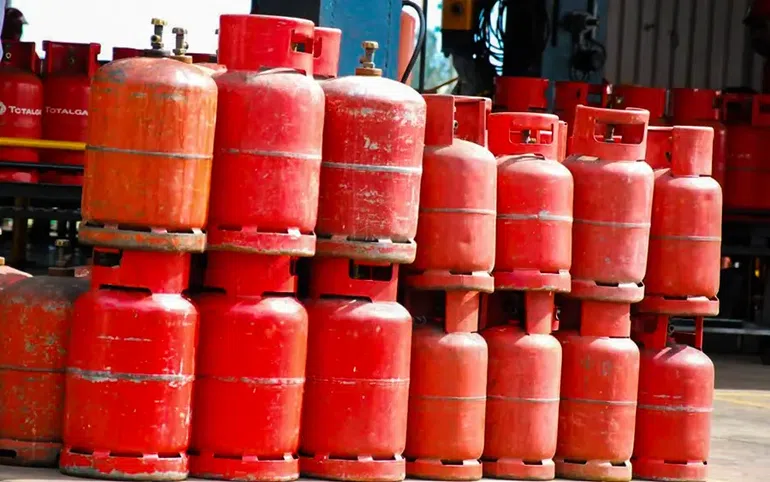
Marketers of liquefied petroleum gas (LPG), commonly called cooking gas, blamed the current acute shortage and surge in prices on a combination of constrained domestic supply, limited imports, and rising demand.
LEADERSHIP reports that several dispensing points in Lagos and other commercial centres across the country have run out of stock, and retail prices have risen towards N1,800–N2,000 per kilogramme.
Operators warned that refill plants may close and that jobs linked to distribution and refilling are at risk.
Executive secretary of the Nigerian Association of Liquefied Petroleum Gas Marketers (NALPGAM), Bassey Essien, told our correspondent that marketers have made repeated representations to the Nigerian Midstream and Downstream Petroleum Regulatory Authority (NMDPRA) seeking incentives, but have not received relief.
“The problem is beyond marketers. Domestic suppliers such as NLNG and the Dangote refinery cannot meet the rising demand. As I speak with you today, there is ‘No Gas,’” Essien said.
Industry data show NLNG has supplied about 400,000 metric tonnes to the domestic market since 2020, when local demand was around 1.2 million metric tonnes.
Demand has now risen to about 1.9 million metric tonnes, leaving a significant shortfall. Dangote Refinery’s earlier contribution to the local market — previously as much as 50 per cent of its available LPG — has been cut back because some output is being used as feedstock for fertiliser production.
According to him, the NLNG is supplying the entire 400,000 metric tons to the local market since 2020 when market demand was about 1.2 million metric tons.
Now, the demand has risen to 1.9 million metric tons, and the supply from NLNG cannot come anywhere close to meeting market needs.
Essien also said that, in addition, the Dangote refinery was earlier devoting 50 per cent of its capacity to the market, but because the refinery is using it as commercial feedstock to support its fertiliser production, the quantity extended to the local market has since fallen.
According to Essien, off-takers previously obtained between 500 and 5,000 metric tonnes from Dangote, but this has now been reduced to about 250 metric tonnes.
Recall that the federal government had, in November 2024, stopped the export of LPG to boost domestic supply.
The Minister of State, Petroleum Resources (Gas), Obongemem Ekperikpe Ekpo, had announced the directive on 22 October 2024 in Abuja, after a high‑level meeting with industry stakeholders, including NNPC Ltd. and LPG producers.
Speaking with LEADERSHIP, the minister’s spokesman, Louis Ibah, confirmed that the ban on LPG exports remains in place and is being strongly enforced by the NMDPRA.
Meanwhile, NALPGAM, executive secretary, Bassey Essien, said the domestic price has continued to increase because the quantity supplied by NLNG is benchmarked at international market prices and as such, marketers would add up their running costs, which pushes up the price that is transferred to consumers.
Our correspondent reports that Nigerian LPG marketers are aggressively seeking government incentives and market reforms to stimulate demand, stabilise erratic retail prices, which have now surged toward N1, 800 to N2,000 per kg, and triple the country’s annual supply to 6 million metric tonnes.
To achieve sustainable market penetration, the industry is advocating the following critical incentives: the elimination of Value-Added Tax (VAT) on locally produced cooking gas and subsidising the cost of cylinders and accessories for low-income groups and cooperatives.
Developing robust domestic blending, storage, and delivery facilities are also part of their demand to cut landing and operational costs.
Also, enforcing the prioritisation of domestic LPG allocation over exports to prevent severe structural supply deficits, while providing forex intervention to help marketers ease the financial burden of importing equipment and products amid volatile global energy shocks.
Meanwhile, the global LPG market is actively surging, driven by a strong shift toward clean residential energy and petrochemical feedstock needs.
The market valuation is projected to grow significantly from approximately $176 billion to $273 billion by 2034. However, this upward trend is accompanied by increased price volatility due to geopolitical supply disruptions.
We’ve got the edge. Get real-time reports, breaking scoops, and exclusive angles delivered straight to your phone. Don’t settle for stale news. Join LEADERSHIP NEWS on WhatsApp for 24/7 updates →
Join Our WhatsApp Channel