In Nigeria, a strike in the health sector does not just disrupt services , it quietly decides who lives and who dies. Pregnant women are sent home in labour, dialysis patients miss treatments they cannot survive without, and children with life-threatening illnesses are denied care. In this report, PATIENCE IVIE IHEJIRIKA writes that as medical workers down tools and authorities stall, the real casualties are not on picket lines or negotiation tables, but in homes, buses, and hospital corridors where hope runs out faster than time.
From labour wards to dialysis units, the fallout of incessant strikes is measured in human suffering, as pregnant women, sick children, and chronically ill patients are forced to survive without care.
Nigeria’s health sector remains caught in a relentless cycle of strikes by doctors, nurses, and the Joint Health Sector Unions (JOHESU). Unpaid allowances, outdated equipment, wage inequities, and harsh working conditions have repeatedly forced health workers across the system to abandon their posts.
Tragically, every industrial action in the health sector carries a human cost as it leaves casualties in its wake. When emergency rooms shut their doors and outpatient clinics grind to a halt, it is patients who are left stranded, particularly the poor and vulnerable who bear the heaviest burden.
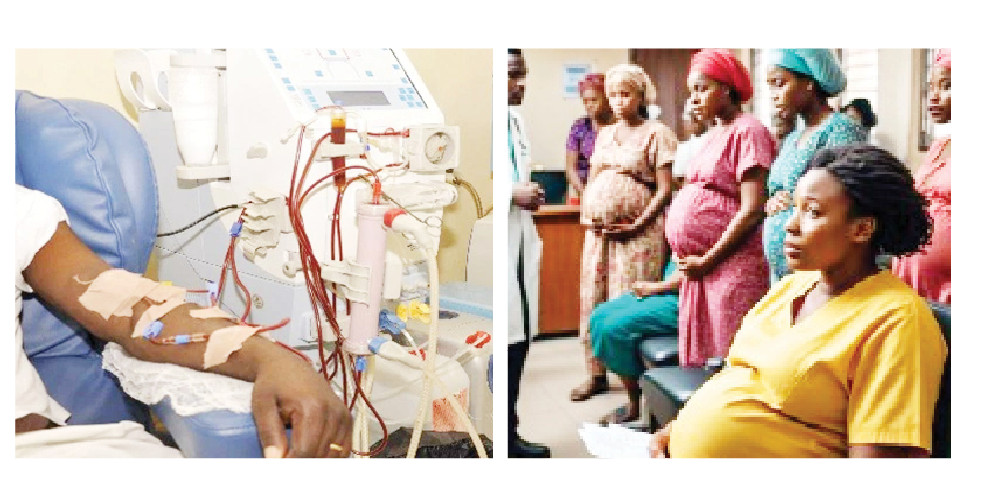
When hospitals close their doors, it is pregnant women in labour, sick children, and dialysis patients who pay the price. Strikes often become a silent death sentence.
The consequences are even more severe in rural areas, where the nearest alternative health facility may be hours away or sometimes entirely out of reach.
LEADERSHIP Weekend reports that Nigeria’s health sector was paralyzed by multiple strikes in 2025. In mid-September, the Nigerian Association of Resident Doctors (NARD) announced a five-day warning strike over unpaid allowances, salary arrears, and welfare concerns. When these issues remained unresolved, the association escalated matters, launching a nationwide indefinite strike on November 1, 2025.
The November strike by NARD lasted approximately 29 days, ending on November 29, 2025, after a memorandum of understanding was reached with government officials. Earlier, in July 2025, nurses under the National Association of Nigeria Nurses and Midwives (NANNM) staged a seven-day warning strike over unmet demands related to welfare, allowances, staffing, and working conditions.
Meanwhile, the Joint Health Sector Unions (JOHESU), representing non-physician health workers, including the Medical and Health Workers’ Union, Nigerian Union of Allied Health Professionals, Senior Staff Associations, and othersdeclared an indefinite nationwide strike starting November 15, 2025.
The strike, which is still ongoing, is over the federal government’s failure to implement the adjusted Consolidated Health Salary Structure (CONHESS) and other longstanding welfare demands.
These overlapping strikes left thousands of patients stranded, as many public hospitals, which cater to the majority of Nigerians only operated skeletal services.
Describing the situation as a reflection of the systemic neglect that continues to undermine healthcare delivery in Nigeria, the President of the Medical and Dental Consultants Association of Nigeria (MDCAN), Prof. Appolos Chidi Ndukuba, noted that the government is in “constant, often tense negotiations” with various medical associations over issues bordering on welfare, remuneration, and working conditions.
According to him, while dialogue between the government and health unions is ongoing, tangible and lasting solutions remain elusive, leaving the system vulnerable to frequent disruptions.
“The government is in constant, often tense, negotiations with medical associations over welfare demands. While dialogue is ongoing, tangible, lasting solutions have been elusive,” he said.
For years, these issues have lingered without durable solutions. When dialogue fails, strike becomes the last resort.
While Nigerians are still struggling with the effects of the ongoing JOHESU’s strike, NARD has threatened to resume it’s suspended strike by January 12, 2026.
In an update issued by its National Officers Committee (NOC) on Saturday, January 3, 2026, the association announced it would resume its industrial action, code-named TICS 2.0 and tagged “No Implementation, No Going Back,” starting at 12:00 a.m. on Monday, January 12.
Responding to the threat, the Minister of State for Health and Social Welfare, Dr. Iziaq Salako, stated that the issues at stake are rooted in structural policies rather than a neglect of the medical workforce.
According to Dr. Salako, the current administration has shown commitment to addressing health sector demands, including the approval of nearly N90 billion in additional annual allowances for health workers in November 2025.
He said the upward review, which covered call duty, shift duty, non-clinical duty and rural posting allowances, followed joint negotiations involving doctors, nurses, laboratory scientists and other health professionals.
The minister described it as a major step toward ending the recurring disputes caused by fragmented negotiations and conflicting agreements in the past.
He noted that NARD’s demands have dropped from 19 to nine, signifying progress. However, he stressed that some remaining items are limited by civil service rules and schemes of service already in force.
However, NARD President Dr. Mohammad Usman Suleiman dismissed the minister’s claim that the association had reduced its demands from 19 to nine. He explained that the union had only grouped the issues to simplify communication with Nigerians, emphasizing that “if you x-ray those nine items, they actually represent 16 distinct demands.”
Dr. Suleiman accused the ministry of employing delay tactics aimed at stalling meaningful negotiations and preventing doctors from securing improved welfare for at least another year. He called on President Bola Ahmed Tinubu to intervene immediately, stressing that the situation demands “genuine commitment” from the government, rather than repeated assurances.
He highlighted several lingering issues, including the persistent delay in transmitting promotion arrears to the Budget Office and Ministry of Finance for payment, the slow processing of salary arrears owed to resident doctors across multiple institutions, and the failure of IPPIS to reconcile and pay arrears from the 25/35 per cent CONMESS review and accoutrement allowance—affecting an estimated 40 per cent of NARD members.
Dr. Suleiman emphasised that the strike is aimed at safeguarding the wellbeing of both doctors and patients. “This action is not against Nigerians; it is about ensuring the survival of our doctors, our patients, and the entire healthcare system. We want a Nigeria where healthcare workers are valued, hospitals function optimally, and patients receive the quality care they deserve,” he said.
Some patients and family members told our correspondent how they bear the brunt of health workers’ strikes, describing the toll it takes on their lives and well-being.
Paulina Amadi, a diabetic patient in Abuja, said:
“I don’t blame the doctors for fighting for their rights, but every time they go on strike, people like me pay with our lives. Last year, I missed two clinic appointments because of a strike, and my sugar levels spiraled out of control. I had to spend much more money managing complications at a private hospital. The government should stop waiting until health workers down tools before taking action.”
Mrs. Chioma Nwafor, a pregnant woman in Nasarawa State, shared her fears:
“I am due in two weeks, and the thought of doctors or nurses going on strike terrifies me. Going to the hospital should give hope, not fear. I understand that health workers face challenges, but the government must find a permanent solution. We cannot continue living like this, every strike feels like a death sentence for pregnant women.”
Mr. Ibrahim Yusuf, a civil servant in Abuja whose child has Sickle Cell Disease, recounted the dangers his family faced:
“These strikes are slowly killing families like mine. During the last industrial action, my son had a crisis, and we rushed him to three different hospitals—none could attend to him. We eventually had to turn to a private hospital before he received care. How long can this continue? Both the government and the unions must remember that ordinary Nigerians bear the brunt of these conflicts.”
Another pregnant woman, Mrs Christabel Ndukwe 28, said, “I was in severe labour and had to be turned away at the Calabar Teaching Hospital a week to Christmas.We had no choice but to rush to a private clinic two hours away. I kept praying I would make it in time and God intervened.”
Mr. Musa Bello, father of a 7-year-old Mustapha, “My son has severe malaria, and when we went to the clinic, there was we met a nurse but there was no doctor. We waited for hours, then had to pay for private care. It was stressful and expensive. What if I couldn’t afford it?
Another dialysis patient, Mrs. Grace Nwosu, a 45-year-old “Missing even one session could be fatal. During the strike, I had to skip two sessions. I was terrified for my life, and my family didn’t know what to do.”
For Mr. Sunday Ojohgnho, a farmer in a remote Otupa village.The nearest hospital is over three hours away, and when the local health centre closes because of the strike, we are left with nothing. Some people just give up and pray.”
At hospitals like Asokoro District Hospital, Wuse, Maitama, and others, even though a few doctors and nurses were present, key units such as NHIS, medical records, the laboratory, pharmacy and surgical departments were completely unattended.
Patients were left stranded, and routine activities ground to a halt. The experience compounded the stress of visiting the hospital, as every essential service was paralysed.”
With negotiations still unresolved, the coming days will determine whether both parties can find common ground or if the nation is set for yet another prolonged disruption in healthcare.
To this end, health workers, government officials, and all stakeholders involved must recognise the human cost of these repeated strikes. Nigerians are paying with their health, and in some cases, their lives. It is time for urgent dialogue, sustainable solutions, and a commitment to ensure that hospitals remain functional at all times. This is because, every citizen deserves access to healthcare without fear or delay.
We’ve got the edge. Get real-time reports, breaking scoops, and exclusive angles delivered straight to your phone. Don’t settle for stale news. Join LEADERSHIP NEWS on WhatsApp for 24/7 updates →
Join Our WhatsApp Channel