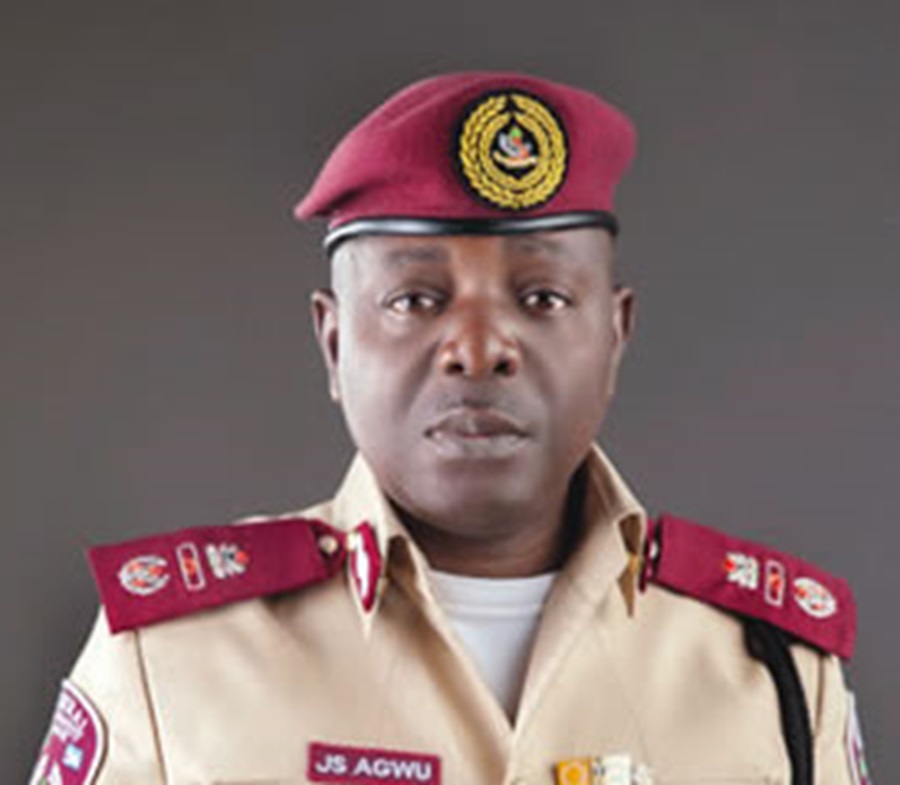
I am a Lagos boy, and an Abuja boy, too. You can ask my friend and brother, Tunde Rahman, the senior special assistant to President Bola Tinubu. Tunde and I were all in the trenches, trekking to and from the crannies of the political gladiators in Lagos in the days of Dapo Sarumi, Femi Agbalajobi, and Michael Otedola, a former Lagos State governor.
While I was with the esteemed and defunct Concord Press, he was with the Lagos-based Horizon Newspaper. Salihu Ibrahim Kindo will also testify on my Abujaness. Kindo and I humbly self-birthed “Oga Driver”, an interactive road safety enlightenment programme, when such a programme, couched in pidgin, was scarce.
I agree that I was not born in Lagos or Abuja but was educated there, from National College to CMS Grammar School, all in Bariga. Before proceeding to Times Journalism Institute, I attended the prestigious University of Lagos for my first and second degrees.
Rahman once honoured me when he wrote “Bariga Boy is back” in Thisday, celebrating my second appointment as spokesperson for the Federal Road Safety Corps (FRSC). During my career, I ended up in 2012 as sector commander, Lagos, with Governor Raji Fashola. Policing Lagos roads was hell and is still hell.
It is not just because of the increased motorisation in Lagos but also because of a driving mentality that thrives on risk-taking and flouting traffic rules. I must thank the state government for its visionary innovations in addressing challenges and projecting a senile society. I hope others do the same in keeping with the Federal Road Safety drive to see State Traffic Agencies spring up nationwide.
My FRSC career began in Abuja and was capped when I became sector commander and zonal commanding officer. It took me to Enugu, Port Harcourt, the Rivers State capital, where I supervised the state, Cross River, Akwa Ibom, and Bayelsa States. I was also in Kaduna, overseeing operations in this state, Kano, Katsina, and Jigawa States. Destiny took me to Plateau State where I supervised Plateau, Nasarrawa, and Benue States.
Apart from my sojourn in Abuja as sector commander, I was also zonal commanding officer supervising Niger State and the Federal Capital Territory (FCT) as well as my earlier sojourn as sector commander, Imo State. The mercy of God bolstered my credentials with work experience traversing the length and breadth of our beloved country.
So, I have seen good drivers representing different faiths. I have also seen terrible driving manners in all states, among all classes, ages, genders, tribes, and religions. Check out our religious index. We top the list of the world’s most prominent Muslim and Christian adherents in Africa. Indigenous people, often referred to as traditional, have their ranking too.
While Ethiopia has the largest Christian population in Africa, Nigeria has the second-highest Christian population. Nigeria equally tops the list in Africa with the highest number of Muslims. Egypt and Algeria trail us. Our credentials, I must say, are intimidating; if we do a census of religious centres for the major faiths, we will still top the bill; so would we if we do the same on the number of clerics and adherents.
Many writers eulogise the Christian and the Muslim faith. They observe the influence of both faith in moulding different facets of society, fostering social cohesiveness, and a strong sense of community. Both faiths agree that they inspire the faithful to help one another and practice charity. Both faiths are strong in peace-building and mediation. They help resolve conflicts and restore unity.
The dominance of both faiths should translate to a vast generation of pious drivers whose driving reflects religious values. These drivers should often emphasise respecting others and following safety regulations.
Their virtues should include being polite, patient, and avoiding road rage.
Despite these attributes, I sometimes drive in awe when I encounter drivers who profess these faiths. They drive blind as their faith does not reflect in their driving. There is a huge disconnect between their faith and safe driving practices, which explains why the places of worship rank high in the corps’ target centre for advocacy and enlightenment.
I am not talking about the other two concepts of blind driving which includes driving with a blindfold as a team building exercise or the second which is the possibility of driving with a visual impairment, or even blindness, with adapted vehicle and training. No please. I am talking of driving disconnected from our religious beliefs and faith
For the record, the Christian faith in Romans 13:1-7 admonishes believers to obey all authority in the land. My Muslim teacher and friend couldn’t provide an equivalent provision in the Holy Koran, which I am confident does the same. I hope it will be made available for this piece’s second and concluding part.
Both faiths preach obedience to constituted authority, such as the FRSC, and, by extension, the provisions of the National Road Traffic Regulations. The regulations contain rules prohibiting driving against traffic, not buckling up, excessive speed, running traffic lights, using a phone while driving, overloading, and underage driving, among other traffic infractions.
Yet the level of traffic infractions amazes even on Sundays and Fridays, which are worship days for both faiths, rather than displaying piety in driving. During festivities such as Sallah, Christmas, and Easter, there are heightened driving infractions.
For years, I have daily pondered the question of Nigerian drivers’ religious beliefs, irrespective of their religious inclinations. During my career, as stated earlier, I was privileged to hold positions in Kaduna, Port Harcourt, the Rivers State capital, Imo State, Lagos, Plateau, the FCT, and Enugu. I was privileged to interact with all tribes, religions, classes, and genders.
My deployment to Lagos, Abuja, and Port Harcourt some years ago further provoked this burning thought, which compelled me to do a piece on driving in Lagos and Port Harcourt, the Rivers State capital. In that piece, titled: “Between Lagos And Port Harcourt Driving”, I tried to compare driving in both cities with the conclusion that Port Harcourt driving was weird because of the increasing traffic infractions and the absence of a strong structure to curb and to deter these driving mannerisms that daily takes the garden out of the city.
I also said in that piece that Port Harcourt, like typical Nigerian cities, boasts of numerous places of worship, especially churches in the South, which adorn almost every street, and mosques in the North, yet daily driving rarely shows any form of piety.
Incidentally, three events prompted me to do this piece, which had been in the cooler since, awaiting the right time to hit my page.
We’ve got the edge. Get real-time reports, breaking scoops, and exclusive angles delivered straight to your phone. Don’t settle for stale news. Join LEADERSHIP NEWS on WhatsApp for 24/7 updates →
Join Our WhatsApp Channel