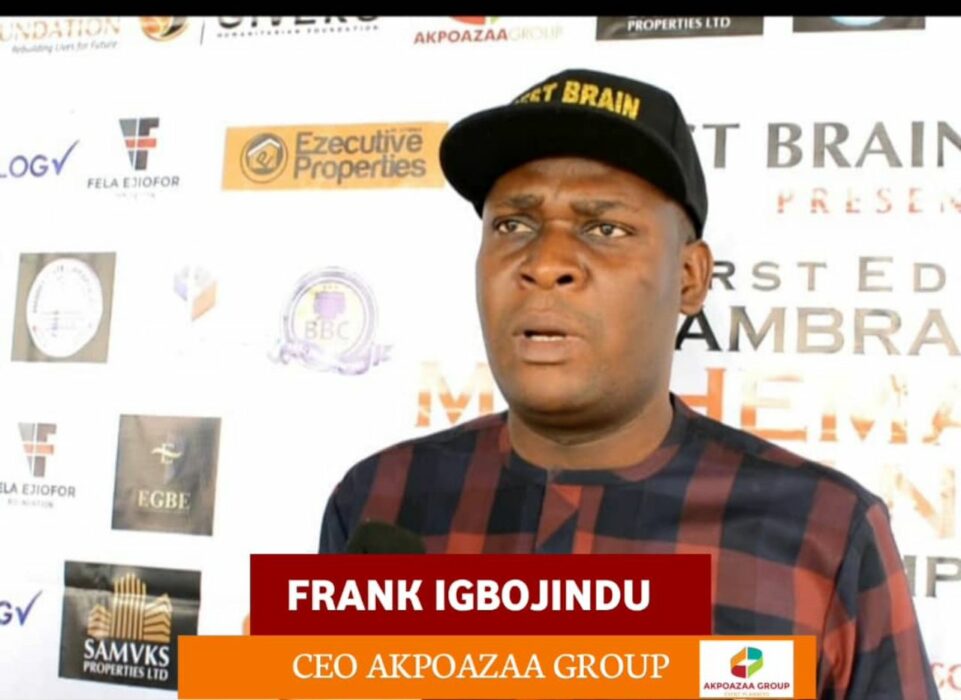
Education advocate and philanthropist, Dr Frank Igbojindu, has called on Nigerians and all levels of government to place education at the centre of national development, insisting that no meaningful progress can be achieved without deliberate investment in learning.
Igbojindu, who spoke while restating his long-held philosophy, “Education or Nothing,” described education as a non-negotiable tool for addressing poverty, unemployment, insecurity and moral decline in the country.
According to him, education should not be treated as a privilege for a few but as a fundamental necessity for societal stability and growth.
“Education is not an option. It is not a luxury reserved for the privileged. It is the lifeline of any society that desires progress, stability, and dignity. Where education is neglected, ignorance thrives; where ignorance thrives, poverty and crime take root. This is why I firmly believe that any meaningful development agenda that sidelines education is already destined to fail,” he said.
He noted that his commitment to education has gone beyond advocacy, pointing to years of direct interventions aimed at supporting pupils, students and teachers. These include scholarships, academic competitions, learning materials support and financial assistance targeted at improving access to quality education.
Igbojindu emphasised the importance of teachers’ welfare, stressing that education cannot thrive where educators are poorly motivated or ignored.
“Any society that undermines its teachers undermines its own future,” he said.
He also highlighted initiatives such as the Best Brain Contest (BBC), describing them as platforms designed to promote academic excellence, reward diligence and restore pride in learning. The competitions, he said, encourage students across disciplines, including Mathematics and Indigenous Languages, while reinforcing both global competitiveness and cultural identity.
On parental responsibility, Igbojindu urged families to prioritise affordable and accessible education over prestige, noting that many successful individuals emerged from modest educational backgrounds.
He further called for a more holistic approach to education, combining academics with skill acquisition, vocational training, mentorship and character development, to ensure young people are equipped with both knowledge and practical skills.
Describing “Education or Nothing” as a declaration of priority rather than extremism, Igbojindu said investment in human capital must come before politics, personal comfort or prestige projects.
He also urged governments, private individuals and community leaders to see education as a collective responsibility, adding that the future of the nation depends on the minds deliberately prepared today.
We’ve got the edge. Get real-time reports, breaking scoops, and exclusive angles delivered straight to your phone. Don’t settle for stale news. Join LEADERSHIP NEWS on WhatsApp for 24/7 updates →
Join Our WhatsApp Channel