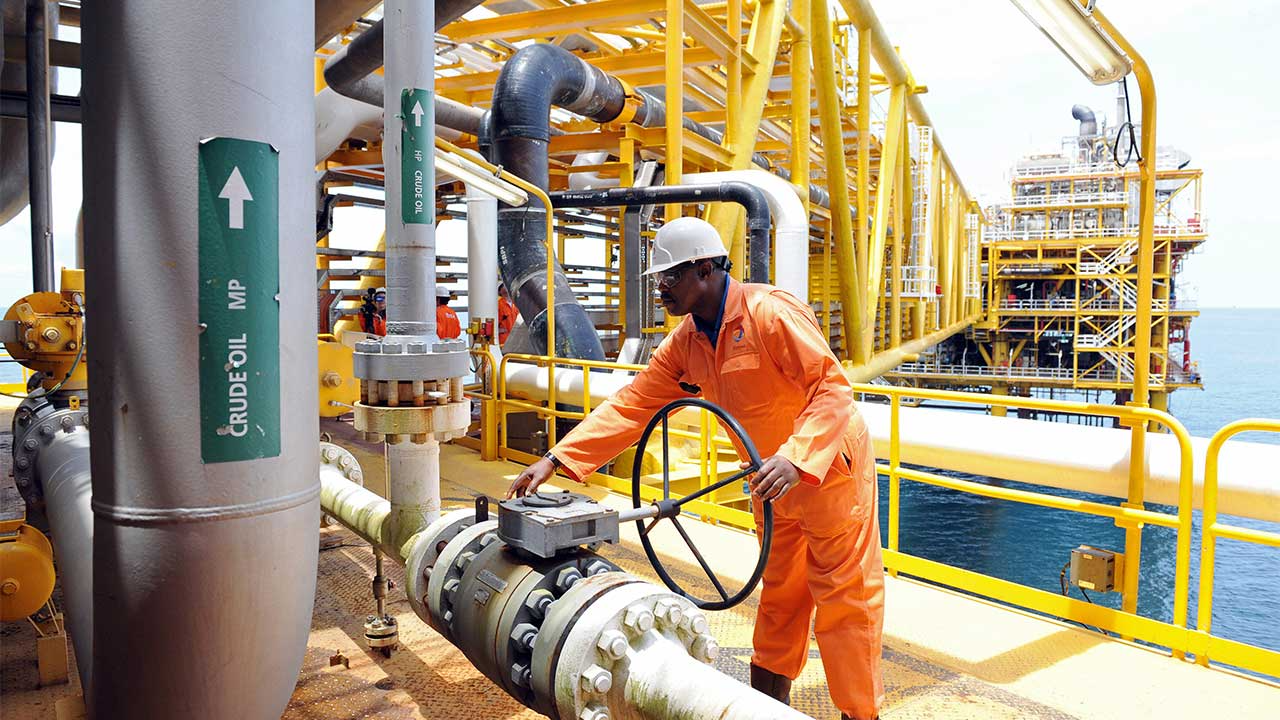
Nigeria’s economic mainstays, oil and gas, have remained a blessing. Some experts insist they are more of a burden. As the debate continues, this resource has undoubtedly provided the bulk of government revenue for decades, yet it has been affected by chronic under-regulation, opacity, and inefficiency.
Gas flaring, oil theft, and underinvestment have plagued the sector for years, draining the nation’s resources and constantly eroding trust.
Industry watchers proffer that some transformation is ongoing in the Nigerian Upstream Petroleum Regulatory Commission (NUPRC), under the leadership of Engr Gbenga Komolafe. The reforms currently taking shape suggest that Nigeria, long chastised for mismanaging its oil and gas wealth, is finally getting the proper regulation.
Under the “1MBOPD Incremental Initiative,” launched in October 2024, Nigeria recorded a significant increase in its crude output from about 1.5 million barrels per day (mbpd) to around 1.75 mbpd, reflecting roughly +250,000 bpd.
Further, in July 2025, Nigeria’s oil production is reported to have topped a close mark of 1.8 mbpd. Expressing this in a literal context, Nigeria has been falling short of its OPEC quota for several years, making these increases noteworthy. A consistent output meeting marginally surpasses that quota under the current regulation and oversight. It points to improved operational and security controls.
However, looking into the accountability of gas production and environmental protection, the July 2025 figure shows a sustained upward trend in Nigeria’s average daily gas production, which is at 7.59 billion standard cubic feet per day (BSCFD), up from 6.99 BSCFD registered for the full year of 2024 and 6.91 BSCFD recorded in 2023. To achieve this feat, the current administration implemented initiatives like the Gas Flare Commercialisation Programme (NGFCP) and the Decarbonisation and Sustainability Blueprint.
Furthermore, the NUPRC generated N5.21 trillion in the first half of 2025, just a sizable portion of revenues from royalties, gas sales, flared gas penalties, and joint venture proceeds. Alongside revenue generation, the Commission also made a concerted effort to recoup debt (outstanding obligations), including from contracts for lifting crude oil. With this debt recovery, the commission has ensured fiscal discipline and strengthened public trust.
It is pertinent to point out that under Komolafe, the NUPRC has rolled out multiple transformative regulations, such as measurement regulations, meter regulation (hydrocarbon metering), and the advanced cargo declaration regulation, to close gaps in accountability. The role of computerised, transparent, competitive licensing rounds has also helped NUPRC execute its mandate in aligning with the stated operations of the Petroleum Industry Act.
It is also noteworthy that while there have been shocking reports on oil theft for decades, the NUPRC took it up as part of its mission to drastically reduce this menace. The results of this effort are made evident by a compelling statistic, which cites the reduction of loss from theft, which was estimated at ~200,000 barrels per day. It has significantly reduced to about 5,000 barrels per day. It is also on record that rig counts increased from 13 in 2021 to around 38–40 in 2025, suggesting an increase in upstream activity, exploration, and development.
Analysts aver that the reforms under Komolafe and the NUPRC are consequential for several reasons. It records the stabilisation and revenue growth, which can be seen in the indices of more production with fewer losses. This, therefore, means more revenue for the government and better funding for policies, infrastructure, and social programmes. NUPRC has shown its commitment to international obligations and environmental capabilities through effective control of gas flaring, which had been a major source of greenhouse gases and black carbon.
The reform under the present management of the commission unarguably requires vision, technical competence, and political courage. So far, this newspaper is persuaded to note that Komolafe has demonstrated a rare combination of engineering rigour and legal understanding. He ensured that NUPRC’s clear mandate—to regulate exploration, development, production, measurement, environmental compliance, and the delivery of the objectives of the Petroleum Industry Act (PIA) of 2021—wasn’t only fully executed but also perfected, which would remove hurdles from future accomplishments.
The commission shows what regulatory seriousness can do: increase production, generate real revenue, reduce waste and environmental harm, and assert the rule of law in areas long plagued by leakage and lax compliance. These are not incremental gains alone: they mark a structural shift toward modernised upstream governance.
The reforms executed have shown that regulation can be a tool not of obstruction but of national progress when it is applied with vision and firmness.
As a newspaper, we aver that if NUPRC continues to follow this landmark, it will refine its regulatory tools, enforce its laws, invest in gas infrastructure, and maintain transparency and institutional strength. In that case, the reward for Nigeria will be in great folds: greater energy security, environmental protection, more consistent revenue, and stronger positioning in a world increasingly concerned about climate, sustainability, and accountability.
The oil and gas sector has long symbolised Nigeria’s paradox, which is, in simpler words, “wealth without prosperity.” If it is well sustained, this current trajectory could help resolve that paradox.
In our opinion, the challenge now is to avoid the temptation of short-termism and ensure that regulation is not just about immediate production gains but about long-term sustainability. Evidently, in our view, there is no doubt that the NUPRC under Komolafe is committed to that trajectory.
We’ve got the edge. Get real-time reports, breaking scoops, and exclusive angles delivered straight to your phone. Don’t settle for stale news. Join LEADERSHIP NEWS on WhatsApp for 24/7 updates →
Join Our WhatsApp Channel