
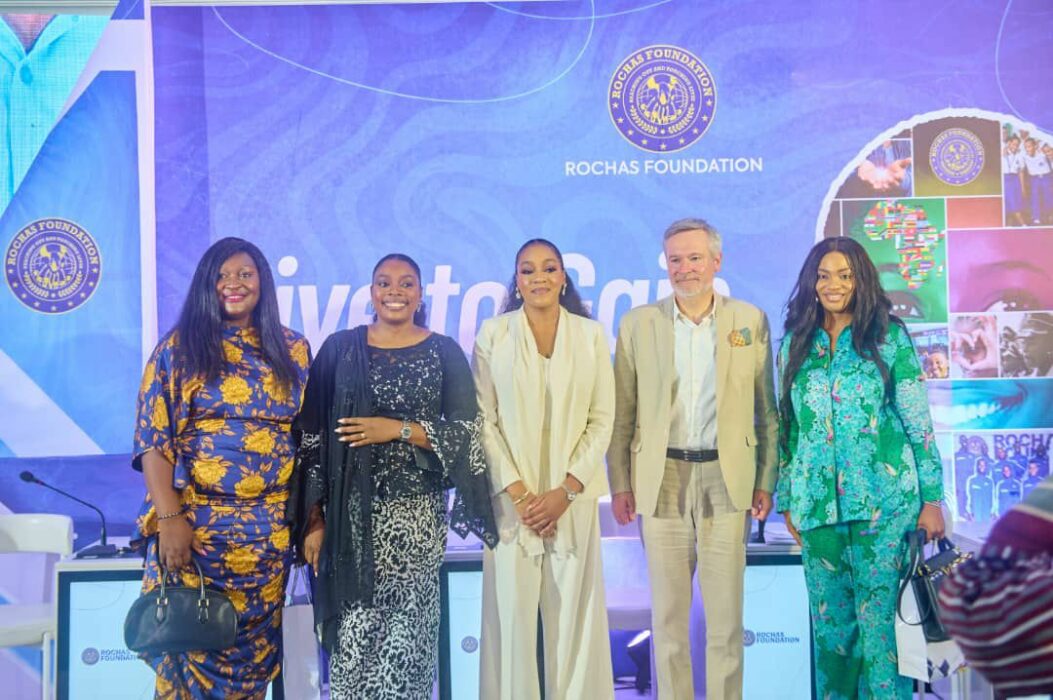
A former president of Liberia, Ellen Johnson Sirleaf has called for action against Nigeria’s growing out-of-school girls crisis, warning that further delay would lead to long-term consequences for the country.
Sirleaf made the call at a high-level event organised by the Rochas Foundation with the theme “Give to Gain: Women, Education and Impact – The Ripple Effect,” held in Abuja over the weekend.
She stressed that while education remains a critical foundation for empowering girls, it must go beyond access to classrooms and translate into leadership and economic opportunities.
“When you educate a girl, you do more than change her life, you change generations. However, education alone is not enough. It must lead to opportunity, inclusion, and leadership.
“If we educate girls without creating pathways for them to lead, then we have only done half the work,”Sirleaf said.
She commended the Rochas Foundation for its intervention, describing it as a long-term investment in Africa’s future which impacted over 41,000 young people across 23 African countries, with girls forming a significant percentage of beneficiaries.
Also, the Director-General of the Rochas Foundation, Uchechi Rochas, emphasised the urgency of the crisis, describing girl-child education as a “ripple effect” capable of transforming not just individuals, but entire societies.
She warned against what she described as society’s tendency to celebrate women’s achievements while neglecting the foundational needs of the girl child.
“It is part of the ripple, and so it must be fixed,” she said. “When a child is given education, especially the girl child, the impact does not stop with her. It extends to her family, her community, her nation, and ultimately, to humanity. If we fail the girl today, we fail the woman tomorrow.”
Citing data from UNICEF, she noted that over 7.8 million girls in Nigeria are currently out of school, while more than 10.2 million children lack access to education, describing the situation as a national emergency requiring collective intervention.
Rochas further highlighted the realities facing many girls in Northern Nigeria, where early marriage continues to limit access to education and opportunities.
“For many girls, education is not just literacy, it is empowerment. It is the freedom to speak, the right to choose, and in many cases, the chance to avoid early marriage,” she said.
She called on stakeholders to move beyond rhetoric, describing the event as “not just a welcome, but a recruitment” for individuals and institutions willing to take action.
Also speaking, the European Union Ambassador to Nigeria and ECOWAS, Gautier Mignot, emphasised the broader socio-economic benefits of investing in girls’ education, noting that gender equality is a key driver of sustainable development.
He said: “education, especially for girls, is not just a matter of fairness; it is essential for societal progress. Research shows that inclusive, gender-balanced societies perform better across all sectors.”
Mignot reaffirmed the European Union’s commitment to education and gender equality through its global partnerships, describing investment in girls as one of the most effective tools for national development.
In her remarks, the Vice President of the Rochas Foundation, Nneoma Nkechi Rochas-Okorocha, highlighted the importance of accountability, advocacy, and awareness in sustaining impact.
She said: “our goal is simple, to ensure that no child, especially no girl, is left behind,”
She expressed optimism that the initiative would inspire young girls to pursue their aspirations and contribute meaningfully to society.
End.
We’ve got the edge. Get real-time reports, breaking scoops, and exclusive angles delivered straight to your phone. Don’t settle for stale news. Join LEADERSHIP NEWS on WhatsApp for 24/7 updates →
Join Our WhatsApp Channel