
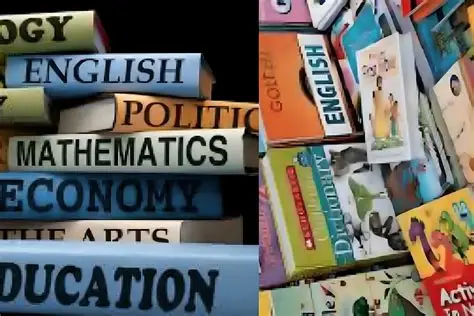
The Federal Government has rolled out a new policy enforcing the use of standardised, high-quality textbooks designed to last between four and six years, aimed at reducing the financial burden on parents and improving learning outcomes across schools nationwide.
The reform, unveiled by the Minister of Education, Dr Maruf Tunji Alausa, and the Minister of State for Education, Prof. Suiwaba Sa’idu, also strengthens quality assurance mechanisms and ends the practice of frequent, cosmetic textbook revisions that force families to purchase new learning materials every academic session.
Director of Press and Public Relations at the Federal Ministry of Education, Boriowo Folasade, announced this in a press statement on Friday.
According to her, the policy formed part of ongoing reforms to reposition Nigeria’s education sector and ease the financial burden on families.
The statement said the policy prioritises the use of standardised, durable textbooks designed to last between four and six years, while expressly prohibiting the bundling of disposable workbooks with textbooks in schools.
She said the initiative will allow siblings to share textbooks, significantly lower recurring education costs for parents, and reduce waste within the school system, thereby supporting environmental sustainability.
“As part of broader sector reforms, they noted that the Federal Government has introduced a uniform academic calendar to promote consistency in teaching, learning and school planning across the country.
“In addition, the Ministers stated that graduation ceremonies have been streamlined to curb unnecessary financial pressure on parents. Under the new guidelines, only pupils and students completing Primary 6, Junior Secondary School 3 (JSS3) and Senior Secondary School 3 (SSS3) are permitted to hold graduation ceremonies.”
The Ministers further emphasised that the policy strengthens the assessment, quality assurance, selection and use of textbooks and instructional materials nationwide.
The reforms, the statement said, respond to longstanding concerns over frequent but cosmetic textbook revisions, weak ranking standards and practices that compel parents to purchase new textbooks annually without corresponding improvements in content or learning outcomes.
A key provision of the policy is the introduction of structured and meaningful revision cycles. Under the new framework, textbook revisions must reflect substantive improvements in content rather than minor changes in layout or pagination, thereby extending the lifespan of approved textbooks and ensuring better value for money.
I further said the Nigerian Educational Research and Development Council (NERDC) will continue to play a central role in the assessment and quality assurance of instructional materials, working closely with relevant education agencies to ensure that only high-quality, curriculum-aligned textbooks are approved for use in schools nationwide.
The Federal Ministry of Education reaffirmed its commitment to education renewal and reform and commended the Universal Basic Education Commission (UBEC), NERDC and other technical partners for their contributions to the development of the new policy framework.
We’ve got the edge. Get real-time reports, breaking scoops, and exclusive angles delivered straight to your phone. Don’t settle for stale news. Join LEADERSHIP NEWS on WhatsApp for 24/7 updates →
Join Our WhatsApp Channel