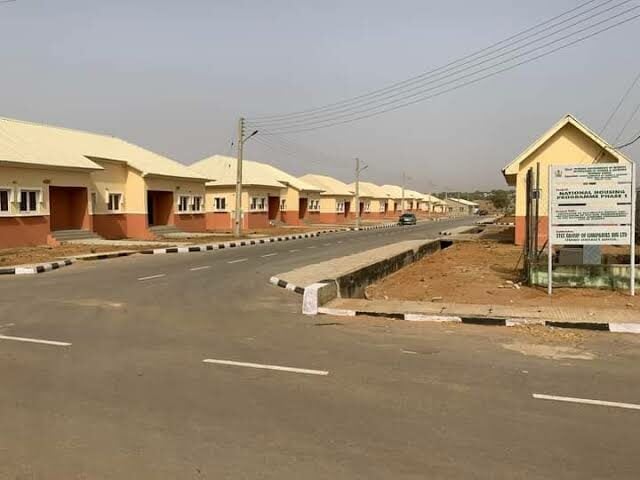
The Federal Government has announced plans to deliver 77,400 social housing units as part of its renewed push to bridge Nigeria’s 28 million housing deficit, but the initiative is already raising a critical question about affordability. While officials describe the project as targeted at low-income earners, past social housing schemes have often ended up beyond the reach of the poor, priced out by high costs, mortgage requirements and location. As the government unveils its latest plan, this story examines how much these homes will cost, who truly qualifies, and whether poor Nigerians can actually afford them. BIDON MIBZAR reports.
For millions of Nigerians, the dream of owning a home is slipping further out of reach as rising rents, soaring building costs and shrinking disposable incomes turn homeownership into a luxury rather than a basic aspiration.
Now, the federal government’s promise to provide 77,400 social homes nationwide has rekindled hopes of a breakthrough. But with many households struggling to afford food, transportation, and rent, a troubling question remains: Will these houses be affordable to the poor, or will they become another government promise that remains beyond the reach of those who need them most?
The challenge goes beyond constructing houses. It is about whether a food seller, a mechanic, a low-income civil servant, or a petty trader can secure a home without exhausting years’ savings or committing to repayments that their earnings cannot sustain.
For Mercy John, a food seller at the Federal Secretariat in Abuja, the uncertainty begins with not knowing how the mortgage system works or whether people like her can benefit without knowing someone influential.
John said she was unfamiliar with the procedures for contributing to the National Housing Fund (NHF), a government-backed scheme designed to mobilise funds for housing finance. She also expressed doubts about whether ordinary citizens could secure mortgage loans without personal connections.
She suggested that seeing other ordinary Nigerians successfully obtain housing loans could encourage her to explore the scheme herself. Her experience reflects a broader concern that housing initiatives may remain out of reach for potential beneficiaries who do not understand the application process or know where to find reliable information.
For Pwausoko James, a federal civil servant based in Maraba, Nasarawa State, the problem is not a lack of interest in owning a home but the difficulty of saving enough money while meeting the daily demands of family life.
James explained that workers must balance rent, food, transportation, children’s education, healthcare and other essential expenses before considering whether they can commit to long-term mortgage repayments.
She welcomed the proposed social housing programme but warned that the number of houses promised would mean little if purchase prices, initial deposits and monthly repayments remained beyond the means of ordinary workers.
The federal government said it intends to address the housing challenge through President Bola Tinubu’s Renewed Hope Social Housing Programme, which targets 100 housing units in each of Nigeria’s 774 local government areas, translating to 77,400 homes nationwide.
At the 15th National Council on Lands, Housing and Urban Development in Sokoto, held from October 12 to 16, 2026, the Minister of Housing and Urban Development, Dr Muttaqha Rabe Darma, outlined measures intended to improve housing delivery and expand access to mortgage finance.
The council, themed “Strengthening Mortgage, Land and Institutional Systems for Accelerated and Inclusive Housing Delivery,” brought together government officials, housing professionals and other stakeholders to examine reforms in land administration, mortgage finance, institutional regulation and affordable housing provision.
Darma said the government’s approach was designed to address not only the housing shortage but also the financial and administrative barriers that prevent Nigerians from becoming homeowners.
However, for James and other low-income workers, the critical issue remains whether the proposed homes will come with payment arrangements that reflect their earnings.
Usman Jubril, a car mechanic based in Apo, Abuja, said artisans and other self-employed workers often struggle to satisfy the documentation requirements imposed by financial institutions.
He explained that although some artisans earn enough to support their families and meet regular expenses, their earnings fluctuate, making it difficult to demonstrate the stable income traditionally expected of mortgage applicants.
Jubril warned that a housing scheme designed mainly around salaried workers could exclude a substantial proportion of Nigerians who depend on informal employment for their livelihoods.
Another concern raised by Awal Yusuf, based in Sokoto, is the need to ensure that housing interventions address the realities of communities beyond Nigeria’s major urban centres.
For residents in different parts of the country, housing affordability is influenced by local land prices, construction materials, infrastructure availability and household purchasing power.
Responding to concerns about the financial exclusion of informal workers, Darma said the government was directing the Federal Mortgage Bank of Nigeria (FMBN) to allocate between 30 and 40 per cent of mortgage bookings to the informal sector.
The measure is intended to expand access to housing finance for Nigerians whose livelihoods depend on trading, small businesses, artisan services and other forms of self-employment.
Darma also directed FMBN to disburse at least 70 per cent of the previous year’s National Housing Fund contributions annually through mortgages.
The minister’s position places mortgage delivery at the centre of the government’s housing reform agenda, with the aim of ensuring that contributions collected from workers translate into more tangible opportunities for homeownership.
He announced a target of delivering 2,000 mortgages in 2026 and increasing the figure to 5,000 by 2028.
Darma also disclosed plans to increase the maximum mortgage loan available through FMBN from N50 million to N85 million by 2028.
The proposed increase is intended to improve borrowers’ capacity to purchase homes in a market where property and construction costs have risen considerably.
However, findings by LEADERSHIP Weekend indicate that a higher borrowing ceiling does not automatically make homeownership affordable to Nigerians earning modest incomes. Interest rates, initial deposits, repayment periods, property prices and monthly earnings will continue to determine whether prospective buyers can sustain their obligations.
For Jubril and other self-employed Nigerians, the practical test will be whether mortgage institutions introduce flexible repayment schedules, accessible documentation requirements and appropriate methods of assessing irregular incomes.
Without such adjustments, allocating a percentage of mortgage bookings to informal-sector workers may not automatically translate into wider access for mechanics, food sellers, traders and other low-income earners.
Also at the Sokoto council, Darma’s reform agenda extended beyond mortgage finance to include measures intended to improve land administration, regulate the housing market and strengthen protections for homebuyers.
The minister identified delays in land titling, registration backlogs, opaque procedures and weak land information systems as factors that increase development costs and discourage investment in the housing sector.
He urged state governments to contribute land for federal housing projects and share housing data with the national system.
Darma also called for reforms to accelerate land titling, establish digital land registries, deploy geospatial technology and improve land administration.
These measures are intended to reduce administrative bottlenecks and make land transactions more transparent, potentially helping to lower some of the costs associated with housing development.
For prospective homeowners, however, the key issue is whether savings from more efficient land administration will translate into lower house prices.
Where developers face lengthy approval processes, uncertain land ownership or expensive registration procedures, these costs may ultimately be passed on to purchasers.
For low-income earners, every additional charge can make the difference between qualifying for a home and remaining in rented accommodation.
The Sultan of Sokoto, Alhaji Muhammad Sa’ad Abubakar III, also called for stronger collaboration among stakeholders to improve access to affordable accommodation.
His intervention reinforced the importance of cooperation among federal and state governments, housing institutions, private developers and other stakeholders in addressing a problem that extends beyond the capacity of any single institution.
State governments will need to identify suitable locations, provide land where possible, facilitate approvals and coordinate infrastructure development if the proposed nationwide housing target is to be achieved.
The government must also clarify how the homes will be financed and constructed, the delivery timetable, the role of private developers, and the mechanisms for monitoring expenditure.
Beyond construction and financing, the condition of the housing estates themselves will determine whether the programme delivers lasting benefits.
Darma said the government intended to require estates under the Renewed Hope Social Housing Programme to meet community integration standards, including electricity, water, a health post, a schoolroom and a tarred access road.
The proposed requirements recognise that decent housing involves more than providing four walls and a roof.
However, for low-income households, the location of an estate and the cost of travelling to workplaces, schools and healthcare facilities can be as important as the price of the house.
Darma said the government was developing a National Housing and Built Environment Regulation Policy intended to address developer licensing, homebuyer protection, professional registration, construction quality standards and housing data.
Under the proposed framework, developers would be licensed, funds collected from homebuyers would be held in escrow, and penalties would apply when developers failed to complete their projects.
The minister also cited Ghana’s establishment of a Real Estate Agency Board as an example of how regulation could help professionalise the sector and improve consumer confidence.
The proposed policy could strengthen protections for people investing their savings in homeownership, particularly those participating in government-backed housing initiatives.
Another major commitment announced at the Sokoto council, LEADERSHIP Weekend gathered, was the National Housing Data Programme, which will include Nigeria’s first National Urban Slum Census.
Darma said the country lacked reliable, current and nationally consistent housing data, making it difficult to determine the number of existing housing units, identify rapidly expanding slum communities and design interventions for those most in need.
The planned programme is expected to strengthen the information available to policymakers on housing conditions and the distribution of demand across the country.
Dr. Aminu Usman, an Economics graduate who finished with a first-class degree and a staff member of the Central Bank of Nigeria, said reliable data would be essential to determining where demand for social housing was greatest.
He explained that a programme covering all 774 local government areas would require accurate information about household incomes, housing conditions, population distribution and the number of people unable to afford decent accommodation.
According to him, reliable data would also make it easier to assess whether the houses were reaching the intended beneficiaries.
His position highlights the importance of making housing data a tool for accountability rather than restricting its use to government planning.
For John, better public communication would be a necessary part of the process. For James and Jubril, accurate data could help policymakers understand why formal workers and informal earners encounter different barriers to homeownership.
Darma also urged state governments to domesticate relevant housing and urban planning legislation, contribute land to federal projects and share data with the national housing system.
He cited Brazil’s Minha Casa Minha Vida programme as an example of how cooperation between federal and state authorities could support large-scale housing delivery.
The proposed social housing programme will therefore require coordination across different levels of government, particularly in land administration, planning approvals, infrastructure provision and the identification of local housing needs.
A federal programme cannot deliver houses effectively in communities where land is unavailable, approvals are delayed or essential infrastructure is not provided.
Each state will need to identify suitable locations, establish clear implementation responsibilities and ensure that infrastructure is provided without undermining affordability.
The 15th National Council on Lands, Housing and Urban Development has outlined an ambitious reform agenda covering mortgage finance, land administration, institutional regulation, housing data and social housing.
The Federal Government’s proposed 77,400 homes could expand access to decent accommodation, while the planned increase in mortgage delivery, the higher loan ceiling and the allocation of 30 to 40 per cent of mortgage bookings to informal-sector workers could help address longstanding barriers to housing finance.
The council’s discussions also highlighted the importance of improving land registration, strengthening cooperation between federal and state governments, protecting homebuyers and developing reliable housing data to guide interventions.
Taken together, these measures suggest that the government’s housing agenda extends beyond increasing the number of buildings to reforming the systems through which land is acquired, homes are financed, and buyers are protected.
But the experiences of ordinary Nigerians show why the programme’s success cannot be measured by targets and policy announcements alone.
For John, the immediate challenge is understanding how to participate in the National Housing Fund and whether ordinary people can access loans without personal connections.
For James, the concern is whether a regular salary can support the deposit and repayments required to own a home.
For Jubril, the question is whether a mechanic with irregular earnings can qualify for a mortgage designed around conventional employment records.
For Awal Yusuf and other residents outside major urban centres, the challenge includes ensuring that housing interventions reflect local conditions, land availability and purchasing power.
For Dr Aminu Usman, reliable data and cooperation between different levels of government will be essential to measuring progress.
Their concerns point to the need for a housing programme that is not only ambitious in scale but also accessible, transparent and responsive to the realities of ordinary households.
The government must explain how beneficiaries will be selected, what the houses will cost, how payments will be structured and what safeguards will prevent the programme from being captured by applicants who are better positioned financially.
It must also provide clear information about the National Housing Fund, expand public awareness, publish implementation timelines and demonstrate how the promised houses will be delivered across the country.
The planned allocation of mortgage bookings to informal-sector workers must translate into accessible financial products, while the proposed land and regulatory reforms must produce tangible reductions in the barriers confronting prospective homeowners.
Ultimately, Nigerians will judge the Sokoto council not by the number of speeches delivered or resolutions adopted, but by whether families who have struggled for years to secure decent accommodation can finally afford a home of their own.
The federal government has set an ambitious target of 77,400 social homes and outlined reforms intended to expand access to housing finance, improve land administration and strengthen consumer protection.
The critical question remains: Will these commitments make homeownership possible for poor Nigerians, or will the cost of acquiring a house continue to place the dream beyond their reach?
We’ve got the edge. Get real-time reports, breaking scoops, and exclusive angles delivered straight to your phone. Don’t settle for stale news. Join LEADERSHIP NEWS on WhatsApp for 24/7 updates →
Join Our WhatsApp Channel