Rio de Janeiro, the Brazilian capital, was in the news recently as world leaders gathered under the aegis of the Group of 20 (G20) countries to tackle issues that pose a threat to international growth and stability.
The 19th session of the Heads of State and Government Summit, which was held for two days in that country, provided an opportunity for them to draw attention to the devastating effects of hunger and poverty, especially in developing nations.
Expectedly, the leaders inaugurated what they formulated, fittingly, as the Global Alliance Against Hunger and Poverty. Member countries also signed protocols that empowered a Task Force to implement practical activities between 2025 and 2030 to accelerate the elimination of hunger and poverty.
The goal of the global alliance was to gather funds and knowledge to implement public policies and social technologies, which have proven effective in reducing global hunger and poverty.
The alliance stressed that ending hunger is also one of the Sustainable Development Goals (SDGs) established by the United Nations (UN) for 2030.
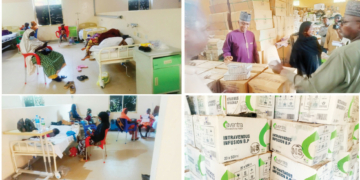
Reports indicate that more than 32 million Nigerians are suffering severe food shortages. The Famine Early Warning Systems Network (FEWS NET) warned that food insecurity in Nigeria is expected to worsen significantly.
In its country analysis, the United Nations Food and Agriculture Organisation (FAO) projected that by 2025, as many as 33 million Nigerians may experience severe food shortages due to compounded economic, environmental, and security factors.
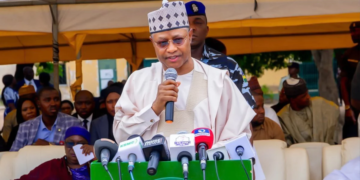
From this perspective, we begin to look at the timeliness of the goals of this Global Alliance. We are enamoured by the fact that President Bola Ahmed Tinubu participated in the deliberations at the summit and also signed the documents that brought to life the principles of the alliance.
The argument that hunger and poverty are so pervasive in the country today is academic because Nigerians know and feel it. The rising cost of food and other items in the face of dwindling incomes makes hunger and poverty a reality to be lived.
The peculiarity of the Nigerian situation is influenced by a multiplicity of factors, most of which are self-inflicted. Corruption in high places has become so endemic that resources that would have aided the reduction, if not elimination, of conditions that energise poverty are frittered away by people in positions who ought to appreciate the implication of diverting resources meant for the public good. This, in effect, stymies efforts to bring about meaningful development that can check traces of poverty that aid hunger.
In Nigeria, governance at all levels is perceived as having fallen short of the ideal. Even the man in the street is knowledgeable enough to know that there is a preponderance of highfalutin, poorly formulated, and indigestible policies. Attempts to forcefully implement such policies under the deception that they are necessary and viable in the long-run have led to challenges that threaten life and society itself.
The dread in the country is that the ruling class perceives poverty and hunger as subjective, given to exaggeration by their victims. In that circumstance, it becomes difficult for them to put in place measures to ease the effect of those societal pangs simply because they neither understand nor feel them.
Compounding this immense absent-mindedness in governance is the scourge of insecurity that is making it near impossible for the poor to grieve over their plight in peace. A combination of lack of access to their farms and the fear of kidnapping for ransom as they go about their daily chores raise the complexity of poverty-induced hunger.
We feel aggrieved at the government’s predilection to politicise measures designed to alleviate poverty as it perceives it. For instance, the conditional cash transfer programme, a good policy in itself, has been reduced to the level that only card-carrying members of political parties can access the money. Those party members must, however, be related to high-ranking political officers who, in disbursing the money, extract commitment to be loyal to the party, especially during elections. That is not how to combat poverty and hunger.
Furthermore, the excessive taxation through the outrageous increase of tariffs on almost every social service is aiding and abetting poverty and hunger.
We hope that President Tinubu’s endorsement of this Global Alliance protocol in Brazil will guide the government in formulating policies and programmes that align with the principles highlighted by the Agreement.
We are persuaded to point out that 2025 is already here, and 2030 is just five years away. It is pertinent to note that the SDGs are the gold standard for measuring efforts to reduce poverty and hunger. From that perspective, we urge the government at all levels to be aware that the eye of the world is on every nation that endorsed that protocol, including Nigeria. In our opinion, it means that the assessment will be strict and devoid of any political shenanigans.
We’ve got the edge. Get real-time reports, breaking scoops, and exclusive angles delivered straight to your phone. Don’t settle for stale news. Join LEADERSHIP NEWS on WhatsApp for 24/7 updates →
Join Our WhatsApp Channel