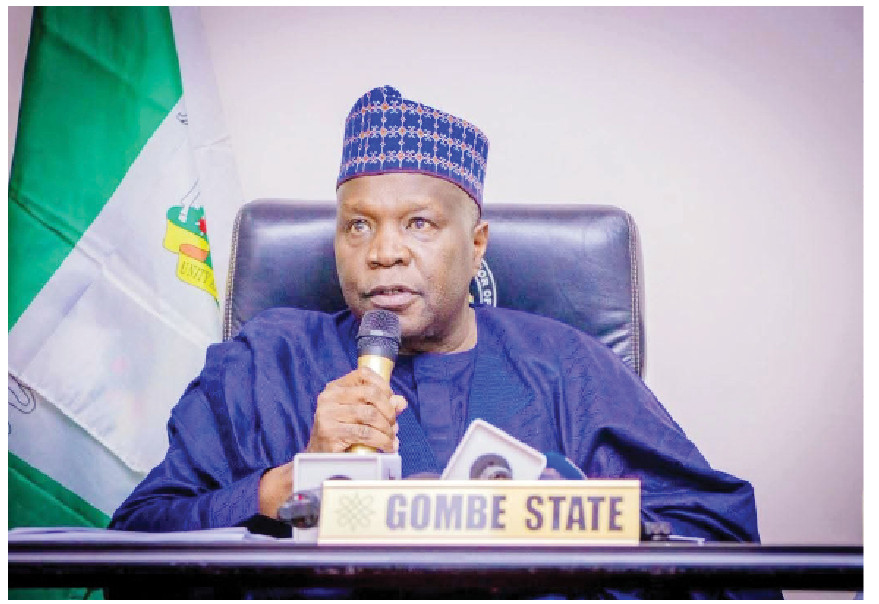
When Governor Muhammadu Inuwa Yahaya, CON, assumed office in 2019, Gombe State’s health sector was hardly where any responsible government would want it to be. Infrastructure gaps, inadequate manpower, weak institutional capacity, poor staff retention and financial barriers to healthcare combined to leave the system in need of urgent resuscitation.
Seven and a half years later, the picture is markedly different. The transformation did not come from one spectacular project. It came from a deliberate attempt to rebuild the healthcare system from the foundation.
At the primary healthcare level, the administration has revitalized 228 Primary Healthcare Centres, including two in every political ward, providing 24-hour services, solar power, water and staff accommodation.
Immunisation service points have risen from 323 to 540, while 440 community health workers and 145 midwives have been deployed to strengthen frontline care.This is significant because healthcare transformation begins where the ordinary citizen meets the system.
The same thinking extends to secondary and tertiary care. General Hospitals in Kumo, Bajoga and Kaltungo have been upgraded as referral centres, while Gombe Specialist Hospital has secured accreditation to train house officers and postgraduate residents in Family Medicine and Obstetrics and Gynaecology. More than 100 house officers have already been trained, following the retention of 16 consultants through improved remuneration.
Perhaps more remarkable is the new 200-bed hospital in Kumo, constructed by the state and subsequently converted by the Federal Government into a Federal Medical Centre. It demonstrates how strategic state investment can attract higher-level federal intervention.
But some of the administration’s most consequential reforms are less visible. A biometric attendance system exposed hundreds of ghost workers and saved over N4.5 billion, while the establishment of the Hospitals Management Board strengthened institutional oversight.
The full implementation of CONMESS and CONHESS for health workers from October last year further addressed the perennial problem of staff retention.
Then comes the affordability question.The establishment of GoHealth has brought more than 380,000 residents into the contributory health insurance system and expanded access for over 100,000 vulnerable people across the state.
GoPharma, supported by additional pharma-grade warehouses, is tackling access to quality and affordable medicines, with local pharmaceutical production envisaged as a long-term objective.
The emergency-care architecture is also receiving attention. Gombe State’s participation in NEMSAS, the SEMSAS ambulance initiative and RESMAT’s free transportation for pregnant women in rural communities are designed around one principle: poverty or distance should not determine who survives an emergency.
What makes the Inuwa Yahaya intervention noteworthy is not simply the number of projects. It is the attempt to connect them into a functioning healthcare ecosystem, from the village PHC to referral hospitals, from health insurance to medicines, from emergency response to manpower development.
The new 1,000-student-capacity College of Nursing Sciences is particularly strategic. It recognises that sustainable healthcare cannot be built with infrastructure alone; it requires a steady pipeline of competent professionals.
This is perhaps where the Governor’s much-discussed “Midas touch” finds its strongest expression. He inherited a health sector requiring urgent attention. Rather than applying cosmetic solutions, he has pursued structural reform, expanding access, strengthening institutions, improving workers’ welfare, reducing financial barriers and investing in the human capital needed to sustain the gains.
The ultimate test, however, is not how many facilities were commissioned. It is whether ordinary citizens can obtain quality care when they need it.
By that measure, the story of healthcare under Governor Inuwa Yahaya is, therefore, not simply a story of projects. It is the story of a government that identified the foundations of a broken system, confronted them systematically and built a new architecture around the needs of the people. That is the defining legacies of the administration, and a demonstration of what purposeful leadership, sustained investment and institutional reform can achieve. That is the Midas touch of Inuwa Yahaya.
We’ve got the edge. Get real-time reports, breaking scoops, and exclusive angles delivered straight to your phone. Don’t settle for stale news. Join LEADERSHIP NEWS on WhatsApp for 24/7 updates →
Join Our WhatsApp Channel