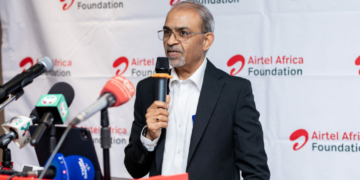
The executive director and national Chief Imam of Al-Habibiyyah Islamic Society, Imam Faud Adeyemi, has appealed to the Nigerian media to intensify their role as society’s watchdog in the fight against pervasive corruption in the country.
He made the call at a press conference to commemorate World Anti-Corruption Day 2025 in Abuja yesterday.
Adeyemi emphasised the importance of journalists, digital communicators, and content creators in promoting accountability and transparency.
He said for seven years, the society has been at the forefront of promoting ethical conduct through faith-based engagement.
“Under our anti-corruption, accountability and transparency campaign implemented via Project EAT-Fin and Project EAT-Halal, we have significantly impacted various segments of society. The society proudly announced the training of 3,000 religious and community leaders, 1,800 young people and 3,500 women across eight Nigerian states, crediting the MacArthur Foundation for their vital support,” Adeyemi said.
This year’s theme, “Championing Accountability and Transparency Through the Media,” highlights the indispensable role of the Fourth Estate in strengthening democracy and civic awareness. “Faith institutions and the media share a collective duty: to guide society toward truth, justice, moral consciousness and responsible citizenship,” Adeyemi added.
Acknowledging the “cancerous corruption” in every aspect of Nigerian life, from employment to education and even security organisations, the group offered glimmers of hope, commended organisations such as the NDLEA and JAMB for their growing transparency, and praised the Nigeria Defence Academy (NDA) for its merit-based admissions this year.
The society issued a clear call to action: “We call on the Nigerian media to rediscover and reinforce their role as the watchdog of society.” This involves rigorous investigative journalism, fact-based reporting, and ethical practice to expose corruption, mobilise communities, and promote integrity. Journalists were urged to encourage courage, demand accountability, and reject all forms of corrupt behaviour.
Beyond the media, the message also reached religious leaders, public officeholders, and citizens. Religious leaders must continue to be “voices of truth and moral direction,” with faith platforms teaching and exemplifying honesty. Public office holders were reminded of their duty to enforce policies consistently and manage national resources responsibly. Every Nigerian, it was stressed, bears personal responsibility for ethical behaviour, as corruption “begins with the daily decisions we make,” he said.
We’ve got the edge. Get real-time reports, breaking scoops, and exclusive angles delivered straight to your phone. Don’t settle for stale news. Join LEADERSHIP NEWS on WhatsApp for 24/7 updates →
Join Our WhatsApp Channel