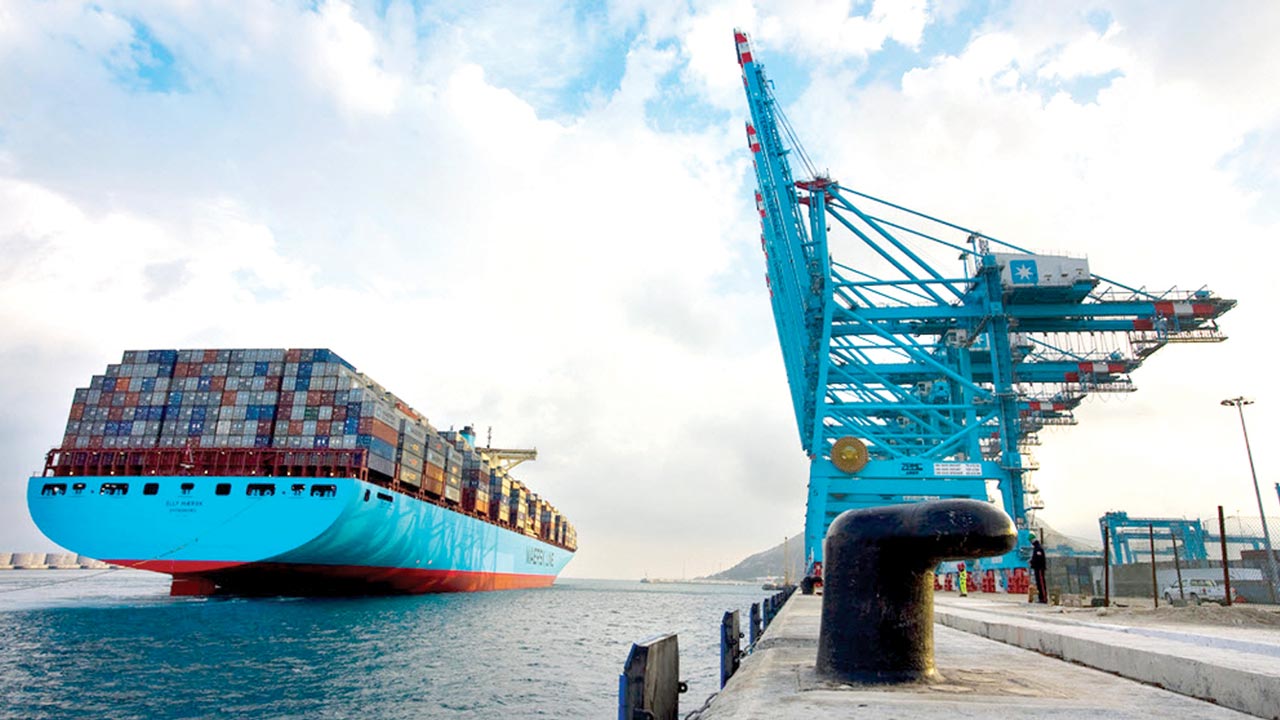
Tension is currently brewing in Nigeria’s maritime sector as key stakeholders brace for a confrontation over a proposed 30 per cent increase in Import Documentation fees and a 60 per cent hike in Port Additional Charges by foreign shipping companies.
LEADERSHIP Weekend reports that a revised schedule of charges issued by Mediterranean Shipping Company (MSC) and which took off January 1st, 2026, shows that the Import Documentation Fee for 20-foot containers has been increased from N45,000 to N58,500, while the fee for 40-foot containers rose from N72,000 to N93,600.
Similarly, Port Additional Charges for 20-foot containers were increased from N50,000 to N80,000, while charges for 40-foot containers jumped from N100,000 to N160,000. MSC indicated in the notice that the new tariffs would take effect from January 1, 2026.
However, the planned increment has drawn strong opposition from the Association of Nigerian Licensed Customs Agents (ANLCA) and the Importers Association of Nigeria (IMAN), both of which described the increases as arbitrary, ill-timed and unjustifiable.
Speaking, the coordinator of ANLCA Western Zone, Alhaji Femi Anifowose, disclosed that several shipping companies are preparing to introduce a new wave of charges, singling out MSC as a major example.
Anifowose said the association has formally appealed to President Bola Ahmed Tinubu to urgently direct the minister of Marine and Blue Economy, Adegboyega Oyetola, alongside relevant regulatory agencies such as the Nigerian Shippers’ Council (NSC), to halt the implementation of the proposed increases.
According to him, shipping lines failed to provide sufficient notice or credible justification for the new charges, stressing that key economic indicators often cited by operators, including diesel, Premium Motor Spirit (PMS) and foreign exchange, have largely stabilised over the past 18 months.
“There is absolutely no reasonable basis for these increments at this time. Fuel prices and forex pressures have eased considerably, yet shipping lines continue to impose fresh charges on importers and agents without transparency,” Anifowose said.
He further revealed that MSC issued what he described as an impromptu invitation to a stakeholders’ meeting on December 23, 2025, scheduling it for December 30, 2025, during which the new charges were announced to take effect barely 48 hours later, on January 1, 2026.
Anifowose criticised the timing of the meeting, noting that it was deliberately fixed at a period when many importers, freight forwarders and relevant government agencies were unlikely to be available to attend or participate meaningfully.
“The so-called stakeholders’ meeting was neither inclusive nor consultative. Many critical stakeholders were absent, yet far-reaching decisions affecting the entire port system were announced,” he lamented.
ANLCA Western Zone, therefore, demanded an immediate postponement of the new charges, insisting that any review of shipping costs must be preceded by proper and holistic consultations involving freight forwarders, the Nigerian Shippers’ Council, shippers and other key industry players.
The association also warned that the continued imposition of what it termed “unilateral and exploitative charges” could trigger strong resistance from freight forwarders.
“If this trend continues unchecked, freight forwarders may be left with no option but to withdraw their services or embark on protests across the ports,” Anifowose warned.
Similarly, the South-West Zone of the Importers Association of Nigeria (IMAN) has petitioned the Nigerian Shippers’ Council, condemning what it described as arbitrary increases in shipping line charges.
The association expressed deep concern that recent approvals were allegedly granted without adequate consideration for their impact on cargo owners, particularly importers who ultimately bear the financial burden.
IMAN noted that the approvals were issued without transparent, cost-based justifications, structured stakeholder consultations or a comprehensive assessment of the cumulative effects on importers, merchants and traders.
The group warned that the increases are being imposed amid harsh economic realities characterised by exchange rate volatility, rising logistics costs and declining consumer purchasing power.
IMAN further argued that the development contradicts the statutory mandate of the Nigerian Shippers’ Council as the port economic regulator, which is expected to promote fairness, efficiency and protect port users from monopolistic or arbitrary pricing practices.
According to the association, the current regulatory posture appears to favour service providers at the expense of cargo owners, thereby discouraging investment, increasing the cost of doing business and weakening Nigeria’s competitiveness within the regional and global logistics value chain.
IMAN also criticised what it described as the repeated engagement of intermediary stakeholders who are not the direct payers of port tariffs, while associations representing actual financial contributors, importers and cargo owners, are excluded from key decision-making processes.
The petition, signed by Chief Joseph Ajoku, acting chairman of IMAN South West Zone, called on the Shippers’ Council to urgently review its approval processes, ensure inclusive stakeholder engagement and adopt a more balanced and transparent regulatory approach that safeguards the interests of importers and the wider economy.
IMAN urged the NSC to act swiftly to restore confidence among port users and prevent further escalation of costs capable of stifling trade and economic growth.
We’ve got the edge. Get real-time reports, breaking scoops, and exclusive angles delivered straight to your phone. Don’t settle for stale news. Join LEADERSHIP NEWS on WhatsApp for 24/7 updates →
Join Our WhatsApp Channel