The ways in which current crises are quietly shaping Nigeria’s next election are increasingly evident, as alleged hardship and insecurity dominate public discourse. ADEMU IDAKWO examines how these realities may influence the road to 2027.
In the bustling markets of Lagos and Onitsha, the mood is strikingly similar despite the distance between them. Traders haggle with cautious buyers, prices shift almost daily, and conversations drift beyond business to something more urgent: survival.
At Mile 12 in Lagos, one of the largest food distribution hubs in West Africa, a food vendor adjusts her prices repeatedly throughout the day, reflecting the volatility of supply and transport costs. Trucks arrive later than expected, sometimes delayed for days, while others come half-filled due to disruptions along supply routes.
“People complain, but what can we do? Everything is expensive,” she says, pointing to tomatoes, rice, and pepper, staple items that have nearly doubled in cost within months due to inflation, fuel price hikes, and supply chain disruptions.
She paused briefly before adding, “Even we who are selling, we are suffering. Sometimes you don’t even make a profit after all the stress.”
Hundreds of kilometres away at Onitsha Main Market, arguably the commercial heartbeat of southeastern Nigeria, the anxiety runs deeper and more layered.
“It’s not just about sales anymore,” a trader explains, his voice tinged with worry. “You think about safety, on the road, in your shop, everywhere. Sometimes goods don’t even arrive on time because drivers are afraid of attacks or extortion on highways.”
He recounts how a shipment he expected the previous week was delayed after transporters reportedly avoided certain routes due to security concerns.
“When the goods finally came, the cost had gone up. Who pays for that? The customer.”
Transporters and traders say that now, “security costs,” including informal payments at checkpoints and the risk of highway banditry, are ultimately passed on to consumers. In some cases, drivers demand higher fees to compensate for perceived dangers, while others refuse certain routes altogether.
The result is a vicious cycle where insecurity fuels inflation, and inflation deepens hardship. As transportation becomes more expensive and unpredictable, market prices continue to rise, placing additional strain on already stretched households.
These shared concerns , rising economic hardship and persistent insecurity , are fast becoming defining national issues, shaping public mood and, increasingly, the political narratives ahead of the 2027 general election.
In Kaduna, a civil servant, Damian Paul, said the situation has gone beyond politics to survival. “Every day, you hear of attacks or kidnappings around communities. Even going to work feels like a risk sometimes,” he said.
He added that many workers now live with constant anxiety. “You leave your house in the morning not knowing what could happen. Families are worried. It affects how people think, how they vote, everything.”
“When elections come, people will not look at promises; they will look at who can actually keep them safe and reduce the hardship,” he said.
Similarly, in Rivers State, a small business owner, Evans Goodman, expressed frustration over the rising cost of living.
“The cost of running a business has doubled. Fuel, transport, everything is high. At the end of the day, profit is almost nothing,” he said.
He explained that customers are also struggling, making it difficult to maintain steady sales. “People don’t have the money to spend like before. Even when they come, they price and go. It’s affecting everybody.”
“Whoever is coming in 2027 must understand what ordinary Nigerians are going through,” he added.
Across Nigeria, insecurity has once again taken prominence, driven by recurring attacks, kidnappings, communal clashes, and growing public unease. In rural communities, farmers abandon farmland due to fear, while in urban centres, residents worry about rising crime and safety concerns.
The impact extends beyond physical safety. Economic activities are disrupted, supply chains are weakened, and investor confidence is affected. For many Nigerians, the line between economic hardship and insecurity is increasingly blurred.
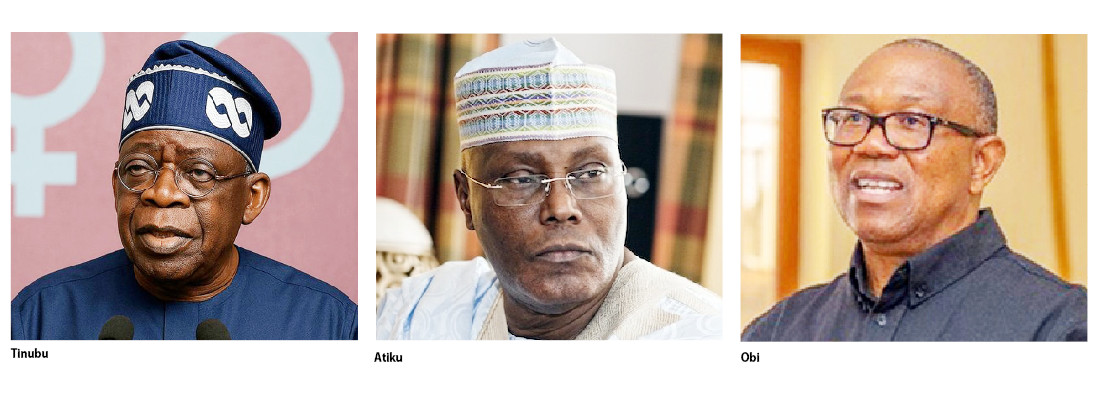
In separate statements issued in recent weeks, key opposition figures, including former Vice President Atiku Abubakar, former Anambra State governor Peter Obi, former Minister of Transportation Chibuike Rotimi Amaechi, and former Kaduna State governor Nasir El-Rufai, have intensified their criticism of the federal government.
Atiku said worsening conditions reflect deeper governance failures. “What we are witnessing today is not just hardship, but a deepening crisis of leadership. When citizens cannot feel safe or economically secure, then leadership must take responsibility.”
Obi linked insecurity directly to economic decline. “Insecurity is not just about violence; it is destroying livelihoods. Farmers cannot go to their farms, businesses are shutting down, and investor confidence is weakening.”
Amaechi questioned the outcome of economic reforms. “We were told subsidy removal would free resources for development, but Nigerians are yet to feel the benefits.”
El-Rufai hinted at growing alignment among opposition actors. “There are ongoing discussions among leaders who believe the country deserves better.”
Their statements suggest an emerging political narrative that seeks to tie governance performance directly to citizens’ lived realities, particularly in areas of safety and economic stability.
Beyond political rhetoric, data underscores the scale of the crisis, with over 5,700 conflict-related deaths recorded in the first half of 2025, while reports show continued spikes in violence into 2026.
The ruling All Progressives Congress (APC) has pushed back against the criticisms. Its National Publicity Secretary, Felix Morka, said opposition figures were exploiting national challenges.
“It is ironic that individuals who had the opportunity to address many of these structural problems while in office are now presenting themselves as critics,” he said.
He maintained that the administration of President Bola Ahmed Tinubu is focused on long-term reforms. “The government is implementing bold and necessary reforms to stabilise the economy and strengthen national security.”
Morka also dismissed opposition alignment as politically driven. “What we are seeing is a convergence of political ambition, not necessarily a convergence of ideas.”
Despite these assurances, many Nigerians say the immediate impact of reforms has been difficult.
If insecurity fuels fear, economic hardship defines everyday life. Across Lagos and Onitsha, traders report declining purchasing power and changing consumer behaviour.
Data shows inflation rose above 33 per cent in 2024 before easing to around 15 per cent in early 2026, though the cost of living remains high.
Food insecurity is worsening, with over 30 million Nigerians affected.
“Before, customers would buy in bulk,” a Lagos trader said. “Now it’s just small, small.”
Analysts say these issues are shaping electoral narratives. “What we are seeing is the gradual formation of electoral narratives,” one analyst said.
Nigeria’s political history offers a comparison with 2015.
With the next general election still ahead, early battle lines are forming.
Back in Onitsha, a trader sums it up: “Whoever will fix these things, that is who people will follow.”
The sentiment is echoed across Lagos, Kaduna, and Rivers.
For many Nigerians, the 2027 election is no longer just a political event; it is seen as a potential turning point.
And as these realities deepen, they may define not just governance, but the political fate of those seeking power in 2027.
According to Dr Christian Okeke, Lecturer, Department of Political Science, Nnamdi Azikiwe University, Awka, the next general election should be issued based, such that will encourage healthy debates around security and economy rather than the seeming concentration of effort to muscle key opposition parties out of the race.
Stifling the opposition is antithetical to democracy and may trigger unexpected consequences. Politicians’ desperation is worsening political tension rather than de-escalating it.
The country needs robust debates and a tension-free process, and the ruling party must play a key role in this and show that it has no hand in the crisis rocking the opposition coalition, as alleged.
Nevertheless, it is encouraging that key opposition politicians are increasingly uniting by the day, against all odds.
Faith Nwadishi, the executive director of the Centre for Transparency and Advocacy, said politicians are weaponising insecurity and economic hardship to score political points against themselves, rather than having a genuine interest in poor Nigerians.
“We have witnessed during former president Muhammadu Buhari when they wanted to unseat Goodluck Jonathan,
“The opposition castigated Jonathan’s administration for being poor and lacking in focus, causing people to suffer from hunger and poverty as well as insecurity.
“When their party, All Progressive Congress, APC, won, the situation became worse, and Nigerians are now facing severe hunger and insecurity.
“There is nothing new about it, except that Nigerians need to wake up to reality to demand good governance.” She said
We’ve got the edge. Get real-time reports, breaking scoops, and exclusive angles delivered straight to your phone. Don’t settle for stale news. Join LEADERSHIP NEWS on WhatsApp for 24/7 updates →
Join Our WhatsApp Channel