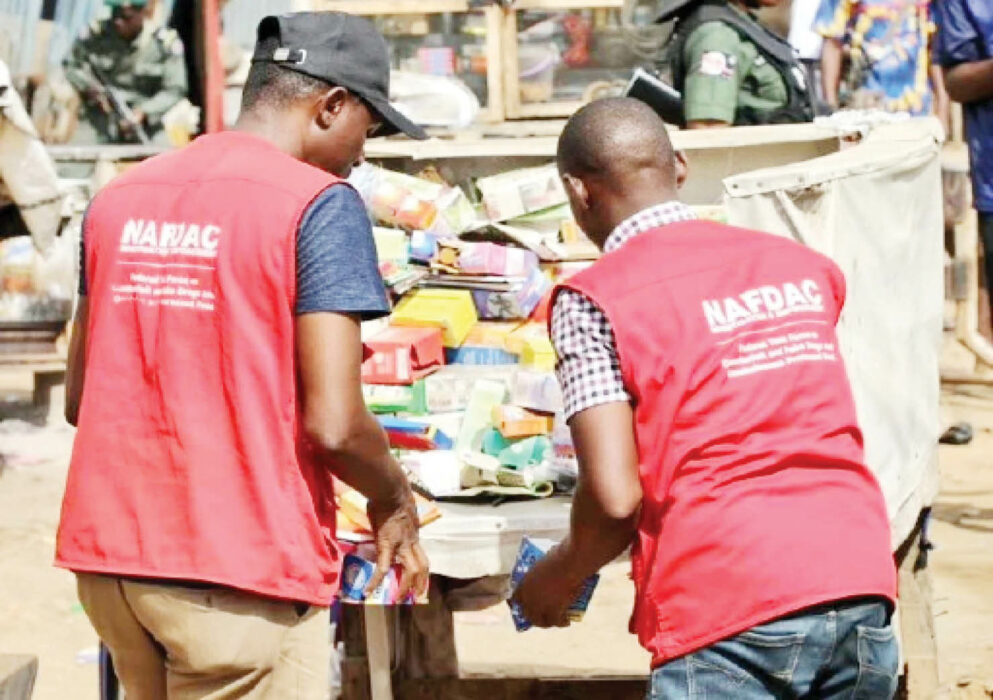
For many years, Kano State was notorious for its chaotic pharmaceutical market, where fake and counterfeit drugs thrived. Investigations revealed widespread smuggling and the open sale of narcotics and banned substances, placing the state among the country’s hotspots for drug abuse.
In 2013, the Kano State government, working in collaboration with the National Agency for Food and Drug Administration and Control (NAFDAC), took major steps to combat counterfeit drugs by destroying fake medicines worth N600 million that had been seized from various outlets.
To tackle these persistent challenges and reform Nigeria’s drug distribution system, the Presidential Committee on Pharmaceutical Sector Reform (PCPSR) was established in 2003. Among its initiatives was the creation of Coordinated Wholesale Centres (CWCs) to enhance regulatory oversight.
Given Kano’s position as a major commercial hub supplying drugs to northern states and neighboring countries, the city was selected as a pilot location for the CWC, which was subsequently commissioned by the federal government.
Fast forward to 2024, NAFDAC brought three suspects before the Federal High Court in Kano for manufacturing, distributing, and selling falsified medicines, including Asian Ampicillin 125mg + Cloxacillin 125mg/5ml oral suspension for children, which contained no active ingredients.
Today, these combined efforts by government agencies, regulators, and stakeholders are beginning to yield positive results, helping to sanitise the drug market in Kano and improve public health and safety across the region.
The World Health Organization (WHO) estimates that over 280,000 children die annually in sub-Saharan Africa due to substandard medicines for treating pneumonia and malaria. According to a study by the UN Office on Drugs and Crime, up to 500,000 people in the region die each year from counterfeit drugs. The report further highlights that approximately 267,000 deaths are linked to substandard malaria medicines, while around 169,000 children die each year from fake antibiotics used to treat pneumonia.

The transition of drug sellers to the new CWC proved challenging, creating tensions among stakeholders, including NAFDAC and the Pharmaceutical Council of Nigeria (PCN). Many sellers initially refused to relocate, prompting these agencies to warn manufacturers, importers, and distributors to stop supplying pharmaceuticals, medical devices, and other regulated products to any open-market outlets, particularly in Niger Street, Sabon Gari Market, or anywhere outside the CWC at Dangwauro.
The Kano CWC, named Kanawa Coordinated Warehouse Centre, is a multi-billion-naira facility developed under a public-private partnership (PPP) arrangement. With many traders now relocating to this site, positive testimonials have emerged regarding the enhanced drug distribution system and legitimate supply chain, contributing to a reduction in the prevalence of substandard and falsified (SF) medicines.
Kano State NAFDAC Coordinator, Mr. Kasim Ibrahim, told LEADERSHIP Weekend that in less than two years of the CWC’s operation, the chaotic distribution of counterfeit and substandard drugs has been reduced by 90 percent. He reported that in 2024, NAFDAC identified at least 35 products in the market that were either completely fake or unregistered. By 2025, the number of such cases had dropped significantly, thanks to the Agency’s active presence and oversight at the CWC.
“In 2024, we apprehended a suspect supplying more than nine completely fake products that bore NAFDAC numbers. Laboratory analysis revealed that these products contained no active ingredients. The Coordinated Wholesale Centre has enabled us to verify products and achieve significant progress in the fight against substandard medicines,” he stated.
“The number of unregistered products has actually decreased because of our presence at the centre, making it much more difficult for fake drugs to enter the market,” he added
“However what we are now experiencing is regulatory faud, where persons who registered a product with NAFDAC can go and bring more product with the same number of unregistered products or a registered product coming in different variations coming into the market.
“When we identify such product, we flag it, send to our laboratory for quality confirmation and further regulatory action – such acts are regarded as classified fraud and with time, we will clean the system,” he explained.
Mr. Ibrahim praised the initiative, emphasizing that the CWC’s restricted environment allows all regulatory agencies to effectively monitor the flow of goods in and out of the market, enhancing overall safety and accountability.
The director of Kanawa Pharmaceutical Partners Ltd at the Coordinated Wholesale Centre (CWC), Alhaji Dahiru Matazu, explained that the state has long struggled with the issue of fake drugs. He noted that when the federal government introduced the initiative for a coordinated market, legitimate businesses welcomed it wholeheartedly.
Matazu emphasised that they conduct regular random sampling of both new and existing pharmaceutical products to ensure compliance with standards, which serves as a deterrent for those considering illegal trade.
When asked about the prevalence of fake drugs in the open market compared to the coordinated market, he stated that it has drastically reduced by 90 percent. He highlighted the presence of an experienced task force that monitors all activities in the center, both covertly and overtly.
“Kano used to be at the forefront of the fake drug issue. When the federal government introduced this initiative, we embraced it to support our legitimate business,” he said. “This has yielded great success; This has also enabled us to seized a large cache of fake ciprofloxacin tablets. Also led to the ban in the production of artemeter suspension for children because of many of the companies didn’t meet standards.
While noting that the centre has handed over varieties of expired and falsified drugs worth 1.4bn to NAFDAC, he added that they have received approval to build a laboratory for the center, but for now, they have signed a memorandum of understanding with a federal government-approved lab in Kaduna. Any drugs that do not meet quality standards are sent for examination.
Matazu cited a case involving a company, Asia Pharmaceutical, which brought goods that, after lab examination, were found to be a suspension made with ordinary flour and containing zero active ingredients. Despite having a Lagos address, these products were actually produced in Niger State. He also mentioned that another tablet was discovered to have only seven (7) percent of the active ingredients it was supposed to contain, while a smuggled cough syrup from Sokoto was also seized.
“If not for the coordination, it would have been difficult to trace these drugs, and we know their consumption poses serious health risks,” he stated.
Regarding controlled substances, Matazu noted that they are no longer sold indiscriminately but under the supervision of qualified experts, such as pharmacists, except in urgent cases where prescriptions are provided. This has significantly helped reduce drug abuse, especially among youth, who now have less access to these substances.
Expressing gratitude for the booming business at the center, he mentioned that customers now come from as far as Chad, the Central African Republic, Niger, Ghana, Cameroon, and other neighboring countries to purchase drugs due to the guarantees offered in a coordinated environment.
Matazu urged fellow traders to remain committed to their legitimate businesses and to avoid buying or selling any form of substandard or falsified medicines, emphasizing that engaging in such practices can lead to prolonged illness, waste of resources, and a breach of trust between patients and healthcare providers.
Veterinary medicine trader Mohammed Adam further highlighted the reduction in fake drug sales in the market, despite initial resistance to relocation. He explained that in the open market, people often manufactured and sold locally made drugs for birds without NAFDAC approval, but such practices are now strictly prohibited at the CWC.
Another trader, who preferred to remain anonymous, mentioned that while they were initially resistant to moving due to the distance from town, compliance became necessary as the new location provided a sustainable livelihood. She reported that business is thriving, and the environment is conducive for operations.
LEADERSHIP Weekend points out that, the remarkable progress in Kano’s fight against counterfeit and substandard drugs demonstrates that coordinated regulation, enforcement, and stakeholder cooperation can yield tangible results.
However, sustaining this success requires continuous vigilance, adequate funding, and unwavering commitment from both the federal and state governments. It is imperative that authorities maintain strict oversight, expand the Coordinated Wholesale Centre model to other regions, and ensure that offenders face the full weight of the law. Only through sustained action can Nigeria safeguard public health, protect its most vulnerable populations, and finally eradicate the scourge of fake and dangerous medicines from its markets.
We’ve got the edge. Get real-time reports, breaking scoops, and exclusive angles delivered straight to your phone. Don’t settle for stale news. Join LEADERSHIP NEWS on WhatsApp for 24/7 updates →
Join Our WhatsApp Channel