On approaching the ancient town of Machina, vast sesame farms, on a plain land and beyond sight, seized a visitor’s gaze. The pale-green plants sway gently under the Sahel sun, stretching endlessly across the horizon, a quiet testimony to decades of labour by farmers who have long depended on the tiny seed for survival.
For many of them, including 43-year-old Musa Gana, those fields once marked both hope and heartbreak. At dawn, Musa drags heavy sacks of freshly harvested sesame to the roadside, just as his father did before him. For years, this ritual signalled the end of his work and the beginning of uncertainty. Middlemen arrived, fixed prices at will and hauled away Yobe’s finest raw sesame, unprocessed and undervalued.
“Sometimes you sell because you have no choice. The money barely lasts till the next season,” Musa recalls his experience with LEADERSHIP.
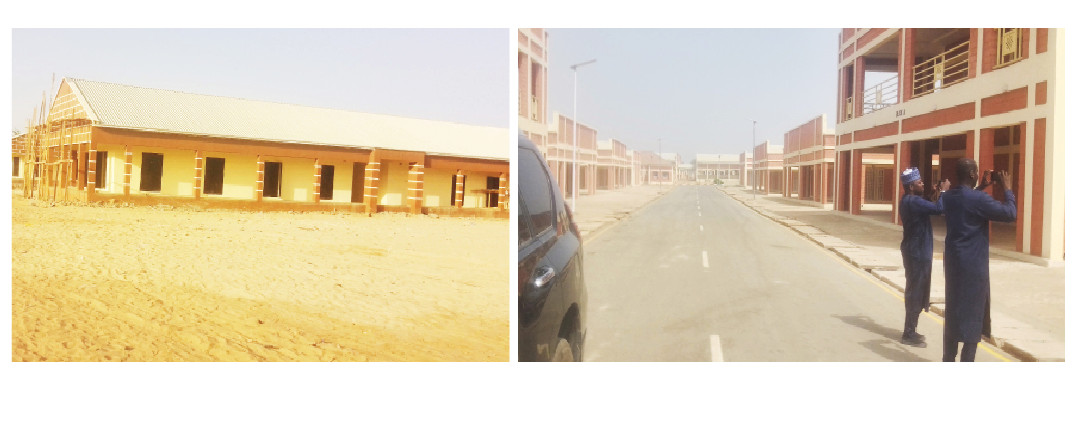
This year, however, feels different. A few metres from Musa’s farm, a massive Sesame processing plant now rises from the dust, steel frames, concrete floors and humming machines standing where emptiness once reigned. To farmers across Machina and beyond, the factory represents more than infrastructure; it signals a turning point in Yobe’s long struggle to convert agricultural abundance into economic prosperity and diversification.
As the sun dips low over Machina, Musa loads his empty sacks, lighter but hopeful. “Before, sesame ended in the field,” he said quietly. “Now, it goes to the factory, and maybe to the world.”
Yobe State is Nigeria’s largest producer of sesame, a high-value crop used globally for edible oil, confectionery and pharmaceuticals. Traders and agronomists rank Yobe’s sesame among the finest in the country, prized for its oil content, uniform grain size and low impurity levels. The state produces enough to meet domestic commercial demand and supply export markets in Asia, the Middle East and Europe.
Yet for decades, this advantage remained largely untapped. Most sesame harvested in Yobe left the state as raw produce, sold cheaply to buyers who transported it elsewhere for cleaning, grading and packaging. The real profits, along with jobs and skills, were created outside the state. It was a structural gap that kept farmers poor and the local economy dependent on subsistence agriculture and federal allocations.
That gap is what the newly constructed sesame processing factories in Machina, Potiskum, Damaturu and Nguru aim to close.
Conceived under Governor Mai Mala Buni as part of Yobe State’s post-insurgency recovery and resilience plan, the factories were built to restore livelihoods disrupted by years of Boko Haram violence. Farming communities were displaced, markets collapsed and investors fled.
In response, the state began repositioning agriculture as a driver of industrial activity, employment and long-term economic recovery. Sesame, already a natural strength, became a strategic entry point.
Inside the Machina factory, towering machines now perform what once took days of manual labour. Sesame seeds move through four critical stages of cleaning to remove stones and chaff; drying to achieve export-grade moisture levels; separating to meet quality specifications and packaging for both domestic and international markets.
Similar installations stand ready in Potiskum, Damaturu and Nguru. Combined, the factories are designed to process hundreds of thousands of tonnes annually.
The effects are beginning to ripple across the value chain. In Potiskum, sesame trader Aisha Lawan remembers seasons when prices crashed at harvest. “Everyone rushed to sell because there was no storage or processing,” she said.
She added, “Buyers took advantage.” Now, she notes, farmers are more confident. Knowing their produce can be processed locally, many delay sales, negotiate better prices or supply directly to aggregators linked to the factories.
Beyond price stability, the factories are reshaping perceptions of farming itself. In Damaturu and Nguru, young men and women are being trained as machine operators, quality controllers and warehouse assistants. To many, it is their first exposure to industrial work. The plants have introduced new conversations into rural communities, about grading, moisture content and traceability, concepts once distant from smallholder agriculture.
Economists estimate that processing can raise the value of sesame by between 30 and 50 per cent, depending on grade and destination. More importantly, value addition keeps money circulating locally, supporting transporters, packaging suppliers and service providers, while strengthening Yobe’s non-oil revenue base.
Experts argue that this transition is vital for Yobe’s long-term stability. Dr. Mohammed Sadiq, an agricultural economist at the Federal University, Gashua, said exporting raw sesame deprives producing states of significant income.
“When you process locally, you retain value that would otherwise leave the state,” he explains. He went on to add that, “It creates jobs, builds technical skills and supports economic diversification, especially in post-conflict regions like Yobe.”
State officials echo that view. The Secretary to the Yobe State Government, Baba Malam Wali, said the factories are central to efforts to build a more resilient economy. He notes that the state is working toward Public-Private Partnership agreements with investors to operate the facilities efficiently and sustainably.
“Our objective is to ensure these factories support farmers, attract investment and contribute meaningfully to Yobe’s economic recovery,” he says.
From the endless sesame fields of Machina to the humming factory floors, Yobe’s experiment with agro-industrialisation is unfolding quietly but deliberately. In turning farms into factories, the state is not just processing sesame, it is rebuilding confidence, restoring livelihoods and laying the foundation for an economy less vulnerable to conflict and dependence, rooted firmly in the soil its people have always tilled.
We’ve got the edge. Get real-time reports, breaking scoops, and exclusive angles delivered straight to your phone. Don’t settle for stale news. Join LEADERSHIP NEWS on WhatsApp for 24/7 updates →
Join Our WhatsApp Channel