Niger State Government is calling for stronger global partnerships and investment to scale up climate action and build resilience for over six million of its residents in the face of escalating environmental challenges.
The call was made by the Deputy Governor of Niger State, Comrade Yakubu Garba, who delivered the message on behalf of Governor Mohammed Umaru Bago at the ongoing COP30 Climate Conference in Belém, Brazil.
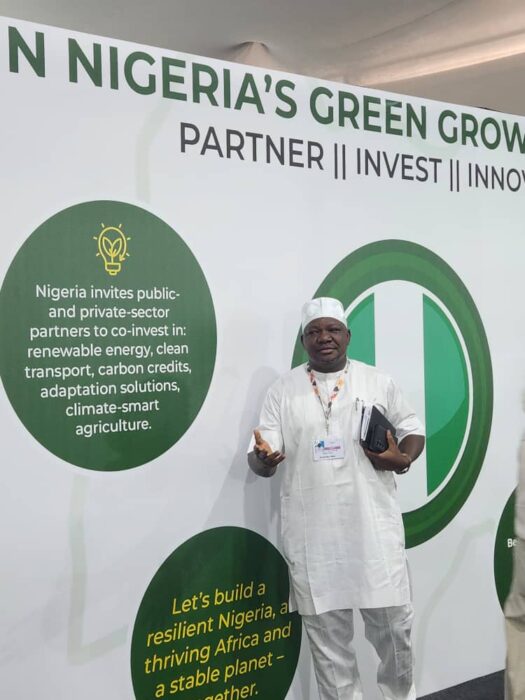
Speaking at the Nigerian Pavilion, Garba emphasized that climate action in Niger State is not only a local necessity but also a critical contribution to Africa’s global climate commitments.
In a statement signed by its Special Adviser on Media and Communications to the Director General, Niger State Agency for Green Initiatives (NG-SAGI),Abdulsalam Mahmud,said “Investing in Niger State means investing in the resilience of over six million people, in food security, and in the protection of critical ecosystems that sustain Nigeria’s environmental balance,” Garba said.
He described Niger State as a land endowed with rich natural resources, fertile agricultural landscapes, and a population determined to build a sustainable and climate-smart future.
Garba highlighted the state’s Green Sustainable Agenda, noting that climate actions are embedded across governance sectors—including agriculture, forestry, energy, water resources, waste management, and sustainable livelihoods.
The roadmap aligns with Nigeria’s Nationally Determined Contributions (NDCs) and Africa’s broader call for equitable climate finance and fair partnerships.
The Deputy Governor stressed that despite the state’s proactive approach—implementing renewable energy initiatives, afforestation programs, climate-smart agriculture, and youth-led waste-to-wealth enterprises—financial constraints have limited the scale of these efforts.
He urged development partners, climate funds, and private investors to collaborate with Niger State in mobilizing climate finance through concessional funding, carbon market access, and blended financing mechanisms.
Garba also emphasized the importance of technology transfer and innovation in driving low-carbon development.
“Niger State seeks collaboration with research institutions, development partners, and climate investors to promote clean energy, digital climate information systems, and modern agricultural technologies,” he said.
Youth participation is central to the state’s green transformation.
According to Garba, equipping young people with the right tools, training, and technology can create jobs, foster green entrepreneurship, and sustain climate-smart value chains. “Niger State is seeking partnerships to establish green innovation hubs, renewable energy clusters, and digital monitoring systems for effective climate action tracking”.
The Deputy Governor cited the direct impacts of climate change on local communities, including unpredictable rainfall, floods, droughts, desert encroachment, and declining crop yields.
In response, Niger State has initiated community-based adaptation programs that integrate indigenous knowledge with modern scientific solutions, such as land restoration projects, irrigation support, and early-warning systems for farmers.
We’ve got the edge. Get real-time reports, breaking scoops, and exclusive angles delivered straight to your phone. Don’t settle for stale news. Join LEADERSHIP NEWS on WhatsApp for 24/7 updates →
Join Our WhatsApp Channel