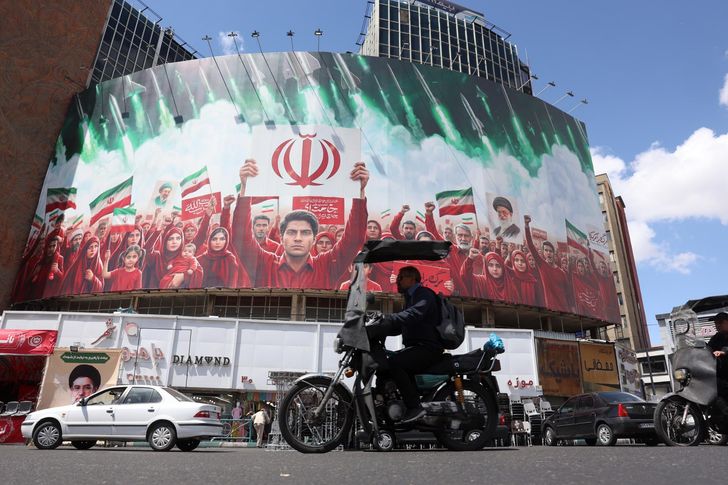
Iran expects to restore most damaged refining and distribution facilities to 70–80% of their pre-attack capacity within one to two months, a senior oil official said, as authorities work to recover from a wave of strikes on energy infrastructure.
Deputy Minister of Oil Mohammad Sadeq Azimifar told the Student News Network that repair work had begun and that part of the Lavan refinery is expected to resume operations within about 10 days, with other units coming back online gradually.
Starmer Urges US, Iran To ‘Find Way Through’ After Peace Talks Falter
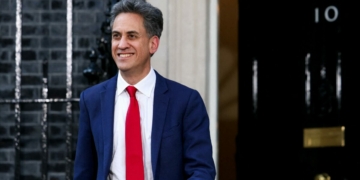
Prime Minister Sir Keir Starmer has urged the US and Iran “to find a way through”, after initial peace talks between Iran and the US finished without an agreement to end the war.
Sir Keir warned against “further escalation” in the Middle East, after the negotiations between the two sides in Pakistan concluded in the early hours of Sunday.
Downing Street said the prime minister discussed the talks – which the UK is not involved in – with the Sultan of Oman in a phone call on Sunday.
The failure to reach a deal creates uncertainty over whether a fragile two-week ceasefire between Iran and the US will continue to hold.
US Vice-President JD Vance was in Pakistan for the talks and said Iran’s refusal to commit to not build a nuclear weapon was the main reason for the lack of a deal.
Iran’s delegation leader, Parliament Speaker Mohammad Bagher Ghalibaf, said whilst his country had risen “raised forward-looking initiatives”, the US had so far failed to gain its trust.
In readout of Sir Keir’s call with His Majesty Sultan Haitham bin Tarik al Said, a Downing Street spokeswoman said: “They discussed the peace talks held in Pakistan over the weekend and urged both sides to find a way through.
“It was vital there was a continuation of the ceasefire, and that all parties avoided any further escalation, the leaders agreed.”
Earlier, Health Secretary Wes Streeting told the BBC it was “disappointing” initial talks to end the war had broken down without a deal.
Streeting said the UK wanted to see a negotiated end to the war that “puts Iran’s nuclear ambitions to bed”.
The cabinet minister also said Sir Keir had made “the right choice” not to commit the UK to joining US-Israeli military strikes on Iran.
On the BBC’s Sunday with Laura Kuenssberg programme, Streeting said: “It’s obviously disappointing that the talks have broken down for now.
But he said “the mere fact that the Americans and the Iranians were able to get around the table together is highly unusual and necessary.
Speaking to Sky News earlier, Streeting described President Trump’s threat last week that “a whole civilisation will die tonight” unless Iran agreed a deal to end the war as “outrageous” and “extraordinary”.
But the cabinet minister told the BBC it was better to judge Trump on his actions, not his words.
“If there’s one thing we’ve learned about President Trump, particularly in this term, it also applies to his first term, you have to draw a distinction between what he says and how he says it, particularly on social media, and what he does,” Streeting said.
Differences over the war in Iran and other international issues have strained the historically close relationship between the UK and the US.
Earlier this week, Sir Keir said he was “fed up with the fact that families across the country see their bills go up and down… because of the actions of Putin or Trump”.
Sir Keir has spoken to Trump about the need for a plan to get ships going through the Strait of Hormuz, which has effectively been blocked by Iran during the conflict.
This week, the UK will host talks on reopening the vital shipping lane with a coalition of countries.
When asked if the UK would send Royal Navy vessels to escort ships through the strait, Streeting said “it would be premature for me to say anything at this stage”.
Streeting was also asked about the UK’s deal to hand over control of the Chagos Islands to Mauritius.
The Chagos Islands – officially known as the British Indian Ocean Territory – are in the Indian Ocean and Britain has controlled them since the early 19th Century.
But fearing international legal action that could threaten a joint UK-US military base on islands, the government struck a deal with Mauritius, which has claimed sovereignty over the territory.
On Friday, the UK government said it had shelved this after the US failed to formally confirm its approval.
Streeting insisted the UK government had not “U-turned” on the deal rather that “elements of the US administration have had a change of heart” and the UK needed to “iron out some of the difficulties”.
We’ve got the edge. Get real-time reports, breaking scoops, and exclusive angles delivered straight to your phone. Don’t settle for stale news. Join LEADERSHIP NEWS on WhatsApp for 24/7 updates →
Join Our WhatsApp Channel