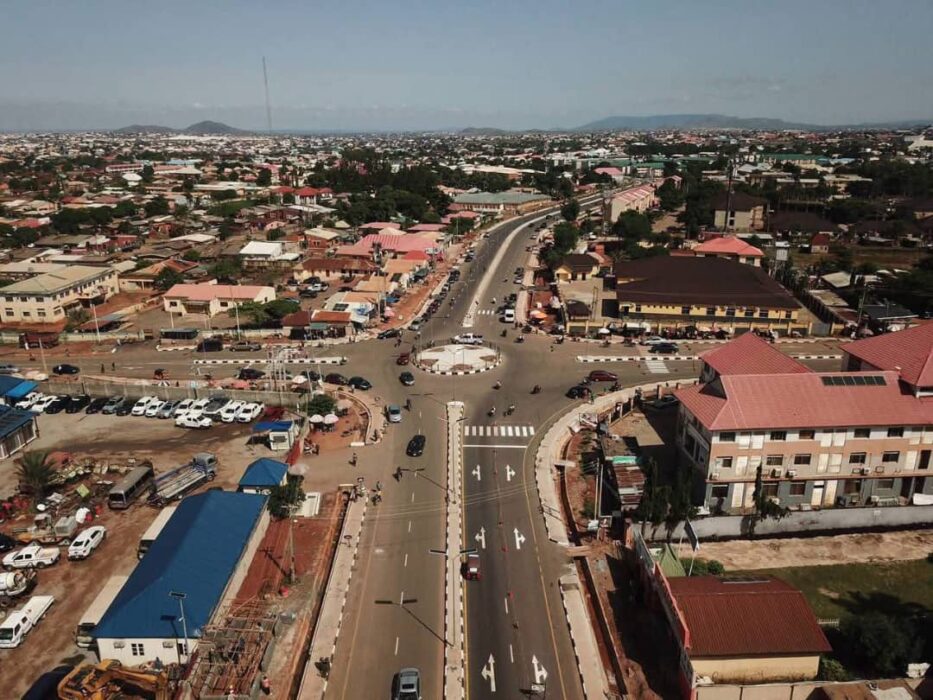
Residents and commuters along the Karu corridor of the Federal Capital Territory (FCT) have begun to feel the impact of the newly completed 15-kilometre road project, with improved traffic flow, drainage and night-time visibility replacing years of congestion and flooding.
The road, executed by indigenous contractor, Abdul-Val Nigeria Limited, also known as Abduval Limited, runs from the Karu Interchange on the Abuja-Keffi Expressway to Customs Clinic Junction.
Awarded on August 22, 2025, the project also incorporates several strategic feeder roads, including DSS Road, NIA Road, EFCC Road, Primus Hospital Road and Old CBN Quarters Road.
The corridor had previously been notorious for traffic bottlenecks, poor road conditions and flooding during heavy rainfall, causing commuters and residents to spend long hours on journeys that ordinarily should take only a fraction of the time.
However, residents who spoke on the completed project said the situation had changed significantly.
A shop owner, Mrs Chinyere Obasi, said the improved infrastructure had begun to translate into better business prospects for traders and other commercial operators along the corridor.
“Before, the road wasn’t all that good. And there was nothing like the street lights. But now, as you can see, the road is okay. And our businesses, by the grace of God, is even better than before,” she said.
Obasi expressed appreciation to President Bola Ahmed Tinubu, FCT Minister Nyesom Wike and the contractor for the project, praying that the authorities would sustain the pace of infrastructure development.
For teacher Anita Ogunwunmi, the most immediate benefit has been the reduction in travel time.
“Before, the congestion on the road was so bad. When rain falls like this, we can’t pass here, but now, everywhere is free. It’s better. We are happy,” she said.
According to her, the improved traffic situation has also changed how she plans her daily movement.
“The route is faster. Before, I used to leave very early to come to work, but now I can leave much later. There’s no hold-up, there’s no traffic. It’s free. The road is free, it’s better,” she said.
Another motorist, Engr Johnpaul Adamu, described the project as a major transformation of an area that had for years suffered from infrastructure deficiencies.
“Well, this road has been a major challenge in Karu. If you can remember, 12 months ago, this place was not like this,” Adamu said.
He said flooding, inadequate drainage and congestion had previously made the route difficult for motorists and residents.
But he said the completed project had changed the appearance and functionality of the corridor.
“Now, wow, this is, let me say, this is city now. We are happy. The infrastructure is working, there’s streetlights. If you come here by 12 midnight, you’ll think this is afternoon. We thank God for everything,” he said.
Adamu also commended the FCT Minister for what he described as visible infrastructure development across the territory.
“For me in particular, I will say, let it be 4+4 for him, because he has done well,” he said.
“In fact, this is the first minister that I’ve seen that has worked, that has provided infrastructure, water, dams, housing everywhere. Everything is going well. We give God the glory. For me, he’s the best minister I’ve ever seen, FCT Minister in particular,” he said.
Meanwhile, the project manager of Abdul-Val Nigeria Limited, Hacı Cengiz, said the project had demonstrated that Nigerian-owned companies could successfully execute major infrastructure projects when given the opportunity and necessary support.
“We are not a foreign company, but thank God we are doing well, and the minister is supporting indigenous companies very well. Thank you, Minister,” Cengiz said.
He disclosed that the Karu project was the company’s second major road project to be completed fully, following its work on the Ushafa road.
“This is the second project we are going 100 per cent we finished. Before in Ushafa, now this Karu project completely finished, 100 per cent completed,” he said.
Cengiz said the company had delivered the Ushafa project ahead of schedule, completing an 18-month project within seven months.
“For example, in Ushafa, it was 18 months, but we completed seven months, 100 per cent. Now we come here, the same thing in Karu.
“About 15 kilometres in Karu also, dualisation of the road. And 100 per cent we completed. That is why the minister, Mr Wike, commissioned the project,” he said.
He attributed the successful delivery of the projects to the company’s investment in equipment and materials, as well as the support received from the FCT administration.
Beyond the physical infrastructure, Cengiz said the project had generated employment for residents of the host communities.
“Up till now, about 259 workers are working. Especially, the majority are from the community. Where we are working, we are employing from the community,” he said.
He added that the economic impact extended to local businesses, as workers patronised shops and other service providers within the communities where the project was being executed.
Cengiz further argued that encouraging indigenous contractors was important to retaining technical expertise, equipment and investment within Nigeria.
“It is an indigenous company. Our MD is supporting very well, and especially the minister. I want to say: ‘Thank you, Minister,’ because he is supporting the indigenous company,” he said.
According to him, foreign contractors could leave the country after completing projects, whereas indigenous firms retain their expertise and equipment in Nigeria.
“Foreign companies, when they come and do the work, later on after two, four, five years, they go. But indigenous company, and the experience, knowledge, data, everything stay in here. And you see our equipment, this is the big investment for Nigeria,” he said.
The completed road is therefore being seen by residents not merely as another infrastructure project, but as a major intervention along one of the key gateways into Abuja, with the potential to improve commuting, stimulate commercial activity and reduce the disruption caused by flooding.
For communities along the corridor, the immediate expectation is that the improved infrastructure will be properly maintained to ensure that the gains recorded are sustained over time.
We’ve got the edge. Get real-time reports, breaking scoops, and exclusive angles delivered straight to your phone. Don’t settle for stale news. Join LEADERSHIP NEWS on WhatsApp for 24/7 updates →
Join Our WhatsApp Channel