
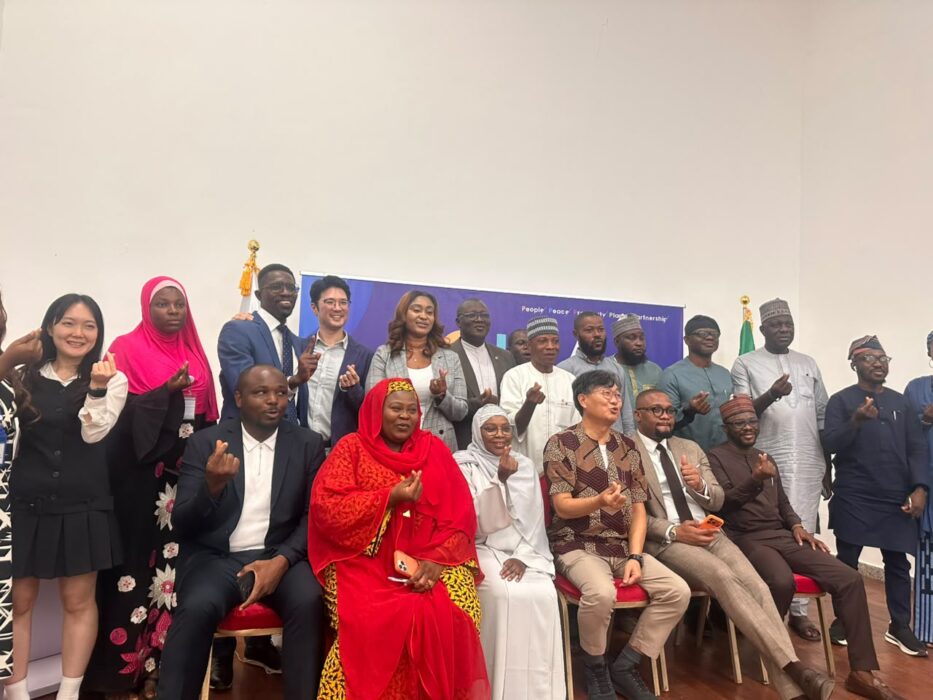
The Korea International Cooperation Agency (KOICA), through partnerships with Nigerian government institutions and development organisations, has continued to support digital skills, entrepreneurship, education and capacity building to strengthen human capital and expand economic opportunities in Nigeria.
Giving an overview of KOICA’s development cooperation in Nigeria, the agency’s Senior Deputy Country Director, Mr Ki-Hyun Baik, said its interventions span digital governance, education, healthcare, agriculture, entrepreneurship, and public administration.
Baik said KOICA, which established its Nigeria office in 2008, had implemented various development and training programmes with a total budget of approximately US$82.74 billion.
He also said about 2,000 Nigerians had participated in training and scholarship programmes in Korea, providing opportunities for skills development, knowledge exchange and exposure to new approaches.
Speaking on KOICA’s development impact in Nigeria, UNDP Head of Inclusive Growth Claire Henshaw said the agency’s partnership with the United Nations Development Programme (UNDP) was helping build platforms for digital innovation, skills acquisition, and business development.
Henshaw, who is the UNDP project manager for the Abuja Centre for Entrepreneurship (ACE), said the centre, whose construction recently commenced, would provide young Nigerians and entrepreneurs with opportunities to acquire skills, improve their businesses and leverage digital tools and artificial intelligence.
She said the initiative was particularly important as Nigeria and Africa adapt to the Fourth Industrial Revolution and the growing influence of artificial intelligence.
According to her, micro, small and medium enterprises (MSMEs) account for a significant share of employment in Nigeria, making it necessary to create an enabling environment for businesses to start, grow and scale.
She added that the involvement of the Small and Medium Enterprises Development Agency of Nigeria (SMEDAN) would help expand access to entrepreneurship support and extend the benefits of the initiative to more businesses.
Henshaw said UNDP had also supported a fashion hub and provided a 120kVA mini-grid within the SMEDAN ecosystem, with more than 1,000 MSMEs benefiting from the intervention.
She stressed that access to infrastructure, energy, technology and technical support remained critical to enabling small businesses to reach their full potential.
On education, the Executive Secretary of the Universal Basic Education Commission (UBEC), Dr Aisha Garba, highlighted KOICA’s contribution to digital education and teacher capacity building in Nigeria.
Garba said the partnership, which has been ongoing for several years, supported the first phase of the Smart Education Project, designed to demonstrate how technology and innovation could strengthen teachers’ capacity and improve learning outcomes.
According to her, key achievements included the establishment of six Digital Content Development Studios, development of operational frameworks and the creation of platforms to support schools implementing digital education.
She said the studios were equipped with high-tech infrastructure for developing digital educational content, including technology provided through the Korean partnership.
Teachers were trained in the use of digital technology in teaching, while school principals and technical personnel also received training in digital pedagogy and operational guidelines.
Garba said the project had produced digital learning resources in Mathematics and Science for primary schools and Junior Secondary School 1 to 3.
She noted that the investment in teachers and school leaders had provided an opportunity to assess the impact of digital education, while participants who travelled to Korea through the programmes returned with experiences and lessons that could be adapted to the Nigerian context.
“We may not take everything from one another, but we can learn from each other and adapt what works to our own context,” she said, stressing the importance of continued Nigeria-Korea cooperation in education.
Garba said the Smart Education initiative had also provided a foundation for expanding digital literacy across public schools, noting that there was still a long journey ahead given the size of Nigeria’s education system.
She expressed optimism about the next phase of the partnership, particularly its potential to extend digital education opportunities to more schools, teachers and students.
The development partners said continued collaboration among government institutions, international organisations and other stakeholders would remain important in expanding digital skills, improving education, supporting MSMEs and creating opportunities for young Nigerians.
We’ve got the edge. Get real-time reports, breaking scoops, and exclusive angles delivered straight to your phone. Don’t settle for stale news. Join LEADERSHIP NEWS on WhatsApp for 24/7 updates →
Join Our WhatsApp Channel