Nigeria’s long and exhausting war against terrorism – Boko Haram, ISWAP/ISIS, banditry, kidnapping, and communal bloodletting has always rested on one fragile but indispensable pillar: the trust of ordinary people. Communities provide the intelligence that guides operations. They are the eyes and ears that security agencies rely on in terrains where technology is limited, geography is harsh, and armed groups blend easily into rural life.
When that trust collapses, the entire architecture of national security weakens. The controversy surrounding the recent killings of women protesters in Lamorde, Adamawa State, sit squarely at the heart of this dangerous erosion.
What happened in Lamorde is another tragic headline in a country grown numb to violence. Women took to the streets protesting what they saw as sustained failures of protection and rising insecurity around their communities.
That such a peaceful demonstration ended in bloodshed is not only morally unacceptable but strategically catastrophic. It signals to already traumatised citizens that even a non-violent appeal for safety can carry deadly consequences.
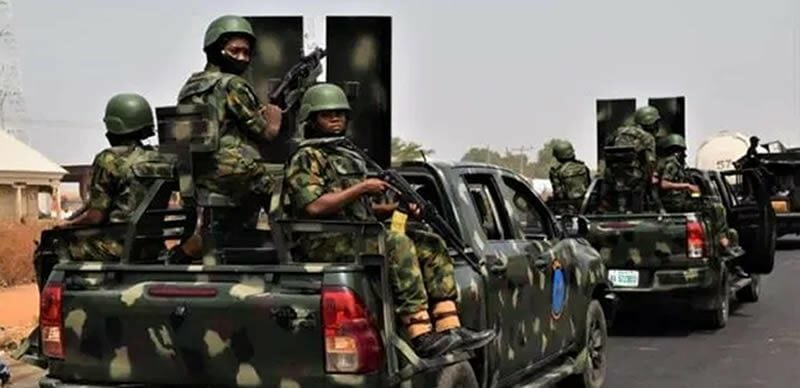
The confusion surrounding the incident only deepens the national wound. Reports from eyewitness accounts suggest that the shots that killed the women were fired by soldiers deployed in the area. The women were protesting what they termed a delayed response by the military to calm tensions between Bachama and Chobo communities of the LGA. The women were seen holding leaves and blocked the movement of troops into the area. They accused security agencies of delayed responses and biased interventions in favour of the Chobo community.
According to Chief Agoso Bamaiyi, the District Head of Gyawana, a community in Lamorde LGA, the women came out peacefully, carrying leaves, begging for security, instead, they were met with live gunfire. Another witness Mr. Morrison said “when the soldiers came, they met the women standing on the highway, blocking the access road. The soldiers didn’t say anything to the women. They just opened fire. These women had nothing on them but leaves, and who attacks women during battle?”
The military, on the other hand, denies responsibility and has provided alternative explanations. The Acting Assistant Director, Army Public Relations, Sector 4 Operation Hadin Kai/23 Brigade, Captain Olusegun Abidoye in a statement explained that combined security forces, including troops of 23 Brigade, the Nigerian Police, NSCDC, and the SSS, responded to violent clashes between the Bachama and Chobo tribes, resulting from longstanding land disputes and ethnic tensions.
“While moving to secure the Secretariat, some women blocked the road to deny troops passage to the Secretariat, while armed men suspected to be fighting for Bachama extraction fired indiscriminately within the community. Troops then created a passage and proceeded to the Local Government Secretariat ( LGS) to secure the area.
At this point, no woman was shot or injured. Otherwise, troops would not have been allowed to find any passage through the crowd,” the said in statement posted on X.
At the centre of this controversy lies a familiar problem: a lack of timely, transparent, and credible accountability mechanisms. In a country where allegations of excessive force have repeatedly gone unaddressed, the instinctive reaction of many citizens is distrust. This distrust, once entrenched, does not stay local—it spreads.
This is why what happened in Lamorde cannot be dismissed as a localised tragedy. It is a national security issue with direct implications for the ongoing fight against banditry and terrorism across the North-East, North-West, and North-Central regions. Communities that feel wronged or unprotected either retreat from cooperation or seek protection elsewhere—sometimes from the same vigilante or armed groups the government seeks to eliminate.
In environments such as Adamawa, Taraba, Zamfara, Kaduna or Niger, the battle between the state and criminal networks often hinges not on firepower, but on who the people believe will protect them.
Compounding this crisis is the troubling resurgence of communal clashes in Taraba and surrounding states. While these conflicts are often framed as land or ethnic disputes, their security consequences are national in scope.
Communal violence creates the perfect chaos for bandits to operate with impunity. It divides communities along fault lines that terrorists exploit. It forces security agencies to stretch already thin resources across multiple flashpoints. And in many cases, the same communities devastated by banditry are also those torn apart by communal reprisals.
If the state responds to these complexities with heavy-handedness instead of careful engagement, it risks turning its own presence into a trigger rather than a stabiliser. The difference between a peacekeeping operation and a provocation often lies in discipline, communication, and clarity of mission. Where these are lacking, tragedies like Lamorde become almost inevitable.
This newspaper has long argued that Nigeria’s security architecture is too dependent on military deployment and too weak in systems of accountability, conflict mediation, community policing, and intelligence coordination. Lamorde confirms this structural weakness. What Nigeria faces is not simply a shortage of boots on the ground; it is a shortage of legitimacy. The state must be seen to act fairly, transparently, and competently. Without this, even the best-resourced operations will falter.
It is, therefore, imperative that the Lamorde incident be subjected to a thorough, independent, and time-bound investigation. Not a routine inquiry, not a closed-door internal review, but a transparent process capable of restoring public confidence. The findings must be made public and must include testimonies from community members, security personnel, civil society organisations, and independent observers. If wrongdoing is established—whether through excessive force, negligence, or operational failure—there must be consequences. Nigeria’s security forces cannot ask for public trust while evading public scrutiny.
But accountability alone is not enough. The federal government must address the deeper systems that allow such tragedies to recur. Rules of engagement for internal security operations must be strengthened and enforced. Military units deployed for civilian policing roles must undergo mandatory retraining in crowd control, de-escalation, and human rights standards. The Nigeria Police Force, chronically underfunded and overstretched, must be rebuilt to reduce the overreliance on the military for domestic operations. And in conflict-prone areas, government must invest in community dialogue structures, early-warning mechanisms, and dispute-resolution frameworks that prevent small disagreements from exploding into deadly clashes.
Nigeria cannot afford a future in which citizens fear their protectors as much as their attackers. The war against banditry and terrorism will not be won solely through raids, firepower, or tactical deployments. It will be won when communities believe that the state is firmly and consistently on their side. Lamorde is a test of that belief.
We call on the federal government, the military authorities, and state governments to treat this moment with the seriousness it demands. The nation’s security battles are too complex, too entrenched, and too costly for avoidable mistakes, unexamined force, or eroded trust. Nigeria cannot fight insecurity while sowing insecurity. The state must protect its citizens—and when it fails, it must be brave enough to correct itself.
We’ve got the edge. Get real-time reports, breaking scoops, and exclusive angles delivered straight to your phone. Don’t settle for stale news. Join LEADERSHIP NEWS on WhatsApp for 24/7 updates →
Join Our WhatsApp Channel