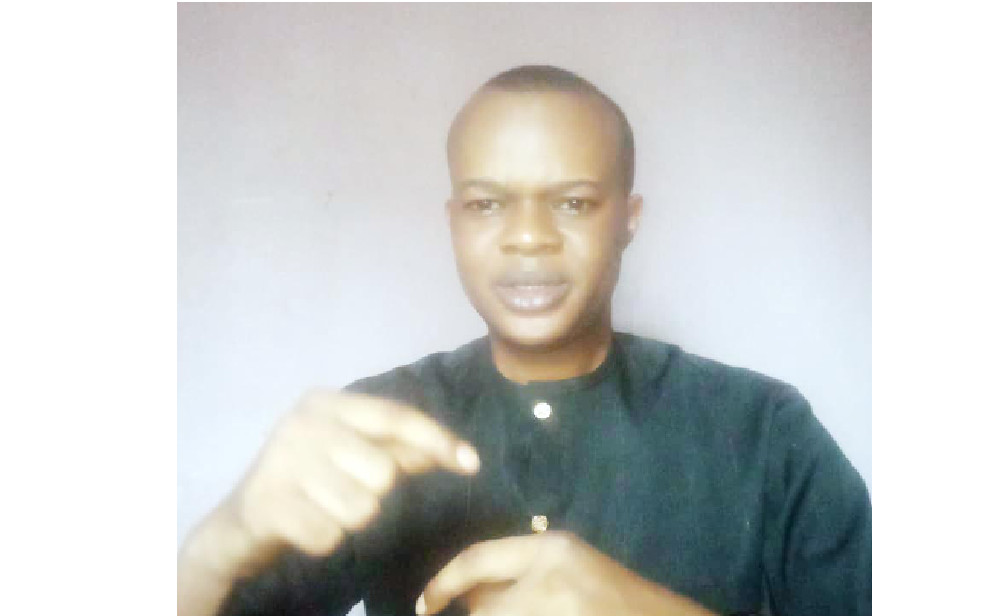
Dr. Christian Okeke, Lecturer in the Department of Political Science at Nnamdi Azikiwe University, speaks with ADEMU IDAKWO on the deepening crisis within the Peoples Democratic Party (PDP), analysing the implications of the Wike-led convention and what it means for Nigeria’s opposition politics ahead of 2027.
What does the Wike-led national convention mean for the unity of the Peoples Democratic Party?
Well, the PDP is a paradox and a cat with many lives. It is a party that once reached the pinnacle of political prosperity, stability, and power. It remained in that position of glory for 16 uninterrupted years and even boasted that it would endure for at least 60 years. However, all of that is now history. Today, we are discussing a party that contributed to its own loss of political dominance and subsequently engaged in self-destruction, a situation it continues to grapple with, including the loss of the 2015 presidential election.
That said, I recognise genuine efforts by some individuals to save the soul of the party, and I sympathise with those who, out of frustration, have defected to what they consider greener political pastures. The Abuja national convention held last week has not significantly healed any wounds, if it has done so at all. I speak strictly as an observer; sincere party members may hold a different view.
To begin with, we did not witness the return of those who had previously left the party, especially the political heavyweights. If the convention were truly a healing balm, one would have expected a significant number of these individuals, often described as prodigal sons of the PDP, to retrace their steps. Instead, even on the eve of the convention, some members were still exiting the party.
Furthermore, many observers argue that there was no visible or sincere effort at reconciliation before the convention.
It appeared more like a continuation of the struggle for supremacy, with each faction determined to emerge victorious. This does not reflect the spirit of unity.
Even now, there are ongoing efforts to nullify the convention and its outcomes. From an observer’s standpoint, therefore, achieving unity within the PDP remains a distant goal, at least for now.
Who appears to have the upper hand politically?
At present, the Wike group is enjoying considerable momentum. It has the advantage of a subsisting favourable judgment from the Court of Appeal in Abuja. Additionally, it enjoys crucial recognition from INEC and has successfully conducted a national convention.
The leader of this group, Wike, appears to be operating with immense confidence and a clear sense of political advantage. Whether this amounts to a pyrrhic victory or a sustainable political gain remains to be seen. The source of this confidence and perceived victory is something only members of the group can fully explain.
How does this situation compare with past internal party crises in Nigeria?
Intra-party crises are not new in Nigeria. Several political parties have experienced internal conflicts that threatened their leadership structures, yet many have managed to navigate such turbulent periods.
For example, APGA experienced a prolonged leadership crisis lasting nearly a decade, involving multiple court cases. Despite that, the party still exists today, maintaining a governor and some legislators, albeit with the scars of those difficult years.
The PDP is also no stranger to internal conflict. However, some observers believe that the current crisis is different in nature. It appears to involve deeply personal grievances, almost like an aggrieved arrowhead seeking redress for perceived injustice. It resembles a fierce political battle of titans, with one side displaying extraordinary stamina, resilience, and strategic depth.
The crisis is further complicated by the perception that some actors may not be genuinely committed to saving the party. While this may be an outsider’s perspective, it raises critical concerns. One faction appears to be gradually losing its grassroots support, while another is seen as playing a strategic game that some interpret as a proxy conflict benefiting a rival political party.
There is, therefore, a significant trust deficit. The Turaki-led faction seems convinced that Wike and his allies do not have the party’s best interests at heart, and vice versa. Ultimately, the key question remains: which side genuinely seeks the party’s survival, and will the PDP emerge stronger from this crisis?
How could this affect Nigeria’s opposition politics ahead of the next elections?
This is indeed the central issue. Whether the PDP can emerge from this internal struggle strong enough to effectively challenge the ruling APC in the forthcoming general elections remains highly uncertain.
A major point of confusion for many Nigerians is how Nyesom Wike, perceived as the dominant figure within the PDP, can simultaneously serve in an APC-led administration while maintaining influence within the PDP. This raises fundamental questions about political loyalty and strategic intent.
Can one serve in the APC and actively campaign against it, particularly against the President? Does this suggest that his political allegiance lies with the APC while he seeks to retain control of the PDP? These are complex issues that require clarification.
Unless there is a dramatic turnaround, the PDP may be too weakened to mount any significant challenge in the 2027 elections. The possibility of forming a coalition with other opposition parties also appears unlikely. For instance, aligning with figures such as Atiku Abubakar, Peter Obi, Rabiu Kwankwaso, or David Mark under a unified platform seems difficult. In practical terms, this could mean that the opposition enters the 2027 presidential race significantly weakened, which would be a major setback for Nigeria’s democratic balance.
Does this situation give the ruling party an advantage?
Absolutely. As I noted earlier, the ongoing crisis within the PDP is likely to benefit the ruling APC. There are even speculations that elements within the APC may be indirectly supporting the Wike faction, although there is no concrete public evidence to substantiate this claim.
Moreover, if the crisis persists unresolved, it could hinder the PDP’s ability to field credible candidates. Should the situation deteriorate further, the party might even find itself in a position where it indirectly supports the APC, particularly through factions aligned with Wike.
What lessons should political parties learn from this crisis?
One major lesson is that excessive concentration of power in a single individual is detrimental to party stability. When a party becomes overly dependent on one dominant figure, its institutional integrity is compromised.
Political parties must strike a balance between accommodating influential members and maintaining internal discipline. Mechanisms must be in place to manage egos and ensure that the collective interest of the party supersedes individual ambitions.
Justice is also critical. Perceived injustice often lies at the root of internal conflicts. If the origins of the current PDP crisis are examined closely, they may reveal instances where individuals felt unfairly treated. I think addressing these grievances early could prevent escalation.
From a legal standpoint, how valid is the Wike-led PDP convention?
That is ultimately a matter for the courts, particularly the Supreme Court, to determine. The issue may already be before the judiciary, which will provide a definitive ruling.
We understand that the Kabiru Turaki faction sought a court injunction to halt the convention, arguing that proceeding with it could render pending judgments ineffective. Despite this, the convention went ahead. The judiciary has handled similar cases in the past and is well-positioned to address this matter.
Are there constitutional or procedural breaches that could invalidate it?
Yes, certainly. If there were a valid court order restraining the convention, or if the Wike-led group is eventually declared illegitimate by the courts, then the convention would lack legal standing.
As the Latin maxim states, aliquid in nihilo stare non potest, something cannot stand on nothing. However, since the matter is sub judice, it is best left for judicial determination.
What role does the Independent National Electoral Commission play in determining its legitimacy?
INEC’s role is primarily to monitor the process, as required by law. However, the ultimate determination of legitimacy rests with the courts.
Once a judicial decision is reached, it will clarify the party’s leadership structure and determine the PDP’s future trajectory as it seeks to redefine its role in Nigeria’s evolving political landscape.
We’ve got the edge. Get real-time reports, breaking scoops, and exclusive angles delivered straight to your phone. Don’t settle for stale news. Join LEADERSHIP NEWS on WhatsApp for 24/7 updates →
Join Our WhatsApp Channel