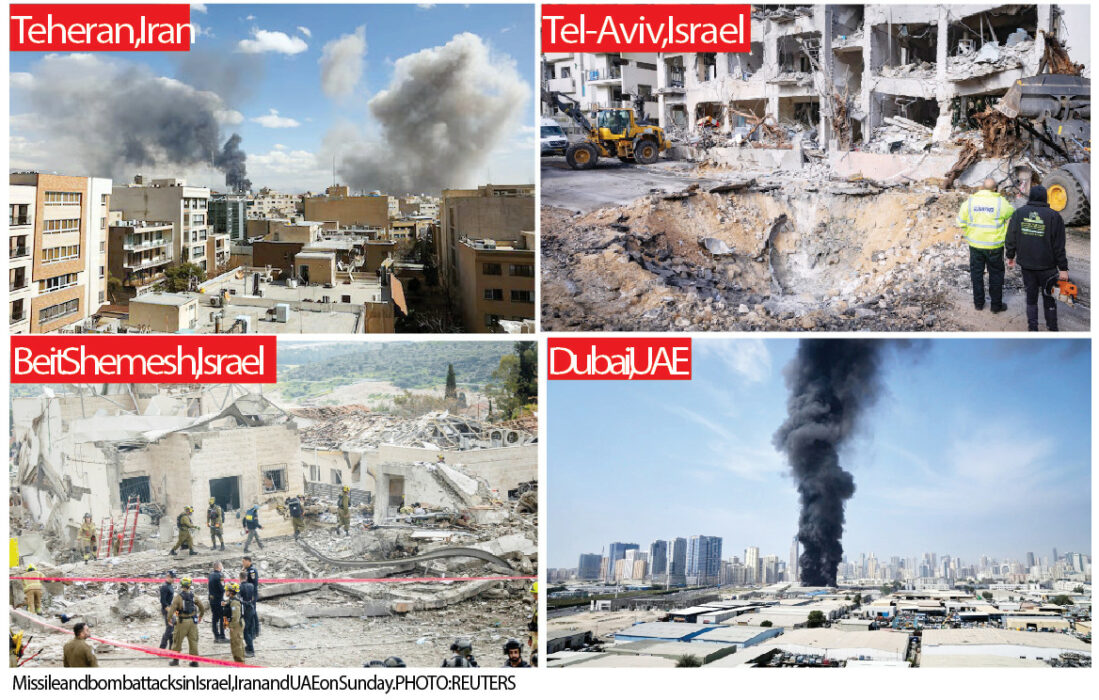
The ongoing conflict in the Middle East should elicit concerns across the globe. The effect is already manifesting. For example, in Nigeria, before the conflict, the retail pump price of Premium Motor Spirit (PMS) ranged between ₦ 839 and ₦ 875. Presently, the retail price of PMS is between N937 and N975. This is due to global crude oil prices surging past $80 per barrel. Industry analysts have predicted that if the conflict persists, the retail price of PMS might hit the N1,000 threshold.
It suffices to add that this presents a stark reality before us, even though Nigeria is not a party to the conflict. This can be explained using the concept of geopolitical risk premium. This is a situation where there is a risk of future supply disruptions in the global crude oil market. Interestingly, the risk of a closed Strait of Hormuz for commercial shipping is economically unplesant. The Strait of Hormuz carries roughly 20 million barrels of crude per day (MMbpd), which is 20 per cent of global oil consumption. Analysts at Goldman Sachs and Barclays have warned that Brent crude could hit $100 per barrel within days if the standoff continues.
As a newspaper, it is our position that Nigerians should brace up for the economic implications of the conflict and adjust accordingly. This is not a time to play politics with the reality on the ground. Instead, the government must begin to think strategically about how to mitigate the effects of the conflict on ordinary Nigerians. As we have come to know, the relationship between the price of PMS and the cost of basic commodities is interconnected.
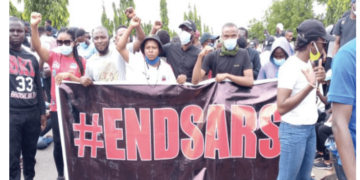
Another aspect that the government must look at critically is the possibility of a rise in insecurity. We have witnessed pockets of protests in some cities as a result of the death of the Supreme Leader of Iran, Ayatollah Ali Khamenei. The regime in Iran is Shia-Islam oriented, and adherents of Shia-Islam are in Nigeria. The government must not leave things to chance. There must be a strategic plan to ensure that things do not spiral out of control, as we have witnessed in times past. The security situation in Nigeria is already on edge, and any additional security threat comes with unpleasant consequences.
It is, therefore, the responsibility of the Nigerian Police Force and other security agencies to scale up their operations to nip whatever security threats that might arise in the bud before they happen. It is the position of this newspaper that a reactive model, as we are used to, is not suitable for the times that we are in. It should be a regime of proactiveness.
We acknowledges the directive by the Inspector General of Police, Olatunji Disu, for police commands across the country to beef up security. This is a welcome development, and it is advised that this should be taken a step further by ensuring strict implementation of this directive.
It is the position of this newspaper that over time, laudable government policies or directives failed not because they were wrong, but due to the lack of supervisory continuity. This has been a leadership challenge in the country, and the consequences have mostly been unpleasant. It must be noted that with the way things stand, we don’t have the luxury of time to be lackadaisical in approaching impending security threats and economic distortions that might arise as a result of the ongoing conflict in the Middle East.
We also wish to advise politicians not to play politics with the reality on the ground. It would be a distractive and unproductive venture if the narrative is twisted to score political points.
This newspaper recognises that the tendency for some vested interests to draw flak from this situation, thereby making the average Nigerian unable to distinguish between a genuine security threat and a manufactured political narrative. Fact states that disinformation tends to create confusion and public order challenges that further compound the situation. Consequently, the media managers of the government must strive to control the narrative on the conflict in the Middle East and its implications in Nigeria by adequately informing Nigerians as events unfold. As it is, we have painstakingly identified the likely issues that would arise, and we have taken the effort in this editorial to draw the attention of the government and relevant stakeholders to live up to expectations in managing the situation effectively.
We’ve got the edge. Get real-time reports, breaking scoops, and exclusive angles delivered straight to your phone. Don’t settle for stale news. Join LEADERSHIP NEWS on WhatsApp for 24/7 updates →
Join Our WhatsApp Channel