By Damilola Origbemisuyi And Tarkaa David
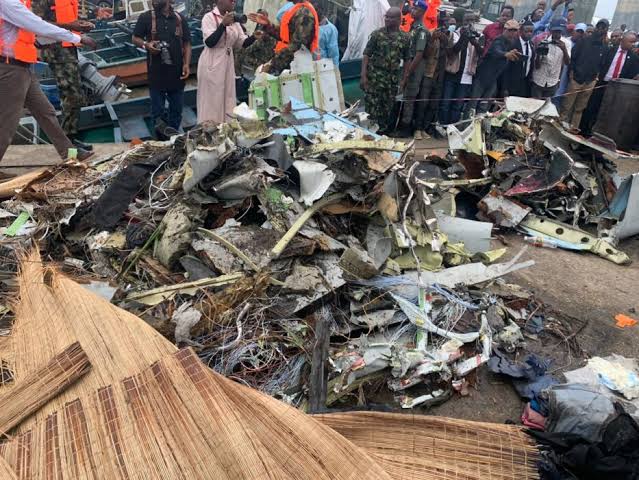
Medical experts have warned that fumigation alone may not be sufficient to prevent an epidemic outbreak in Igbokoda in Ilaje Local Government Area of Ondo State in the face of reports of decomposing human remains in the river where a Nigerian Air Force (NAF) aircraft crashed.
The experts urged the government to complement its planned fumigation with the safe recovery of human remains, the provision of potable water, and comprehensive environmental assessments to determine the extent of potential contamination.
They spoke following complaints by residents of Igbokoda about a foul odour emanating from the crash site and concerns over the safety of the river, which serves as a source of livelihood for the community. A medical professional, Dr Odunayo Falana, said fumigation alone can not adequately address the situation, warning that decomposing human remains could contaminate surrounding water and increase the risk of waterborne diseases.
Falana, however, noted that the presence of decomposing human remains did not automatically translate into an epidemic. He said the government should prioritise the safe evacuation of the remains, provide residents with clean drinking water and conduct proper water-quality tests and environmental assessments. According to him, fumigation cannot remove human remains or guarantee that the water is safe for domestic use.
He said, “Fumigation alone is not enough to address the situation. Although decomposing human remains do not automatically cause an epidemic, they may contaminate surrounding water and increase the risk of waterborne diseases. “The best approach is a comprehensive public health response, not fumigation alone,” he said.
Another medical professional, Dr Wilson Ikubese, said the effectiveness of fumigation would depend on the methods employed by environmental experts to address the situation. Responding to a question on whether fumigation would be sufficient if the human remains were not evacuated, Ikubese said the process involved more than simply spraying chemicals into the atmosphere.
He said environmental experts had established procedures for dealing with organic matter in water and other forms of environmental contamination.He said, “There are chemicals used in different forms of fumigation, and when dealing with a situation like this, environmental experts have established procedures for addressing it.
“If the state government says it will fumigate the area, I believe it intends to do so professionally. It goes beyond simply spraying chemicals into the atmosphere.”
Ikubese added that natural processes could also play a role in the decomposition of organic matter in water, while environmental specialists had methods for managing the situation.
“When organic matter is submerged in a body of water, there are natural processes that help break it down, and environmental experts also have methods for managing such situations. I believe this is what the state government intends to do,” he said. On the possible consequences of failing to address the situation, Ikubese warned that it could lead to environmental pollution.
He, however, expressed confidence in the government’s commitment to addressing the concerns, noting that the state had already announced plans to intervene.
The Ondo State Government had earlier ordered the fumigation of the river around the crash site and directed the distribution of nose masks and other essential health kits to residents to reduce potential exposure to environmental hazards. The government said the intervention was aimed at protecting public health and addressing concerns about the river, which is an important source of livelihood for residents of Igbokoda and neighbouring communities.
The directives followed complaints by the Olu of Igbokoda, Oba Afolabi Odidiomo, and residents about an offensive odour spreading across the community, with concerns that decomposing human remains and body parts were still present in the water. The monarch had called for the urgent removal of the remains and expressed concern about the situation’s effect on residents’ access to clean water.
The NAF ATR-42 aircraft crashed into a swamp near the Nigerian Navy’s Forward Operating Base in Igbokoda on Monday, 5 October, while on a mission from Benin City, Edo State, to Lagos. All 25 people on board, comprising 20 passengers and five crew members, died in the incident. The Ondo State Government has said it is working with the Federal Government on recovery efforts and assessing the environmental and public health implications of the crash.
We’ve got the edge. Get real-time reports, breaking scoops, and exclusive angles delivered straight to your phone. Don’t settle for stale news. Join LEADERSHIP NEWS on WhatsApp for 24/7 updates →
Join Our WhatsApp Channel