The federal government has reaffirmed its commitment to unlocking the full value of national assets and attracting global capital.
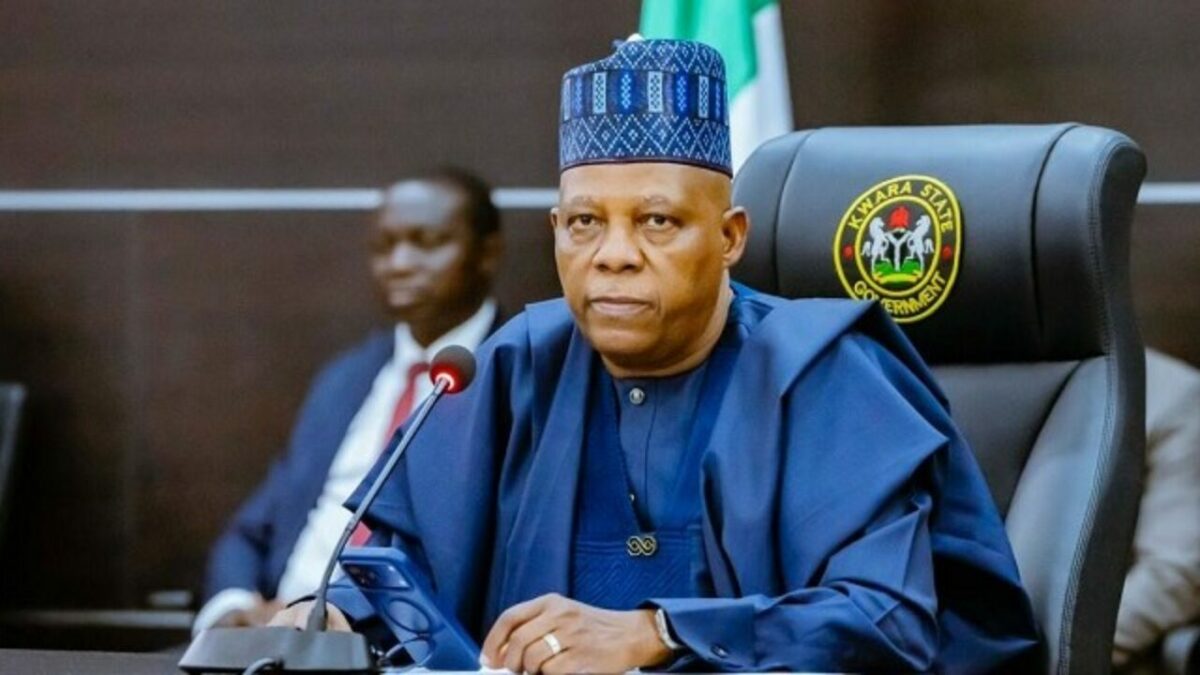
This aligns with Vice President Kashim Shettima’s call for an aggressive expansion of public-private partnerships to drive Nigeria’s economic ambitions.
At the first 2026 meeting of the National Council on Privatisation (NCP) at the Presidential Villa, Abuja, yesterday, the Vice President said the administration was focused on attracting investment and ensuring that such capital was strategically aligned with national development priorities.
“The task before us is not only to ensure that Nigeria emerges as a safe destination for private investment, but to align that investment with the governing purpose of this administration and the larger destiny of our nation,” he said in a statement issued by his spokesman, Stanley Nkwocha.
Shettima stressed that Nigeria’s long-standing ambition to become a trillion-dollar economy would remain out of reach without a deliberate balance between public enterprise and private-sector dynamism, noting that economic prosperity must be intentionally designed and sustained through strong institutions.
According to him, “Prosperity does not happen by accident. It is designed, negotiated, protected, and sustained by institutions that understand that national assets must be deployed in the service of the people.”
Reviewing progress over the past year, the Vice President highlighted key milestones across sectors such as mining, agriculture, and energy, noting in particular the sale of Eko Electricity Distribution Company (Eko DISCO) as a major signal of renewed investor confidence.
Shettima attributed the growing investor interest to the administration’s policy direction and reform agenda, emphasising that credibility, consistency, and clarity remain the strongest drivers of capital inflows.
“Investors do not respond to rhetoric alone. They respond to coherence, to clarity, and to the evidence that a country knows where it is going and has the courage to stay the course,” he said.
The Vice President also commended improvements within the privatisation framework, particularly the enhanced governance processes and timely completion of audit reports, describing institutional discipline as critical to building trust.
He charged the Council to accelerate the development of a robust pipeline of bankable projects and deepen the use of public-private partnerships as a central tool for economic expansion.
“We must accelerate the work of building a pipeline of bankable projects and of executing more public-private partnership transactions to support our economic targets,” he said.
He further emphasised the importance of post-privatisation oversight, urging stricter monitoring to ensure that privatised assets deliver on their contractual obligations and contribute meaningfully to national development.
The Vice President also warned against policy inconsistencies within government institutions, noting that overlapping mandates and unclear roles could undermine investor confidence and slow reform progress.
“Policy confusion is expensive. Overlapping mandates unsettle the market. If we are to speak convincingly to investors, the government must speak with one voice,” he added.
Shedding light on the outcome of the meeting, the director-general of the Bureau of Public Enterprise (BPE), Mr. Ayodeji Ariyo Gbeleyi, said he updated the Council on the progress made with the distribution sector recovery programme, an initiative financed by the World Bank to the tune of $500 million.
He explained that a major component of the programme is the procurement of about 3.22 million prepaid metres to bridge the metering gap, currently estimated at about 5.6 million.
“As of today, we have signed a contract for 1,437,000 metres that have already been deployed in the country. As we speak, almost 400,000 of those metres have been installed across the 11 DISCOs within the country.
“These are all efforts geared towards ensuring that we can have a stable power supply in the country and also ensuring that the era of estimated billing is a thing of the past, as promised by His Excellency, Mr President,” he said.
Gbeleyi noted that the Bureau’s effort is to complement President Bola Ahmed Tinubu’s repositioning of the economy, pivoting it towards a $1 trillion gross domestic product in the near term.
We’ve got the edge. Get real-time reports, breaking scoops, and exclusive angles delivered straight to your phone. Don’t settle for stale news. Join LEADERSHIP NEWS on WhatsApp for 24/7 updates →
Join Our WhatsApp Channel