Could you share a brief background of yourself?
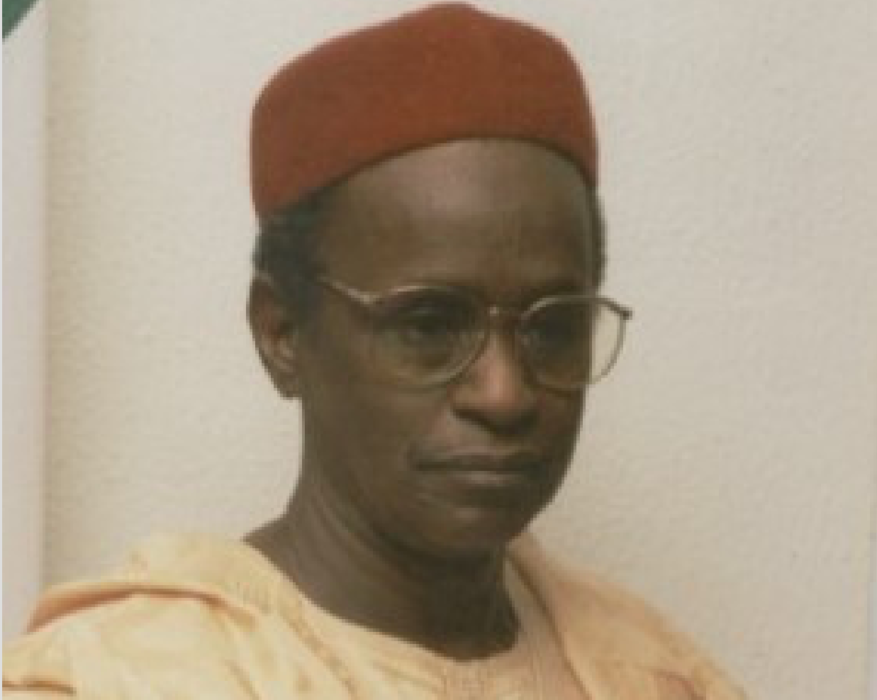
My name is Abu, and I am from Katsina Central. I completed my studies and graduated from Ahmadu Bello University (ABU) in June 1965.
After graduating in June 1965, I joined Shell, which was then known as Shell Nigeria Distribution Company. At that time, there were only about five or six distribution companies, Shell, Mobil, Texaco and later others. All of them were expatriate-owned; there were no indigenous distribution companies then. I spent eight years with Shell.
I started as a sales representative, and later I handled administration. I worked in Kaduna, Kano and Plateau. Each region had different categories of customers. Kaduna was mostly administrative, Kano was commercial, and the Plateau area had mostly expatriates as Shell customers.
From Jos, I was posted to the village stations in the North. There were three major village stations. I worked there for three years. After that, my boss felt I had gained enough experience and recommended that I should go to Lagos. But at that time, Nigeria was under military rule, and Lagos was the heart of military administration. I did not want to live in Lagos. I said I would only go there if I was a soldier, and I was not. So I refused and resigned after eight years.
I then joined Arewa Textiles. I started as Sales Manager and later rose to Executive Finance Manager. Eventually, I became the Executive Chairman of the company. At that time, I was the highest-ranking African in the company, which had between 3,000 and 5,000 workers.
Yes, I served in government several times. I was appointed Commissioner for Trade, Industries and Cooperatives in the old Kaduna State. After about six months, I was moved to the Ministry of Finance as Commissioner for Finance. I served until the administration ended with the return to democratic rule.
Given your experience of Nigeria over the decades, in politics, the economy and social life, what is your view of the country’s condition today?
It is completely different. As a commissioner under a military administration and even later as a federal minister, your job is straightforward. You are appointed based on your background and competence. You do not owe anybody. You simply work and perform. In democracy, it is different.
You must struggle to get elected, campaign everywhere, greet everybody, listen to everybody, and deal with every complaint. It is not easy. Anybody can come to you and say, “We elected you, you must do this.” So I truly sympathise with politicians. They work extremely hard to get elected, and once elected, they hardly ever sit down. The demands are endless.
Do you believe the country is progressing in a direction that inspires confidence?
I am not. How can I be comfortable when I serve in a properly disciplined system? Let me give you an example. During the transition to civilian rule, the Supreme Military Council created the position of Deputy Chairman of the State Executive Council. I was appointed to that position.
When the democratic process was starting, I told my military administrator that we had a moral responsibility to keep some money for the incoming elected government because we had made many promises. So we stopped spending and saved the money.
When Alhaji Balarabe Musa won the governorship election, he came to us and said he wanted to award a contract for the Kano–Ikara road. As Deputy Chairman, I chaired the Executive Council meeting, and we awarded that contract for ₦6 million. I swear neither I nor my military administrator took a kobo. We gave the exact amount to the contractor.
Years later, my daughter married someone from that area, and I drove on that same road. I felt proud because I had done something honestly without taking anything into my pocket. This is not what we see everywhere today.
In your opinion, how effectively is today’s political class responding to Nigeria’s challenges?
Most politicians today are overwhelmed. Let me tell you something: myself and other elders from Katsina went to meet former President Muhammadu Buhari, and I told him that the poverty we see today is man-made, not natural.
I said, “Your Excellency, when you came into power, your first pronouncement was your commitment to developing agriculture, especially rice production. You will recall that in those days, we only ate tuwon shinkafa occasionally, not regularly. It was mostly during Sallah festivities or special events, and sometimes the school would provide a meal of rice.”
I told him that because of that single pronouncement of his, people became encouraged, and Nigeria soon gained recognition as a rice-producing country. But rice is grown mainly during the rainy season—three to four months. Seventy percent of our population are farmers. So imagine if we expand irrigation and engage those farmers for six to nine months a year. Nigeria will not only produce rice; we will export rice. But government attention keeps shifting elsewhere. That is the problem.
Would you say the quality of governance has improved or declined when compared to the military era?
The military built 70 percent of the dams in this country. They established assembly plants for cars and trucks. They built steel rolling mills. They developed industry. Look at Arewa Textiles, where I worked, more than 5,000 workers. Today the place is a ghost town. The military did not have as much money as we have today, yet they achieved more.
Democracy is supposed to work in a productive society. But we are not there yet. Too many people are concerned with positions, politics, and what they can get.
Despite ongoing efforts, insecurity persists across the country. What do you believe is fueling this challenge?
It is painful. Nigeria once mobilised African countries to intervene in Liberia and Sierra Leone. We kept peace in other countries. Today we cannot keep peace within our own borders. Why? Something is wrong.
A productive society creates stability. If 70 percent of our workforce is engaged in agriculture and industry, insecurity will drop. But politicians are overwhelmed with demands and distractions. They cannot focus long enough to build a productive economy.
In your estimation, how would you evaluate Nigeria’s current state?
The society is too impoverished, and the political environment is too distracting. We are not yet patriotic enough. The politicians try, but they are not allowed to settle down and plan. Until this country becomes productive again through agriculture, industry, and manufacturing, we will continue struggling.
Nigeria can still be great, but not with the way things are being handled now.
Back then, Saudi Arabia was still developing, and their people were modest. But today, they have transformed their country beyond imagination. Everything they have now is first class. When I compare their progress with ours, it pains me. Nigeria had all the potential to reach the same heights, but we have not matched their level of commitment.
Yes, we have made progress in areas like oil production, and we have produced outstanding industrialists. However, many capable Nigerians are denied opportunities simply because they are not from certain regions. Unnecessary obstacles are put in their way. This is unfair and harmful to national growth.
With these challenges, do you still remain optimistic about Nigeria’s future?
I remain hopeful, but hope alone is not enough. There must be better understanding among Nigerians. We must stop promoting the idea that our problems are caused by religious groups attacking one another. It is false and dangerous to say Muslims are killing Christians. These narratives only divide the country further.
Katsina is about 99 percent Muslim, yet you will find many churches across different streets. That shows tolerance. Islam teaches “live and let live.” We do not create problems for others, even fellow Muslims. We coexist peacefully because that is what our faith instructs.
Problems arise when some people act without understanding the environment. Islam teaches that all humans are God’s creation and deserve respect. But when there is an attempt to build numerous small churches in every corner without regard for community harmony, it will naturally raise concerns. Muslims become alarmed not because they hate Christians but because sudden, uncontrolled expansion can disrupt peace.
Those accusations are false and malicious. It surprises me that people who once led this country would spread such falsehood. It is not right and certainly not in the interest of Nigeria. We cannot build a nation on lies.
If you had a platform to address political leaders and major groups, what would your central message be?
They must be patriotic. Leadership is not about selfish interest or promoting one’s tribe or religious group. It is about fairness and justice. Islam does not approve of leaders who disgrace or marginalise others because of their background. Leaders must act in the interest of the whole country.
I pray for Nigeria daily. Our leaders and aspiring leaders must remember that God created all of us and loves all of us equally. No Nigerian should be treated unfairly because of tribe or religion. When discrimination becomes visible, it destroys the spirit of the nation. We must treat each other with fairness and dignity if we truly want Nigeria to move forward.
We’ve got the edge. Get real-time reports, breaking scoops, and exclusive angles delivered straight to your phone. Don’t settle for stale news. Join LEADERSHIP NEWS on WhatsApp for 24/7 updates →
Join Our WhatsApp Channel