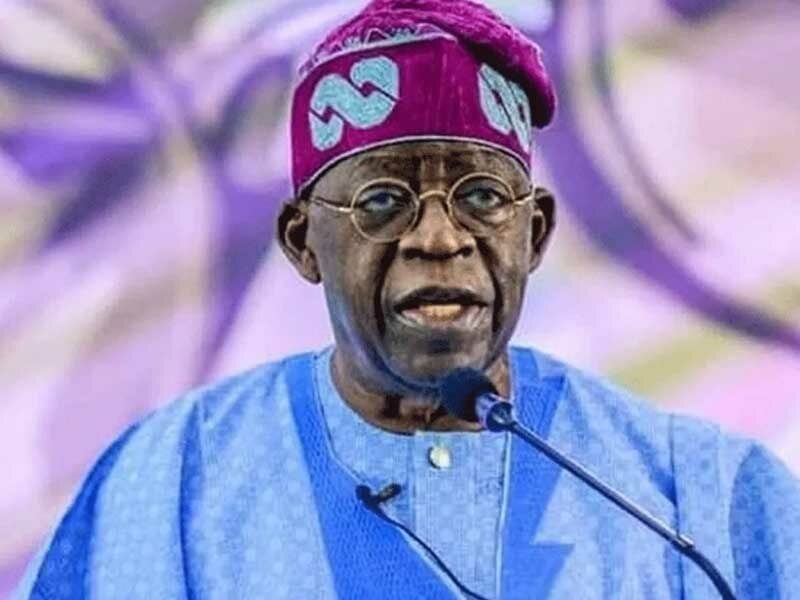
Recently, President Bola Ahmed Tinubu signed Executive Order Nine which directed that oil and gas revenues (royalty oil, tax oil, profit oil/gas) be remitted directly to the Federation Account.
The order also scrapped the 30 per cent Frontier Exploration Fund established under the Petroleum Industry Act (PIA). Similarly, it discontinued the 30 per cent management fee on profit oil and profit gas retained by the Nigerian National Petroleum Company Limited (NNPCL).
Anchoring the directive on Sections 5 and 44(3) of the 1999 Constitution (as amended), the presidency said the move was to safeguard oil and gas revenues, curb wasteful spending, eliminate duplicative structures in the critical sector of the national economy, and redirect resources for the benefit of the Nigerian people.
Tinubu said the directive seeks to restore the constitutional revenue entitlements of the federal, state, and local governments, which were removed in 2021 by PIA.
This newspaper recognises that under the current PIA framework, NNPC Limited retains 30 per cent of the federation’s oil revenues as a management fee on Profit Oil and Profit Gas derived from Production Sharing Contracts, Profit Sharing Contracts, and Risk Service Contracts.
In addition, the company retains 20 per cent of its profits to cover working capital and future investments and another 30 per cent of its profit oil and profit gas under the production sharing, profit sharing, and risk service contracts, as the Frontier Exploration Fund under sections 9(4) and (5) of the PIA.
There is also the duplication of the Midstream and Downstream Gas Infrastructure Fund (MDGIF) under Section 52(7)(d) PIA, funded by the collection of gas flaring penalties provided under Section 104 and a dedicated Environmental Remediation Fund, administered by NUPRC, specifically designed to fund the rehabilitation of communities negatively impacted by upstream petroleum operations, including gas flaring.
Justifying the Executive order, Tinubu said given the existing 20 per cent retention, the additional 30 per cent management fee is unjustified as the retained earnings are already sufficient to support the functions NNPCL performs under these contracts.
He said the PIA created structural and legal channels through which substantial federation revenues are lost through deductions, sundry charges and fees.
He attributed the continuing decline in net oil revenue inflows to these deductions and fragmented oversight under the current PIA architecture.
Meanwhile, on the heels of the Executive Order, Tinubu approved the establishment of an Implementation Committee with the Minister of Finance and Coordinating Minister of the Economy as chairman, to oversee and ensure the effective, coordinated implementation of the executive order.
Following the inaugural meeting of the Implementation Committee held on 26 February 2026, and subsequent official statements released on 2 March 2026, the federal government was to revise its approach to the operationalisation of the Executive Order.
The committee said the implementation framework is expected to transition within 90 days window toward a model where revenues derived from such lifting are paid into a designated Central Bank of Nigeria (CBN) account prior to final remittance into the Federation Account.
The NNPC Limited is expressly restricted from accessing the funds once they are paid into the CBN account unlike the previous framework where NNPC Limited could deduct costs “at source.”
Nevertheless, the Executive Order has continued to generate controversy in the country with a cross section of Nigerians, including state governors, commending the decision.
Nigeria’s 36 state governors, under the aegis of the Nigerian Governors Forum ( NGF) believe this order will ensure faster and more transparent remittance of revenues, boosting the fiscal capacity of states.
A Senior Advocate of Nigeria and former president of the Nigerian Bar Association (NBA), Dr Olisa Agbakoba, said that with the executive order, the sovereignty of the Nigerian crude oil has been placed in the hands of Nigerians. It is also perceived as one of the hardest and strongest decisions taken by a Nigerian president ever.
On the other hand, the Petroleum and Natural Gas Senior Staff Association of Nigeria (PENGASSAN) has flayed the action, arguing that the order violates the PIA 2021, threatens thousands of jobs, risks investor flight, and creates industry instability.
According to the association, any changes to the current fiscal regime should be handled through an amendment to the PIA by the National Assembly rather than an executive order.
We know that opinions have been divided especially on the legal implications of the Executive Order.
While some Nigerians concede that the Constitution requires that all revenues be paid into the Federation Account, any statutory provision permitting prior deductions may be inconsistent and therefore void.
Others say that where an Executive Order purports to alter, suspend, or modify the operation of an Act of the National Assembly, it may raise concerns under the doctrine of separation of powers, which is firmly embedded in the Constitution.
Public sentiment towards the NNPCL is one characterised by deep-seated mistrust largely driven by the company’s inability to manage its refineries, the high cost of fuel, persistent allegations of corruption and lack of accountability.
Last year, the World Bank reported that (NNPC) Limited was remitting only 50 per cent of the gains generated from the removal of petrol subsidies to the federation account.
Recall that President Bola Tinubu announced the removal of petrol subsidies shortly after he was sworn into office in May 2023.
Meanwhile, a forensic audit is underway as of March this year to examine deductions, including 30 per cent management fees and the Frontier Exploration Fund.
In our opinion, the presidency should transmit the PIA to the National Assembly for amendment and plug the loopholes.
There’s no perfect law anywhere and considering that it took more than two decades to pass the PIA in 2021, it’s a working law in progress.
We’ve got the edge. Get real-time reports, breaking scoops, and exclusive angles delivered straight to your phone. Don’t settle for stale news. Join LEADERSHIP NEWS on WhatsApp for 24/7 updates →
Join Our WhatsApp Channel