
By EJIKE EJIKE, IGHO OYOYO, Abuja, NONYE EKWENUGO, Kaduna and Anayo Onukwugha, Port Harcourt
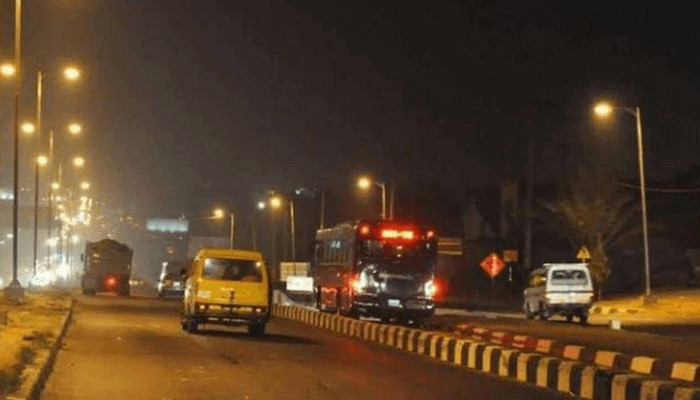
Despite repeated security warnings from the police and the Federal Road Safety Corps, night travel remains popular among many Nigerians amid the country’s prevailing security problems.
In the Federal Capital Territory, Abuja, while banditry, kidnappings, and accidents have made nocturnal journeys a gamble, visits to major parks like Jabi, Utako, and Kubwa reveal a steady stream of passengers boarding luxury buses well past 10 pm.
But the Federal Road Safety Corps (FRSC) has warned against night travel due to high risks of fatal crashes.
It warned that apart from the risks involved with road crashes, night travel increases vulnerability to security threats, including banditry.
The FRSC corps marshal, Mohammed Shehu , who said night travels contribute to a lot of road crashes, citing poor visibility, driver fatigue, and speed violations as major risk of night travels.
He further stated that night journeys are deemed dangerous, particularly during ’ember months’, as rescue operations are delayed in the event of accidents.
“Many fatal crashes occur at night due to limited visibility and excessive speeding. Long-distance driving at night increases the likelihood of falling asleep at the wheel.
Many vehicles used for night travel are usually not sound enough,” the corps said
It urged travelers to plan trips for daylight hours to ensure safety, particularly avoiding travel after 6pm and asked drivers to park and sleep in the nearest guest house whenever it is past 6pm.
Far from ignorance of the risks, investigations show that economic pressure, work schedules, and a desperate need to maximise daylight hours are driving the decision.
For many passengers, the choice to travel at night is not a preference but a financial necessity.
With the cost of petrol and diesel causing daytime fares to skyrocket, night buses often offer lower fares because traffic is lower and there are fewer roadside delays.
One passenger, Mrs Funmilayo Adebayo, a trader heading to Onitsha, explained that the fare difference is substantial enough to affect her family’s feeding budget.
“If I go by day, I will pay almost twenty thousand naira more because of the hold-ups and checkpoints. At night, the bus moves faster, and I save that money for my children. I know the risk, but hunger does not know bandits,” she said.
Long-distance drivers, who bear the direct brunt of night travel dangers, admit they are caught between union warnings and economic survival.
Speaking at Jabi motor park in the FCT, a veteran driver, Alhaji Sani Usman, who plies the Abuja–Kano route, disclosed that many drivers accept night trips because passengers demand them.
“If I refuse to drive at night, the next driver will take my passengers, and I will go home with nothing. The owners of these vehicles also pressure us. They say, ‘If you don’t go, we will hire someone else.’ We are afraid of kidnappers, but we are more afraid of not feeding our families,” he said.
Transport unions in the FCT, while officially discouraging night travel, have reluctantly acknowledged that enforcing a total ban is nearly impossible without government intervention.
Union officials point out that many interstate roads still lack adequate lighting, security patrols, and emergency services, yet the demand for movement does not stop at sunset.
A union representative, Mr Chibueze Okechukwu, who oversees night departures at a major Abuja park, said that the authorities have not provided safe alternatives.
“We have issued many warnings, but the government has not given us police escorts or fixed the bad spots. Our members travel at night because the day is also dangerous with speed bumps and reckless okada riders. It is the same road,” he said.
He called on the FCT administration to create designated night travel corridors with mobile police patrols and well-lit rest stops, as without such measures, their warnings will continue to fall on deaf ears.
“You cannot tell a man who works in Abuja and whose child is sick in the village to wait until morning. “He will leave at midnight if that is the only bus available. We need help, not just warnings,” he said.
The security risks, however, remain severe and well-documented. Not too long ago, the FRSC reiterated that night travel contributes to a high percentage of fatal crashes due to poor visibility, driver fatigue, and the increased operation of armed criminals on deserted highways.
Despite this, passengers interviewed argued that daytime travel has become equally problematic, with endless traffic jams, multiple extortion points, and the loss of an entire day’s wages.
Many travellers now adopt a resigned attitude, believing that their fate rests on luck rather than the clock.
Some drivers also believe that modern technology has slightly reduced the threat of armed robbery, even if kidnapping remains a terror.
With most passengers paying by bank transfer, buses carry less cash, making highway robberies less lucrative than in the past.
Yet, the drivers admitted that isolated routes, particularly those passing through forests in Niger, Kaduna, and Kogi states, remain extremely dangerous after dark.
“We share information on WhatsApp groups about which roads are hot. But if the passenger insists on going, we go. We just pray,” a driver who preferred anonymity said.
As the night buses rev their engines and roll out of the FCT into the darkness, the reality is clear that Nigerians will continue to trade safety for survival until affordable, secure, and efficient daytime alternatives exist.
In Kaduna, despite repeated security advisories and growing concerns over highway attacks, night travel has continued unabated on major inter-state routes, as operators and passengers insist the practice remains active and going very well across key transport corridors.
At Television Garage motor park in Kaduna, Arinze Okechukwu said night operations remain steady, with vehicles consistently departing for eastern destinations such as Onitsha, Enugu, Owerri and Port Harcourt.
According to him, many passengers still prefer night journeys due to convenience and shorter travel time.
A union leader at the park, who preferred anonymity, confirmed that night movements have not slowed, noting that operators continue to record steady passenger turnout despite repeated warnings.
He added that demand for overnight trips remains high, particularly among traders and long-distance travellers seeking to maximise daytime activities at their destinations.
Similarly, at Mando motor park, another major departure point in Kaduna, a commercial driver, Lawal Abdullahi, said night journeys from Kaduna to Lagos are ongoing without disruption.
He explained that most trips are fully booked in advance, stressing that passengers opt for night travel to save time and avoid daytime traffic delays.
Findings by our correspondent indicated that, despite persistent security concerns on highways, a mix of economic pressure, the urgency of travel, and passenger preference continues to sustain night journeys across major routes linking Kaduna to other parts of the country.
‘Why We Still Patronise Night Journeys’
Some residents of Port Harcourt, the Rivers State capital, have said they have continued to take long-distance journeys at night, not for safety but for convenience.
LEADERSHIP Weekend observed that the majority of long-distance travellers travel from Port Harcourt to Abuja or to Lagos.
However, of late, the number of night travellers from the Rivers State capital to Abuja has been declining due to the high level of insecurity on most roads in the North.
Speaking with our Correspondent, a night traveller, who identified himself as Remmy, said he chose to travel at night because it saves cost for him.
“As you are looking at me now, I am travelling to Lagos to buy goods for my shop. When we arrive in Lagos tomorrow morning, I will head straight to the market to pick up the goods. Tomorrow evening, I should be on my way back to Port Harcourt. So, with that, I have saved money that I would have used to lodge in a hotel,” he said.
Also speaking with LEADERSHIP Weekend, another Lagos-bound passenger, Ifeanyi Onyema, said that although night travel is very risky, it remains the most convenient for him.
Onyema said, “I know that long-distance night journeys are risky, but to me, it is the most convenient. In all, safety belongs to God.”
A driver for one of the country’s major transport companies, who spoke on condition of anonymity, said most long-distance night drivers don’t drive all night.
He revealed that most drivers travelling from Port Harcourt to Lagos usually stop at Ore before midnight and continue their journey later in the morning.
We’ve got the edge. Get real-time reports, breaking scoops, and exclusive angles delivered straight to your phone. Don’t settle for stale news. Join LEADERSHIP NEWS on WhatsApp for 24/7 updates →
Join Our WhatsApp Channel